The European Union is Not in Need of Expansion, but in Need of Consolidation
PREFACE
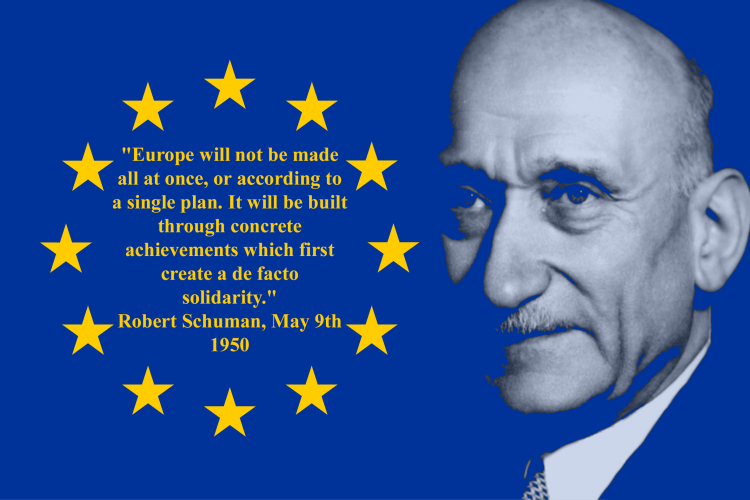
After centuries of bloody conflict, the European Union has brought peace, stability, and prosperity, fulfilling the visionary goals of its eleven founding fathers, including pioneers like Robert Schuman, Alcide De Gasperi, and Konrad Adenauer.
As Jean Monnet said, “There is no real peace in Europe if the states are reconstituted on a basis of national sovereignty… They must have larger markets. Their prosperity is impossible unless the States of Europe form themselves in a European Federation.”
First established by the Treaty of Paris in 1952, the Maastricht Treaty in 1992 was the first tangible and successful step towards making the objective of a European Union a reality.
The economic and monetary union, achieved through the Maastricht Treaty, marked a major step forward in European integration, in contrast to the political union which lags behind.
Today, more than 510 million citizens from 28 Member States enjoy the benefits of European cooperation. Twenty-five years after the roadmap towards the euro was agreed upon, the euro has become the world’s second most traded currency and is part of the daily life of 340 million citizens in 19 countries.
Despite progress and the establishment of a single market facilitating the free movement of goods, people, services, and capital, there have been shortcomings in fostering a sense of connection and concern among European citizens and public opinion regarding European-level affairs.
The challenge has always been to reconcile narrow national interests with the broader interests of the European Union and to find consensus in an ever-changing world.
Our interconnected world functions as a global village where no European country stands alone. National economies are deeply intertwined with the EU, rendering individual foreign policies irrelevant without EU coordination. Defence budgets of individual countries are insignificant without the EU-NATO partnership. Issues such as crime, energy, technology, environment, and refugees require cross-border solutions.
Despite the resurgence of nationalism and isolationism, it is an illusion for individual European Member States to think that outside the European Union, they are strong enough to guarantee prosperity and social development for their peoples.
In conclusion, we need not less Europe, but more Europe, because only a federal European Union can ensure progress and control the future in the present global forcefield.
Currently, France, together with Denmark and the Netherlands, strongly opposes the ascension of North Macedonia and Albania into the EU, despite other European ministers calling for the Western Balkan countries to join. This also affects Serbia and Montenegro, which are already negotiating membership, and Kosovo and Bosnia, which would like to start the process as well.
This might not be the best strategic decision given the current activities and interests of China and Russia in the Balkan region and their attempts to reshape the world by building their Eurasian trade union.
However, Emmanuel Macron’s arguments are pragmatic and sensible given the internal need to re-prioritize EU strategic interests and address pending issues such as Brexit, the global economic slowdown, the rise of the radical right, and climate change.
Reviewing the position of the EU, we must recognize the expansion of the European project has its limits. The EU needs not expansion, but consolidation to protect the achievements made during the last fifty years.
Since the Berlin Wall fell in 1989, influenced by the events surrounding German unification, the European Union embarked on a path of economic expansion and fundamental change in the 1990s, aiming to build a safe, prosperous, and democratic Europe. The expansion envisioned the integration of essential legal rules, democratic values, and economic growth.
At the time, the consequences of rapid development were not fully foreseen, but there was no real alternative, partly due to the lack of a coherent strategy by the US and EU since 1991. Opportunities to include Russia in the framework of nations during this cycle of history were wasted, leading to today’s strained relations.
The eastward expansion presented a tremendous opportunity, but Europe failed to reshape its constitutional basis, a failure that persists to this day. The warnings of European Commission President Jacques Delors in 1992 to strengthen the Union as a condition for its enlargement fell on deaf ears, and narrow-minded views prevailed.
Enlargement slowed down and negatively influenced the integration of the European Union and its institutions after the Maastricht Treaty, delaying further integration of the “Political Union.”
The EU would have been better served with a “concentric circles Europe” or a two-speed European Union, instead of including Eastern European countries as full members, which has been an obstacle to further integration. A “concentric circles Europe” or a two-speed EU would have been more beneficial, allowing the “traditional” EU to focus on faster integration of institutions and establishing a political and defence union.
As François Mitterrand said, “New Europe is not less European than us,” but today we see more clearly the differences in values and cultural norms between traditional and new European countries. Simplified, the interests of the individual versus the interests of the state are far greater than originally thought and will take years to bridge.
These differences in culture, commitments to democratic values, human rights, and the rule of law have led to serious and persistent breaches of democratic, legal, and human rights values led the European Commission to activate Article 7 TEU against Poland and Hungary for serious risks to the rule of law.
In an ever-changing environment, the EU is headed for further change, influenced by the global political power shift from the West to the East and the changing relationship with the US since the early 21st century, which only confirms the benefits of the EU.
This shift has been further influenced by the election of populist nationalist Donald J. Trump, who has taken the protection of our free liberal society, human rights, and international law off the agenda.
With Trump, we identified a potential autocrat, someone who seeks internal and external destabilization, undermining institutions, the judiciary, the free press, and freedom of speech, following a playbook reminiscent of 1932. This culture of lying leads to nihilism and opens the door to fascism.
Europe must recognize that 70 years of trust and cooperation with the US are being ignored by Trump. In 2018, German Foreign Minister Heiko Maas concluded: “The world order that we once knew and were accustomed to no longer exists. Old pillars of reliability are crumbling under the weight of new crises.”
It is uncertain whether trans-Atlantic cooperation on economic, foreign, and policy matters can continue much longer. This did not start with Trump; the US squandered its good name in global leadership first with President George W. Bush in Iraq, creating Atlantic divisions, and then with Obama’s weaknesses in Syria.
However, the trans-Atlantic cooperation was never damaged as severely as it has been by Trump. We must recognize the US, under Trump, has become a security threat and adversary to Europe and its interests. We must also question the value of US security assurances after recent events.
The damage done by Trump to US credibility, reliability, and reputation is likely permanent, and it is doubtful this will ever be fully repaired. A possible re-election of Donald Trump would be disastrous for the US, Europe, and the world.
The EU should have recognized the changing winds of our times in 2003 when George W. Bush pivoted away from Western Europe towards New Europe due to criticism of his Iraq adventure, US support for Israel, opposition to the International Criminal Court, and climate change (Kyoto). Despite serious disagreements, the Alliance survived due to mutual respect and trust among Allies.
Beyond the US and China as our adversaries, we must recognize Russia as an existential threat to Europe. Recent Russian attacks on international law and state sovereignty have reached an unacceptable level of aggression. Additionally, attacks by the Putin government or its proxies against American and European democracies, aiming to divide by weaponizing information and cyberspace, confirm Russia as an existential threat.
These attacks, aimed at discrediting basic liberal values and strengthening isolationist and destructive forces in Western societies, seek to destabilize our free liberal society and the foundations of democracy with the help of the radical right.
The rise of national populism has exposed weaknesses in US and European democracies, resulting in the weakening of institutions and value systems, enabling Russian interference in Western countries’ internal politics.
These vulnerabilities have also contributed to the rise of the radical right. Factors such as the flow of refugees, increased military engagements, the decline of the middle class, and increased inequality have fueled nationalism and racism, the cancer that led to fascism and played a destructive role in our shared history.
The use of “fake reality” or “lügenpresse,” a term dating back to 1914 and used by Hitler, Stalin, and now Trump, no longer distinguishes between analysis and propaganda or truth and lies. This destroys the notion of one “truth.”
Russian attacks on Western democracies with fake reality and influence on the general public played a role in the 2016 US elections, although this involvement was secondary to internal factors such as growing societal divisions since the Nixon years and a dysfunctional Congress, which led to the election of Donald J. Trump.
In Western Europe, despite support from growing radical right circles in the US, Israel, and Putin’s allies, these attacks were less successful during elections in the Netherlands, France, and Germany. However, they were effective in Brexit and Italy, where economic ties with Russia have been strong, especially since Berlusconi.
From a strategic perspective, it is in the interest of Putin to divide Europe, and Brexit offered the best opportunity, a reality Russia exploited with the help of fake news and national populists.
Brexit has significant implications for the EU, which will face many more challenges than Britain. Despite current difficulties in the process, the EU must be constructive and offer fair and equitable deals, understanding Britain will always be part of Europe.
Negotiations must recognize common values, geopolitical and economic interests, and Britain’s role in the EU’s achievements. Isolationism or a split from Britain is not in the EU’s interest.
In concluding this strategic review, we must recognize that the future is unpredictable, influenced by factors beyond our control. However, what is clear is that the era of nation-states has ended. The world has shrunk, and no nation can survive alone in a global village.
Our world is increasingly interdependent, interconnected, and borderless. The European Union, a model for successful international cooperation, remains our best answer to the challenges of the future. We need more Europe to protect our achievements, ensure our prosperity, and secure our place in the world.
Let’s not forget the words of Winston Churchill: “If Europe were once united in the sharing of its common inheritance, there would be no limit to the happiness, to the prosperity, and the glory which its three or four hundred million people would enjoy.”
The challenges of today remind us that European integration is not just a historical achievement but a continuous necessity. The European Union is not a given but a task that needs to be fulfilled day by day.
In an unpredictable world, the European Union is our best insurance for a peaceful, prosperous, and free future. For that, we need more Europe, not less.
WJJH-28.10.2019
📌Blog Excerpt
The European Union, born from the vision of the eleven founder fathers, has brought peace, stability, and prosperity to its citizens. Although there have been successes, such as the economic and monetary union, there is a need for greater consolidation and unity, especially in light of external threats and challenges like national populism, Russian aggression, and the erosion of trans-Atlantic unity. The EU must prioritize consolidation and integration to protect its achievements and ensure a stable future.
 In what kind of world do we wish to live