The Suffocation of American Exceptionalism
Netherlands, 10.6.2020
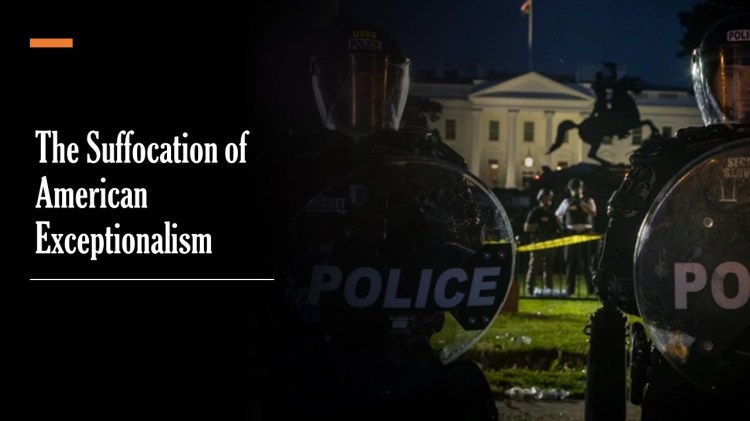
In my lifetime, I have never seen an American President behave as disgracefully, destructively, and counterproductively against the interests of the United States and our liberal democratic order as the current occupant of the White House.
The decline of American world dominance, which began domestically and internationally post-World War II, has accelerated over the years. This global shift started in the late 1990s and was further propelled by George W. Bush’s war on terror and the Iraq war.
Today, we stand at a critical juncture in global thought and decision-making. The world is undergoing a transition influenced by the United States’ shift from multilateralism to isolationism and the erosion of democratic values. This shift signals the end of an era of American exceptionalism and its social, economic, and international supremacy. Our current “rule-based order” is gradually being replaced by a more “transaction-based order,” dominated by various regional and global players.
The election of Donald Trump has significantly set humanity back in several areas, including climate change, public health, nuclear threats, equality, racism, and multilateralism. Trump has revealed himself as an erratic leader devoid of legal, moral, or ethical standards, a populist who has rekindled the flames of nationalism, hatred, racism, and bigotry. He has unearthed and amplified the evil that was long hidden beneath the shiny surface of American society, a society currently out of balance.
On the positive side, this moment presents an opportunity to rediscover, reinvent, and reposition the country. It is a chance to correct imbalances and make long-overdue massive investments in human capital, infrastructure, and good governance.
America stands at a crossroads today. The foundations of the country are jeopardized by the lawlessness of the Trump administration. The upcoming election will determine the country’s future path: either continuing down a spiral of chaos, crony capitalism, lawlessness, isolation, and authoritarianism under Trump, or following Joe Biden towards responsible leadership, the restoration of law and order, and multilateralism.
This raises the question: When we survive Trump—and we will—where do the US and the world start? It is clear that since 2017, our world has moved on and will never return to its original unipolar state. It has become, and will remain, multipolar. As Oliver Wendell Holmes Sr. once said, “One’s mind, once stretched by a new idea, never regains its original dimensions.”
_._
During the last seventy years, American exceptionalism has often positively influenced the world. The USA has long been the leading power among free nations, instrumental in creating international organizations like the UN, NATO, IMF, and the World Bank. Figures such as Averell Harriman, Dean Acheson, George Kennan, Robert Lovett, John McCloy, and Charles Bohlen, highlighted in Walter Isaacson and Evan Thomas’s book “The Wise Men: Six Friends and the World They Made,” made significant contributions to post-WWII US foreign policy and America’s status as a world power. During this period, the US was committed to freedom and liberal values.
International relationships were based on laws, such as those defined by the 1975 Helsinki Final Act and the post-Cold War settlement outlined in the 1990 Paris Charter for a New Europe. There were fundamental differences between the main powers—China, Europe, Russia, and the USA. The European Union and the USA were founded on values like human dignity, freedom, democracy, equality, the rule of law, and respect for human rights. In contrast, Russia and China modelled authoritarian governance, where the state’s interests supersede those of the individual.
Both authoritarian models share a disdain for Western liberal democracy, which they aim to undermine. These sentiments are also evident in the Arab world, where countries like Saudi Arabia and the UAE are reorienting away from the liberal West towards the authoritarian powers of Russia and China.
The rise of global nationalism and authoritarianism has been notably fueled by the election of Donald Trump, a national populist who has given new life to the fires of nationalism, hatred, racism, and bigotry. The saying attributed to Abraham Lincoln, “America will never be destroyed from the outside. If we falter and lose our freedoms, it will be because we destroyed ourselves,” is becoming a reality. The Trump-McConnell-Barr triumvirate is attacking the presidency, democracy, the legitimacy of institutions, the rule of law, and human dignity with unprecedented viciousness.
Donald Trump, a figure known for his con-man persona, has a long history of legal and ethical transgressions. His business career is marked by involvement in approximately 3,500 lawsuits, multiple settlements, and six bankruptcies. Today, deficits are soaring, unemployment rates are approaching Depression-era highs, and Trump’s leadership failures during the COVID-19 crisis have resulted in a massive loss of life. Yet, Trump continues to play golf, shirk responsibility, and steer the United States towards what could be his largest bankruptcy.
He is supported by individuals who seem intellectually incapable of discussing or understanding the merits of ideas or policies, preferring simplistic explanations and a figure to believe in. This group has termed the “elites” as their enemy, following Trump’s lead.
Life is multifaceted, as is human nature. However, Trump’s election in 2016 was driven by nationalism, racism, and falsehoods, raising questions about the electorate’s wisdom. What kind of America do people wish to live in and want their children to grow up in? Is it an America that bans travellers from select Muslim countries, builds a wall on the Mexican border, and detains children in camps? Is it a country that supports autocrats, ignores climate change, fails to act during a health crisis, and considers 100,000 coronavirus deaths a success?

These actions evoke memories of the McCarthy era’s shameful inhumanity or the internment of Japanese Americans during World War II. Ignoring history’s lessons is perilous.
The factors leading to Trump’s election are rooted in societal vulnerabilities and polarization, exacerbated by technological advancements, AI, and educational issues. The US suffers from a high level of functional illiteracy, around 15%, contributing to a dysfunctional Congress. While Russian meddling played a marginal role, as Stephen Kotkin pointed out, the real issue lies in America’s own failings. States will meddle in each other’s affairs unless stopped and punished, as the US has done worldwide.
In Congress, money and influence negatively impact the culture, a long-standing issue. The current dysfunction is a direct result of the climate created by figures like Pat Buchanan and Newt Gingrich, compounded by a vocal Tea Party minority. The resulting gridlock signifies total human failure. Returning to centrist positions and balanced budgets is crucial, allowing elected officials to correct the dysfunction they created.
Trump’s “America First” policy has suffocated American Exceptionalism. The US has reverted to a Hobbesian state, reminiscent of the Bush administration. Today, the protection of our free liberal society, human rights, and international law has been replaced with racism, xenophobia, nationalism, isolationism, and falsehoods—hallmarks of this administration.
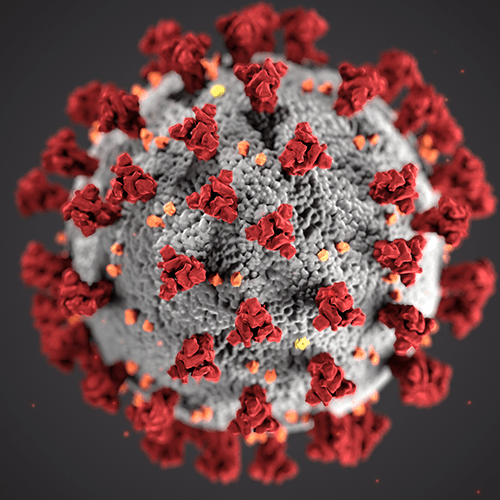
Instead of leading the world and collaborating to face the global health threat, the Trump administration ignored the danger, responding inadequately at the cost of trillions of dollars and thousands of preventable deaths. The WHO’s early warnings were heeded by Germany, which minimized victims with typical German thoroughness, developing a coronavirus detection assay as early as January 16.
In contrast, Trump chose disengagement, antagonism, and competition with China. Congressional Republicans leveraged the crisis to support Trump in finding a new villain and decoupling from China, ignoring the dangers of increasing tensions over Hong Kong, Taiwan, or the South China Sea. Daily coronavirus briefings turned into campaign events, where Trump contradicted experts, spread misinformation, and argued with journalists, displaying a toddler’s temper tantrums and mental health issues that damage America’s global standing.
Trump’s blame-game with China, calling the pandemic the “Wuhan virus,” is part of his 2020 election strategy, reflecting his obsession with trade imbalances and neo-isolationist impulses. This strategy is dangerous, shortsighted, and historically ignorant, given the long history of pandemics since 420 BC: plague, typhus, smallpox, cholera, AIDS, SARS, Ebola, to name but a few.
The Trump administration systematically undermines scientific research, expertise, and data during an epidemic when science should lead the way. Trump and his enablers frantically blame others, like China or the WHO, for their failures. Defunding the WHO is strategically unwise, as the organization addressed the coronavirus early, and nothing prevented Trump from recognizing the dangers and acting in January 2020.
This blame strategy shows weakness and strengthens China’s rise to power.The Trump administration systematically undermines scientific research, expertise, and data during an epidemic when science should lead the way. Trump and his enablers frantically blame others, like China or the WHO, for their failures. Defunding the WHO is strategically unwise, as the organization addressed the coronavirus early, and nothing prevented Trump from recognizing the dangers and acting in January 2020. This blame strategy shows weakness and strengthens China’s rise to power.
Today, science is under attack. Facts, morality, and truth are the main casualties of the societal disaster unleashed by the Trump kleptocracy. In a thousand days, Trump has destroyed what his predecessors built over seventy years, a legacy a new President will have to restore.
In the Trump transactional world, communication with autocrats and dictators is favoured over allies, causing allies to distance themselves from the US.
The murder of Khashoggi by the Saudi regime highlighted the administration’s disregard for human rights. Despite Russian attacks on American and European democracies, Trump’s administration has removed the defence of free and liberal society, human rights, and international law from the agenda.
Trump has shown himself as a useful tool to Russia, given his kleptocratic interests. He has gradually submitted to Vladimir Putin’s demands. While Russian contributions to Trump’s election success were minimal and attacks on American democracy were not entirely successful, there is some disappointment in Russia over unmet expectations. However, Russia continues to look to Trump’s re-election to further its interests.
With the narcissistic, autocratic Trump in the White House, the U.S. faced a leader who sought absolute power through internal and external destabilization, undermining institutions, the judiciary, the free press, and freedom of speech. This playbook is alarmingly familiar from historical precedents. The media, a pillar of democracy, were under relentless attack, with attempts to regulate platforms critical of the “supreme leader.” This culture of nihilism opens the door to fascism, a perilous ideology against which the U.S., like Germany in the 1930s, is not immune.

Yet, Trump’s impeachment marked a significant blemish on his presidency, a stain that time will not erase. His administration continued to validate the adage: “the fish rots from the head down.” Integrity within the Republican Party deteriorated, exacerbated by Trump’s nomination. Historically, the GOP stood for free trade, balanced budgets, and interventionist foreign policies. Today, it endorses protectionism, nationalism, and has abandoned common values such as respect, integrity, and truth.
The Republican Party’s decay began well before Trump’s nomination, rooted in spineless politicians lacking virtue and moral compass, devoid of integrity and self-respect. This malignancy started with Nixon and burgeoned under the watchful eye of a Congress lacking integrity. It has now grown into a full-blown cancer.
Parallels between Trump and Nazi Germany are stark. The GOP and Senate Majority Leader McConnell resemble the 1932 Franz von Papen conservatives, who mistakenly believed they could control Hitler. Their and the world’s regret over this miscalculation is a historical lesson being ignored today.
In the 1930s, Germany escalated oppression, demonization, discrimination, and isolation of vulnerable communities—a trajectory echoed in Trump’s America. He endorses police brutality, demonizes those who differ, strips people of their families, jobs, or livelihood, and attacks the courts, the free press, and the media, asserting his belief that he is above the law.
Future historians will harshly critique this era. They will see how America’s soul was corrupted by MAGA policies, comparing this period to the isolationism of the 1920s. High tariffs, increasing income disparity, concentration of wealth at the top, and restrictive immigration policies echoed the past failures, rendering the country unprepared for crises like the Great Depression.
The rise of fascism in the 1930s was initially ignored, yet found support in the U.S., evidenced by rallies like those of the American Bund in Madison Square Garden. In 1939, Jewish refugees aboard the St. Louis were refused entry in Miami and sent back. Angela Merkel’s words resonate: “When those who survived WWII have passed away, we will know if we have learned from history.”
Trump has shaped his government in his own image, prioritizing personal over national interests. His brand of populism has severe international repercussions, as the coronavirus pandemic has shown. A slower-moving but equally catastrophic issue, climate change, is unfolding. Since 2017, the geopolitical balance has been negatively impacted by Trump’s failures, from Paris to Jerusalem, Iran, North Korea, and China. His reckless tariffs have created a void filled by China and Russia.
Europe must acknowledge that the seventy years of trust and cooperation with the U.S. are now over. German Foreign Minister Heiko Maas remarked on June 13th, 2018: “The world order that we once knew and were accustomed to no longer exists. Old pillars of reliability are crumbling under the weight of new crises. Alliances dating back decades are being challenged in the time it takes to write a tweet.”
The valid question for Europe today is whether trans-Atlantic cooperation on economic, foreign, and policy matters can persist after being suffocated by Trump. However, the Atlantic divide did not start with Trump; it began when George W. Bush pivoted from Western to New Europe, due to criticism of his ill-advised Iraq venture.
Bush’s assault on the International Criminal Court’s jurisdiction and the rejection of climate change treaties (Kyoto), withdrawal from the ABM treaty, and unconditional support for Israel further strained U.S.-Europe relations. These actions eroded U.S. moral authority and global leadership, contributing to the decline of U.S. hegemony, further influenced by China’s rise.
The EU-U.S. relationship has always been fraught with disagreements. Since the 1950s, Britain and France’s development of nuclear weapons, France’s departure from NATO military command in 1966, and West Germany’s détente with East Germany in the 1970s, all sparked divisions. Events in the Middle East (Iraq, Iran, Israel) further complicated the alliance.
Despite differences with the Bush administration in the early 2000s, the Alliance survived due to mutual respect and trust. Barack Obama, popular in Europe and seen as intelligent and empathetic, nonetheless strained relations by pivoting from Europe to Asia and pursuing a reset with Russia while cancelling missile defence systems in new Europe. His weaknesses in Libya, Syria, and Ukraine, and “fee good” sanctions against Russia, were not impressive and rebalanced Russia-China relations.
The suffocation of American exceptionalism under Trump returned the U.S. to a Hobbesian jungle, abandoning protection of a free liberal society, human rights, and international law. Instead of global leadership, the administration embraced racism, xenophobia, nationalism, isolationism, and falsehoods. The inadequacy of the Trump administration’s response to the coronavirus pandemic cost trillions of dollars and thousands of preventable deaths.
Trump’s administration systematically downplayed scientific research, expertise, and data amidst a pandemic, when science should have been leading public health efforts. Defunding the WHO was strategically unwise, as early warnings were ignored, revealing weakness and strengthening China’s rise.
Today, science is under attack, and facts, morality, and truth are casualties of the Trump kleptocracy. In over a thousand days, Trump managed to destroy what his predecessors built over 70 years, leaving a new president the task of restoration. In Trump’s transactional world, autocrats and tyrants are favoured over allies, distancing the U.S. from its traditional partners.
The murder of Khashoggi by Crown Prince Mohammed bin Salman’s regime underscored the disregard for human rights under Trump. Despite Russian attacks on American and European democracies, Trump has shown himself to be a useful tool for Russia, gradually submitting to Putin’s demands. While Russian interference in the 2016 election was minimal, their disappointment in Trump’s accomplishments is evident. However, Russia looks to Trump’s re-election to further its interests.
The Erosion of Trans-Atlantic Trust Under Trump
Today, under Trump, there is a profound erosion of trust and respect, critically damaging trans-Atlantic cooperation that has underpinned stability and prosperity for over 70 years. Trump’s nationalism, protectionism, and populism have hollowed out U.S. foreign policy to an unprecedented degree.
With Trump in power, the U.S. has transformed into a security threat and adversary to Europe. His actions resemble a protection racket, using the U.S. military to force trade concessions from Europe. The U.S.’s commitment to international systems of rules, norms, and values, and the value of U.S. security assurances, are now questionable. The recent U.S. withdrawal from Iraq, leaving the Kurds to face ethnic cleansing by Turkey, exemplifies this betrayal.
Since taking office in 2017, Trump has withdrawn from treaties, insulted allies, undermined multilateral alliances like the G7, WHO, and NATO, and chosen confrontation over cooperation. His sanctions, embargoes, and boycotts targeting China, Iran, and Europe have been globally divisive.
The damage to U.S. credibility, reliability, and reputation under Trump may be permanent, despite possible future repairs. German Chancellor Angela Merkel’s refusal to attend the June G7 meeting highlights deep disagreements over NATO, the Nord Stream 2 gas pipeline, the WHO, climate change, relations with China, and the invitation extended to Vladimir Putin.
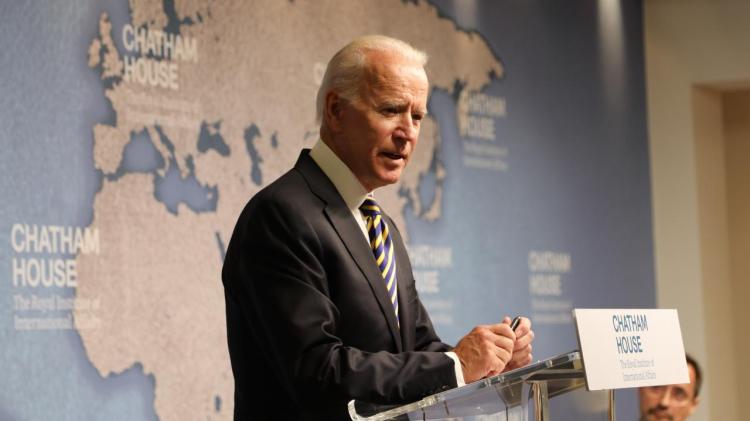
A Biden presidency would be a welcome return to responsible leadership and restoration of law and order, essential for a functioning democracy. Joe Biden represents a return to normalcy and the potential to address societal ills and repair America’s damaged reputation as a trustworthy international leader and partner.
Re-electing Trump would be disastrous for the U.S. and the world. The 2020 Presidential election places the rule of law on the ballot. Trump is stacking the courts with sympathetic judges, preparing to postpone or void the election if it doesn’t favour him—a recipe for chaos. Senate Majority Leader McConnell and his compliant colleagues enable this institutional vandalism, as George F. Will highlighted in his Washington Post article, “Trump must be removed. So must his congressional enablers.”
The killing of George Floyd, capping years of fear and inj ustice, has ignited societal tensions. Trump fuels these fires, preparing to campaign on “law-and-order” as Nixon did in 1968. However, unlike Nixon, Trump is the incumbent. After more than a thousand days in office, with the U.S. sliding toward illiberalism, Trump has declared war on the American people, setting up conflict between the military and civilian society. He has turned the White House into a fortress, hiding in its bunker while promoting his authoritarian credo, “dominate the street,” a gift to repressive regimes worldwide.
This has prompted all four living former Presidents and numerous military leaders to break their silence, denouncing Trump for dividing the nation and violating constitutional rights. In this unstable climate, American exceptionalism and the trans-Atlantic relationship are on life support. Europe must prepare for a new world and re-prioritize its strategic interests, recognizing Russia as an adversary seeking to weaken trans-Atlantic ties and draw Europe into its sphere of influence
Europe should not abandon unification, as Brexit has shown the perils of disunity. The EU needs collective responsibility, closer coordination of policies, and a move towards full political, monetary, and fiscal union. Majority voting in the Council and transnational voting in EU elections are necessary steps. French President Emmanuel Macron noted, “We need to change the rules…to be credible internationally and to our constituents.”
The EU must end its dependency on the U.S. and strive for autonomy. A multi-speed Europe and accelerated political union, including a unified defence force and increased defence budget, are essential. In summary, Trump poses a clear and present danger to American democracy, public health, the liberal order, and global peace and stability. The U.S. electorate faces a critical choice in November. For the sake of the U.S., Europe, and the world, let’s hope they choose wisely, reflecting Alexis de Tocqueville’s insight: “The greatness of America lies not in being more enlightened than any other nation, but rather in her ability to repair her faults.”
WJJH-10.6.2020
📌Blog Excerpt
American exceptionalism is suffocating under the present U.S. administration, leading to global repercussions. Donald Trump’s leadership has eroded democratic values and shifted the country towards isolationism. The upcoming election will determine America’s path: chaos under Trump or a return to responsible leadership with Joe Biden. The trans-Atlantic relationship is at risk, requiring Europe to prepare for a new world order.
 In what kind of world do we wish to live