Ukraine: A Conflict Thirty Years in the Making
✍️ Author’s Note
This post revisits the roots of the Ukraine crisis, tracing its origins to missed opportunities, NATO expansion, and the broken promises of the post-Cold War order. History did not begin in 2022—this conflict has long been in the making.
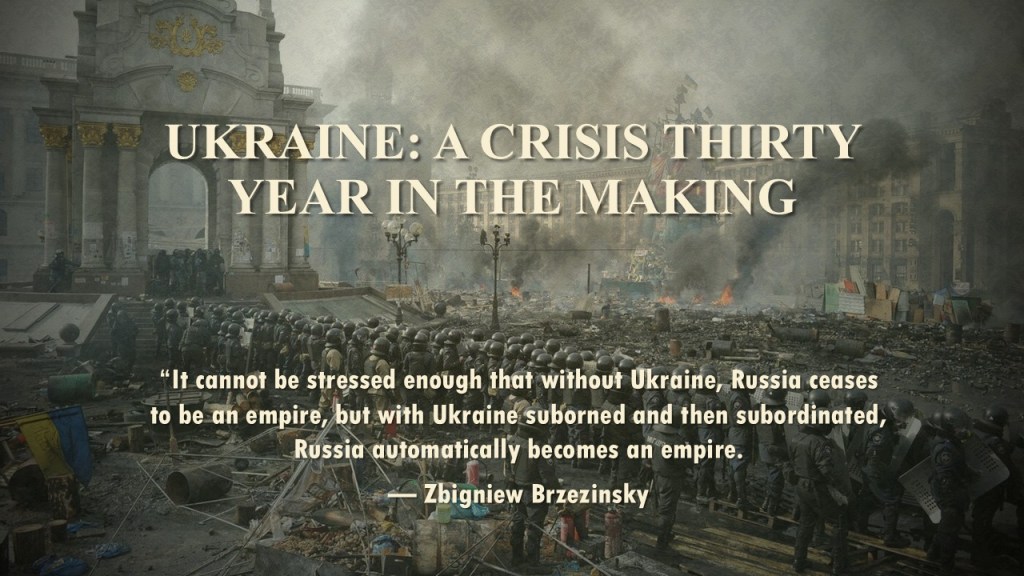
Understanding Russia and its people is a lifelong endeavour, one which requires delving into a rich tapestry of history and culture—a lifelong pursuit. My journey commenced in my dad’s Russian library, immersing myself in the works of Gogol, Tolstoy, and Turgenev, juxtaposed with Steinbeck, Hemingway, and Nevil Shute.
Undoubtedly, Russia stands as a remarkable and enigmatic nation, its civilization boasting profound depth. The influence of the Romanov dynasty’s 304-year rule, the tumultuous Russian Revolution of October 1917, and a lineage of autocratic leaders shaping the country with an iron fist—all contribute to a societal fabric steeped in authoritarianism and a tradition of rule by fear.
To comprehend Russia is to fathom its culture, history, and the global role it claims. The nation’s vulnerability, stemming from historical invasions by foreign powers like Nazi Germany, Napoleon, and the Polish-Lithuanian Commonwealth, accentuates the importance of Ukraine—a geopolitical chess piece often manipulated by hostile foreign states.
Moscow, besieged and occupied since 1238 by the Mongols, symbolizes Russia’s enduring struggle to dominate its neighbours, viewing them not as partners but as potential threats. The current events in Ukraine, while undeniably devastating and a breach of international law, demand a measured response beyond the constant moral outrage echoing through the airwaves.
The tragedy unfolding in Ukraine extends beyond its borders, affecting Russia and Europe. A resolution could have been forged by addressing concerns on both sides, averting the dire consequences of a conflict that serves no one’s interests.
Looking at the bigger picture, the conflict in Ukraine is not just about the nation itself; it reflects a global power struggle and the waning dominance of the United States. In the geopolitical chess game, Europe serves as a bridgehead, with a permanent U.S. military presence in the east as noted in Ukraine A Pawn On The Global Chessboard.
Change and decline are inherent in the ever-shifting cycle of history. The pertinent question isn’t whether the current world order will change, but what will replace it. Dismissing Vladimir Putin’s concerns about NATO’s eastward expansion since the 1990s as spurious neglects the gravity of promises made and underscores a lack of seriousness.
Verbal assurances made during the collapse of the Berlin Wall and the signing of the “Two Plus Four Treaty” in 1990 carried implications for NATO’s expansion. The failure to put these assurances in writing, coupled with subsequent events, contributed to the present crisis.
The recent events in Ukraine were neither irrational nor unforeseeable. They resulted from a culmination of factors, including NATO and EU expansion, sanctions against Russia, and Vladimir Putin’s navigation of nationalist sentiments. However, the absence of statesman-like leadership in both Russia and Ukraine exacerbated the situation, unleashing the beast of nationalism.
Nationalism, a force that fuelled conflicts in the past, is resurging, echoing the patterns of the 18th and 19th centuries in Europe. The current lack of concern about the dangers of war mirrors historical apathy, leading Europe towards a potential larger conflict.
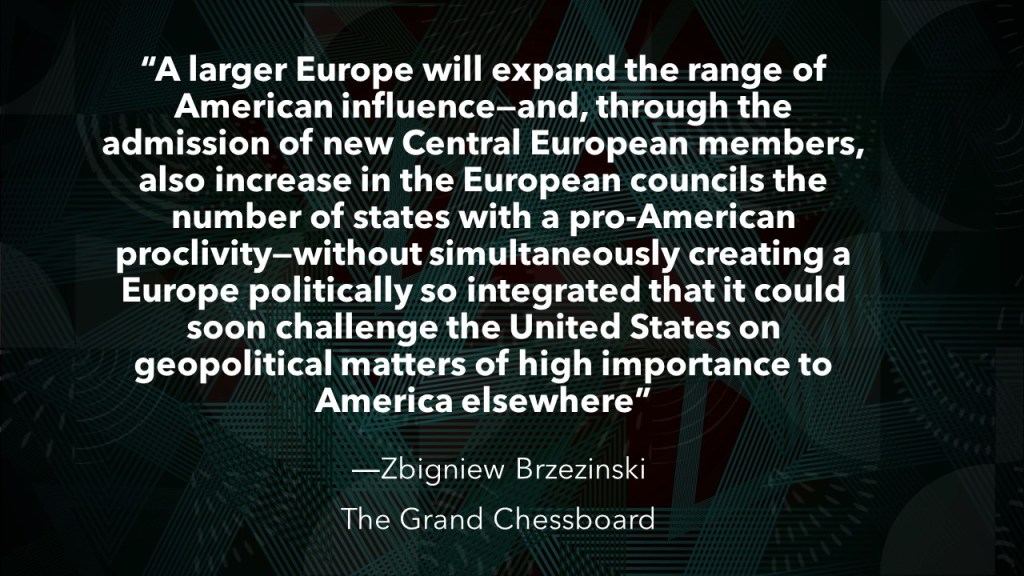
While Russia’s security concerns are valid, the unprovoked assault on Ukraine and its civilians cannot be justified. President Putin’s apprehensions about NATO do not excuse such actions. Reflecting on the changes in Europe over the past three decades, it’s clear that the rapid developments, including German unification and EU enlargement, had far-reaching consequences. Yet, the eastward expansion served American interests more than European ones, weakening the EU as noted by Zbigniew Brezinski in his excellent book “The Grand Chessboard, American Primacy And Its Geostrategic Imperatives.”
In essence, the tragic predicament Russia finds itself in is a result of its own decisions, eroding its sense of security and challenging the foundations of its strategic culture. The assault on Ukraine, however, remains an unjustifiable historic error.
The consequence of these developments is that the pursuit of a more integrated European Union was sidelined, and Europe failed to recognize the potential benefits of managing its own defence independently, gradually distancing itself both militarily and politically from the United States to strive for greater strategic independence.
Senator Joe Biden was a prominent advocate for NATO enlargement in the late 1990s and played a pivotal role in expanding NATO to include Poland, Hungary, and the Czech Republic. In 1998, he optimistically declared, “This is, in fact, the beginning of another 50 years of peace.” However, not everyone shared this view. Former U.S. Ambassador to Russia John F. Matlock Jr., testifying before the Senate Foreign Relations Committee in 1997, considered NATO expansion a blunder and misguided. George F. Kennan, the architect of America’s Cold War policy, went even further, calling NATO’s 1998 expansion “the most fateful error of American policy in the entire post-Cold War era.” The inclusion of Georgia and Ukraine into NATO, viewed by Russia as a threat to its vital national interests, was deemed reckless and deceitful by critics.
Similar conclusions are drawn in the memoirs of CIA head William J. Burns, supported by former Defence Secretary William Perry and scholar Professor John Mearsheimer, all highlighting the complex issues underlying these geopolitical decisions.
Professor Mearsheimer emphasizes that great powers, including Russia, operate in their security interests through spheres of influence. The U.S. has historical precedents like the Truman-Monroe Doctrine and the Carter Doctrine, defending its interests with force when necessary.
Acknowledging the historical context, Dr. Henry Kissinger expresses concern about a resumption of the Cold War, emphasizing the importance of avoiding conflicts based on morality and security. Yet, the current reality reflects a tragic historical trajectory.
Despite these warnings, the present situation unfolds as a tragic consequence. War is always a brutal even savage outcome, rooted in a longer historical context. This conflict, brewing for the past 30 years, could have been prevented by recognizing Russia’s core strategic interests, particularly considering its possession of thousands of nuclear weapons. The pressing question arises: What core strategic interests are at stake for the U.S. and its allies?
As highlighted in Fiona Hill’s 2015 Washington Post Op-Ed, aiding the Ukrainian military without understanding Russia’s perspective could push Putin into a regional war. Ukraine, aspiring to join NATO and the EU, failed to acknowledge the boundaries of its influence and the limits of NATO and EU enlargement.
Greater strategic understanding and clarity would have been beneficial, similar to the neutrality embraced by Belgium in the 1930s and Finland and Austria during the Cold War. This neutrality, acknowledging the limits of NATO and Russia’s spheres of influence, in line with the 1991 founding act and the 1996 constitution, could have provided a satisfactory resolution to the present difficulties.
The lesson learned from history is clear: Russia will not accept a NATO presence in Ukraine or Georgia, just as the U.S. vehemently opposed the German-Mexican alliance in 1917, Soviet missiles in Cuba in 1962, or China’s aversion to U.S. presence on its border with North Korea, and Pakistan’s resistance to an Indian foothold in Afghanistan from 1994 to 2020.
U.S. officials, including William J. Burns, the Ambassador to Russia from 2005 to 2008, acknowledged this sentiment. In a February 2008 memorandum to Condoleezza Rice, Burns emphasized that Ukraine’s entry into NATO is a significant red line for the Russian elite, extending beyond the leadership of Putin.
From the Russian perspective, allowing Ukraine, historically considered a buffer state against democracy, to secede from Russia’s sphere of influence and align with the West is not a viable option. A Western-oriented Ukraine, marked by reduced corruption, adherence to the rule of law, and integration into the West, could stand as a powerful counterexample to today’s authoritarian Russia and the broader region.
The 2008 Bucharest summit, where President George W. Bush advocated extending Membership Action Plan (MAP) to Ukraine and Georgia, resulted in opposition from some NATO members. The subsequent war between Russia and Georgia reflected the rising tensions. The overthrow of the Moscow-backed Viktor Yanukovych regime in 2014, followed by Russia’s annexation of Crimea and activities in the Donbas region, further strained relations.
The current Russian invasion of Ukraine, an unprovoked attack violating Article 2(4) of the prohibition against the use of force, lacks justification and exacerbates the situation. Drawing parallels between the motives of the U.S. in Vietnam, Afghanistan, and Iraq and Russia’s actions, it becomes apparent that both nations pursue similar strategies based on perceived threats.
The roots of the Ukraine invasion can be traced back to geopolitical shifts after the Iraq War, symbolized by Vladimir Putin’s reburial of fascist thinker Ivan Ilyin in 2005. Ilyin’s ideas now influence Russia’s narrative, depicting the European Union and the liberal order as existential threats. Putin’s 2007 Munich Conference speech hinted at a desire to restore Russia’s geopolitical relevance.
Putin’s 2011 article, “A New Integration Project for Eurasia,” announced plans to develop the Customs Union into a Eurasian Economic Union, aiming to weaken the European Union and integrate Europe into the Eurasian Union. This vision underpins Russia’s foreign interests since 2013.
Putin’s fallacy lies in choosing hostility and revenge over reconciliation and cooperation, disregarding accepted international and moral principles. The war in Ukraine, while showcasing tactical skill, reflects a strategic mistake that will leave Russia diplomatically isolated, economically crippled, and internally divided. Despite vulnerabilities, the future of Russia as a revived empire seems highly unlikely, especially in the face of a more united Western alliance committed to discouraging Russia’s antagonistic approach.
It’s crucial to note that modern states derive military power from their economic base, and in this measure, Russia emerges as a minor power, too weak to significantly impact the great power competition or pose a serious challenge to the U.S. and its NATO allies.
Considering our complex European history and the ongoing military stalemate between Russia and Ukraine, a pragmatic approach is essential when examining the three strategic alternatives:
Frozen Conflict: The current hostilities transform into a “frozen conflict,” with Russia and Ukraine engaging in incremental territory exchanges over the next few years. This could lead to intermittent flare-ups and a perpetual state of low-grade war, leaving Ukraine weakened and dependent on EU/US aid for both reconstruction and military support.
Peace Settlement: A lasting peace settlement is achieved, conceding the conquered territories (Crimea, Donbas, and potentially the land bridge) to Russia. Such an agreement would include a security arrangement allowing Ukraine to rebuild, with the distant prospect of joining the EU in the future.
Escalation and Provocation: The conflict escalates, with the U.S. lacking rhetorical discipline, calls for “regime change,” and unintentionally stumbling into a larger conflict.
Given Europe’s history rife with family disputes, regional conflicts, and world wars, a neutral Ukraine in global affairs appears to be the most favourable outcome. This would end hostilities, prevent further bloodshed and destruction, and ultimately save lives. In the words of Henry Kissinger, the goal is not absolute satisfaction but balanced dissatisfaction.
The universal truth is that all wars conclude with negotiations, either when there’s a clear winner and loser or when both sides are exhausted. The current balance of power on the battlefield indicates a prolonged stalemate, with human and economic costs outweighing the benefits.
Ukraine must assess the balance of power, the cost of the war, likely outcomes, and determine the best achievable goal at the minimum cost. The hope is for both parties to recognize the rationale for negotiations sooner rather than later.
However, reaching a negotiated settlement poses considerable challenges, including potential disagreements over interpretation and the permanency of the agreement. Calls for EU membership from President Zelensky, though passionate, may be counterproductive. The West should refrain from entering the conflict or establishing a no-fly zone to prevent a larger conflict.
Serious reflection on the desirability and challenges of Ukraine’s EU membership is crucial, especially considering the current volatile emotional climate and the unpredictable effects of massive sanctions. Expedited EU membership for a nation with a weakened regime, corrupt institutions, and dependence on external support is imprudent and not in the interest of a consolidating European Union.
While uncomfortable with the idea of Ukraine’s EU membership, which may strain EU unity, unexpected outcomes are common in geopolitics. The EU, forced to perceive Putin’s Russia as a clear and present danger, must navigate a delicate situation that challenges the balance of power in Europe—a stark contrast to Tsar Alexander I’s dream of a united Europe in the Act of the Holy Alliance of 1815.
Netherlands, WJJH-March 2022, Revised December 2023
📌Blog Excerpt
The history and geopolitical factors contributing to the conflict in Ukraine are complex. A conflict which could have been avoided in the same manner this was created, by
making Ukraine a pawn on the geopolitical chessboard for influence in the Eurasian Balkans. All wars end, the current balance of power on the battlefield indicates a prolonged stalemate, with human and economic costs outweighing the benefits. Although challenging, there is the need to look at the strategic alternatives, including a peace settlement or a frozen conflict.
Refenced links
1. Ukraine A Pawn On The Global Chessboard
2. Giving Weapons To Ukraine Could Goad Putin Into A Regional War
 In what kind of world do we wish to live
2 thoughts