A New Saga: Sleepwalking Into a Larger Conflict and Things of the Past Come Part of the Future Again
✍️ Author’s Note
This historical reflection raises the alarm about the West’s increasingly automatic alignment in proxy warfare, invoking the haunting parallels with the prelude to World War I. In geopolitics, a balanced, pragmatic approach is crucial for navigating global relations and shaping a shared future, sleepwalking is rarely innocent.
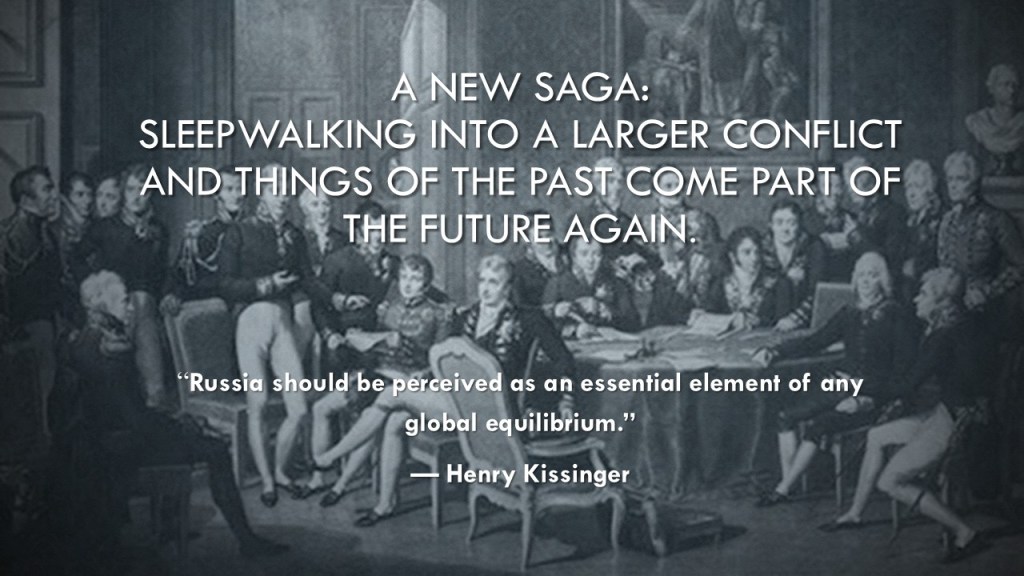
Kenneth Neal Waltz (1924-2013) once stated, “Among states, the state of nature is war… Not in the sense that war constantly occurs, but in the sense that with each state deciding for itself whether or not to use force, war may break out at any time.” This perspective highlights the constant potential for conflict in the international arena.
A century ago, Europe found itself on the precipice of World War I, described by Christopher Clark as a period of “sleepwalking” into a conflict that claimed twenty million lives. Drawing parallels between the diplomatic landscape of 1900-1914 and today, Clark suggests that our world is becoming more akin to 1914 rather than less.
Recent events, such as the war in Iraq and the Russian invasion of Crimea and Ukraine, have exposed deep-seated differences within the international community. In both Russia and the United States, rising inequality has paralleled an increase in the influence of the wealthy elite, reminiscent of historical oligarchic structures.
In Russia, the influence of the wealthy few and systemic weaknesses have persisted since the 14th century, forming an oligarchic class that remains dependent on the ruler, much like in Putin’s era. This inequality, mirrored in the United States, is causing societal divisions along significant fault lines.
From 1993 to 2017, administrations in the U.S., under Clinton, Bush, and Obama, pursued liberal hegemony. However, the policies driven by liberal logic contributed to instability in the greater Middle East region, fostering the crisis between Russia and the West.
The weaknesses of the Obama administration, marked by a shift away from Europe and a failure to uphold red lines, played a role in the Crimea and Ukraine invasion. This also hindered democratic advancements, favouring authoritarianism and bolstering China’s influence in the region.
While the annexation of Crimea and Ukraine violated international law, historical complexities underscore that borders are often shaped by annexations and are not a thing of the past. Crimea’s historical ties to Russia, dating back to the Byzantines, Tatars, Ottomans, and the savage Crimean war (1853-1856) complicate the narrative of its annexation.
As Orlando Figes writes in his excellent book “The Crimean War,” “The savage Crimean war (1853-1856) killed almost one million soldiers and civilians. It emmeshed four great empires -the British, French, Turkish and Russian in a battle over religion as well as territory; and fixed the fault lines between Russia and the West; that set in motion the conflicts that would dominate the century to come.”
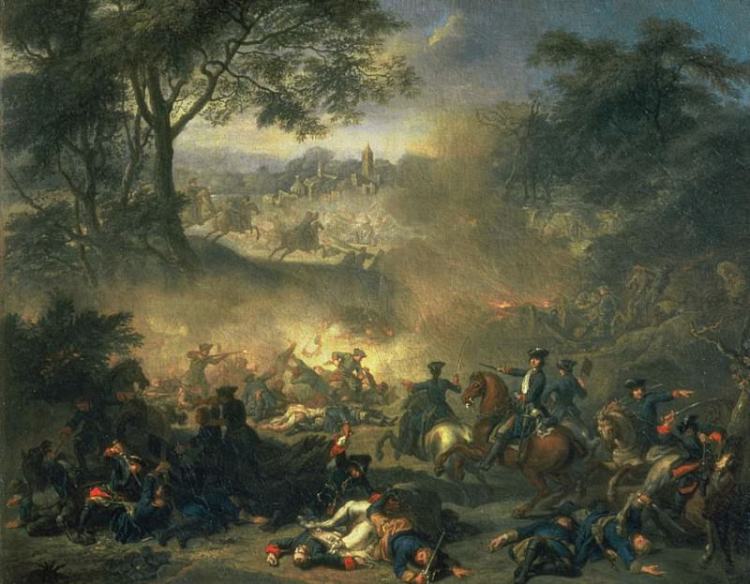
Ukraine’s integral role in Russian history, particularly the Battle of Poltava in 1709, challenges the perception of its separation from Russia. The decision by Nikita Khrushchev to transfer Crimea to Ukraine in 1954 is viewed by some as a historical mistake.
The Western part of the Ukraine is largely Catholic and speaks Ukrainian; the eastern part is largely Russian Orthodox and speak speaks mostly Russian. The lustration laws of 2014, the attempts at uprooting the cultural and institutional legacy in part of Ukraine, and to impose Ukrainian will on parts of the country have fueled separatist movements. As noted by Dr. Henry Kissinger in 2014 “treating Ukraine as part of an East-West confrontation risks scuttling any prospects for cooperation between Russia and the West – especially Russia and Europe – into a cooperative international system.”
The subsequent sanctions against Russian interests, driven by personal animosity and a lack of diplomacy, worsened the crisis. The demonization of Vladimir Putin, rather than engaging in constructive dialogue, reflects the absence of a coherent policy.
In the face of 21st-century global challenges, such as climate change, food insecurities, and resource scarcity, long-term strategic calculations should take precedence. The decline of the U.S.-led world order signals a shift towards multipolarity, requiring a re-evaluation of international relations beyond Western hegemony. Despite global condemnation of the Russian invasion, over half of the world’s population resides in countries that chose not to join the sanctions, emphasizing the need for a nuanced approach to global affairs.
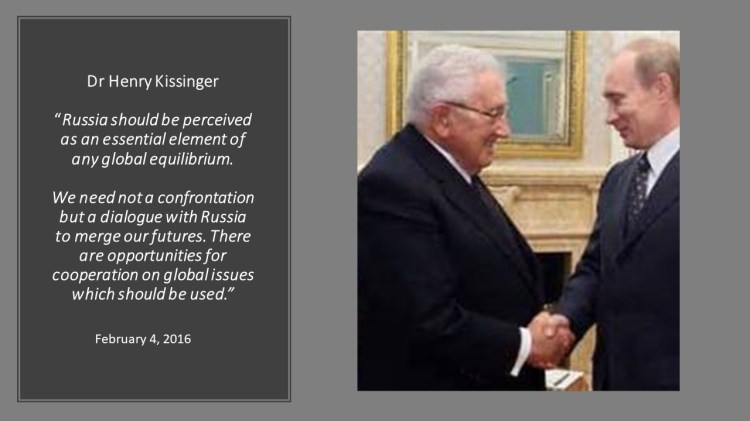
Understanding the Dynamics of U.S.-Russian Relations and the Unintended Consequences of Policies.
The West, through its sanctions aimed at subordinating Russia, has unwittingly become Vladimir Putin’s most effective ally, his useful idiot he can blame that he can use to blame for his own failures to modernize Russia. These sanctions, stimulate nationalism and unite the populace, have inadvertently isolated Russia, transforming it into an autocratic state with increased dependence on security apparatus, resulting in reduced freedom and heightened control. Orlando Figes’ book, “The Whisperers,” hints at the potential consequences of this trajectory.
Rather than integrating Russia’s 140 million people into the global economy, coercive sanctions have excluded and isolated them. This isolation has pushed Russia into a closer alliance with China, sharing common interests aimed at limiting U.S. influence and shaping a world that opposes American values.
The deepening China-Russia relationship is underpinned by economic complementarities, global alignment against American hegemony, and shared security concerns. This strategic partnership gives China newfound influence in Europe, impacting the global balance of power and increasing instability.
Understanding Russian culture and history is crucial, as Russia is unlikely to undergo significant change, not with or even after Vladimir Putin. The failure to recognize this reality and the imposition of sanctions have only strengthened the position of the revanchist and pro-war faction within Russia.
The nationalist hawks in Russia envision an inward-looking and isolated nation, the Russian world, a sovereign socioeconomic autarky detached from the West, deepening ties with China. This aligns with Putin’s vision of a self-contained technological civilization, as Putin calls this — a unification of “our own history, culture and spiritual space,” divorcing Russia from Europe and expanding its subordinate relationship with China.
Maintaining power, Putin balances various interest factions within his regime. As circumstances shift, his personal balance tilts towards the stronger group, emphasizing the importance of understanding these internal dynamics.
Over the past two decades, the U.S. has antagonized Russia, China, and Iran, displaying a shortsighted approach. Blaming Russia for the breakdown in relations, fits the one-sided American narrative of pre-eminence in the 21st century. The U.S. rejection of treaties and increased proximity of NATO troops to Moscow has heightened Russian security concerns.
Historical mistakes, similar to those after World War I, were repeated after the Cold War. A power void in Eurasia was created, leading to a deterioration of Russian-U.S. relations. The rejection of key treaties further eroded stability, resembling the perceived humiliation of Versailles that contributed to the rise of Hitler.
The U.S. would have been well served by having adopted a balanced strategy akin to Prince Clemens von Metternich at the Congress of Vienna of 1815, fostering voluntary submission to a vision of legitimacy.
The rejection of treaties, including the Anti-Ballistic Missile Treaty and the Intermediate-Range Nuclear Forces Treaty, has undermined European stability and strained the Russian-U.S. relationship.
While the hopes for European-Russian cooperation may have been idealistic, the return to old differences and the manipulation of Ukraine as a pawn on the geo-political chessboard, in the battle for U.S. influence in Eurasia have intensified the crisis. Ignoring Russian security concerns about NATO expansion has exacerbated tensions.
Attempting to detach Ukraine from Russia and pursuing NATO membership for Ukraine lacks prudence and realism. Dr Henry Kissinger’s assertion that Ukraine should act as a bridge between the West and Russia resonates, emphasizing the need for a nuanced approach to international relations to avoid further crises.
Navigating the Complexities of Global Relations and Shaping a Shared Future
Europe must recognize that it has reached the limits of eastward expansion for both NATO and the EU. Choosing consolidation would be an act of self-defence, providing Europe with greater strategic clarity. A more pragmatic approach would involve acknowledging Russia’s legitimate security concerns and finding a compromise to guarantee Ukraine’s territorial integrity. In this scenario, Ukraine could have become a neutral state, refraining from formal alliances or military cooperation with either NATO or Russia, aligning with the principles laid out in the 1991 declaration of independence and the 1996 constitution of Ukraine.
The ongoing war in Ukraine, resulting from Russia’s invasion, marks the culmination of events spanning the last thirty years. Russia’s unwarranted aggression has crossed boundaries and aimed at influencing the balance of power in Europe. However, Russia’s actual capacity to challenge the European balance of power is limited. Claims that Ukraine is of vital interest to European security or that it protects European democracy are debatable.
The European Union finds itself at an inflection point, having allowed itself to remain an American protectorate since German unification. This situation negatively impacts European sovereignty. In contrast, the U.S. has expanded its goals in Ukraine, from containment and deterrence to excluding Russia from global politics and crippling its economy. This strategy aligns with the U.S. objective of limiting China’s expansion in Europe.
The escalating rhetoric from U.S. leaders, such as President Biden’s mention of “regime change” and Defence Secretary Austin’s desire for the “total defeat of Russia,” raises concerns about the lack of room for dialogue and compromise. Such goals, combined with neo-conservatives and liberal interventionists returning to the forefront, fuelled by Russophobia, suggest a perilous path for Ukraine and the broader international community.
Cold strategic thinking is essential, as coercive sanctions with the objective of “regime change” defy logic. The U.S. aims to push Russia into chaos, but this approach lacks consideration for the consequences and potential costs to the West. The current attempts to isolate Russia contribute to a larger conflict, reminiscent of historical patterns, with unforeseen consequences.
The risks of further provoking Vladimir Putin, who may act recklessly as he becomes weaker, are considerable. The ongoing strategy of weakening or defeating Russia could lead to regime change, mirroring historical events in 1918, contributing to devastating consequences.
In a pragmatic sense, the emotional satisfaction derived from sanctions and economic warfare might outweigh the unpredictable damage to the economy, surpassing the costs of past oil crises. The current U.S. strategy of encirclement and containment risks escalating the conflict with a nuclear power, jeopardizing global security and altering the global balance of power.
Scipio Africanus’ wisdom of leaving an open side to create a “golden bridge” for possible retreat should be considered. The current approach of “submit or else” risks historical consequences and ignores the complexities of international relations.
As democracy declines and global challenges intensify, including climate change, food system disruption, and inequality, cooperation and new thinking are imperative. The emerging multipolar world demands a shared vision and a return to the concept of balance of power politics, echoing the wisdom of Prince Clemens von Metternich.
In facing the defining moment of our time, with the rise of artificial intelligence and nuclear capabilities, a re-evaluation of our values and priorities is crucial. Navigating a world filled with challenges requires cooperation, shared prosperity, and a departure from 20th-century thinking. The return to balance of power politics, coupled with a shared vision, can pave the way for shaping a more inclusive and sustainable future.
Netherlands, WJJH July 2022, Updated December 2023
📌 Blog Excerpt
Kenneth Neal Waltz’s assertion that international state of nature is war highlights the potential for conflict. Parallels drawn between pre-World War I diplomatic tensions and today’s world call for a nuanced approach to global affairs. Sanctions on Russia unintentionally strengthened its ties with China. A balanced, pragmatic approach is crucial for navigating global relations and shaping a shared future.
 In what kind of world do we wish to live