Post Mark Rutte – Adapting to the Shifting Tides: A Realist Reflection on Global Dynamics
Mark Rutte’s Legacy
The Liberal Prime Minister of the Netherlands, Mark Rutte, stands as one of Europe’s enduring leaders, deeply rooted in Dutch Atlanticism and a legacy of overseas trade spanning centuries. Over his more than 10 years in office, Rutte has steered the nation with Calvinist thriftiness, showcasing competence and political instinct. As the curtains draw on his fourth coalition government since 2010, Rutte’s tenure reflects a custodian of sound economic and financial policies, albeit lacking the aura of a serious strategist.
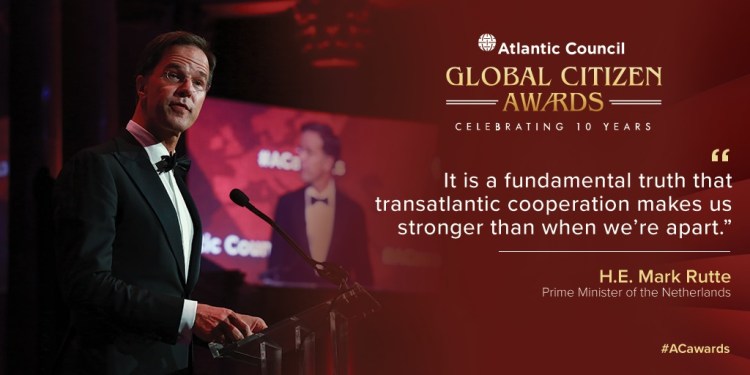
Mark Rutte, a fervent Atlanticist, champions American hegemony and the international rule-based liberal order. Rooted in historical, cultural, and economic ties, as well as shared values of individual freedom, democracy, and human rights, Rutte’s commitment to the U.S. has weathered even the tumultuous Trump Presidency. His 2019 speech at the Atlantic Council emphasized the need for stronger US-European cooperation in the face of global changes, reinforcing the enduring bond between the two continents.
While acknowledging Europe’s enduring gratitude to the U.S. for its pivotal role in WWII, Rutte emphasizes the need for friendship over subservience. However, the narrative has evolved post-Vietnam, Iraq, and Guantanamo, challenging the idealistic vision painted by Walter Isaacson and Ivan Thomas in “The Wise Men.” Rutte, undeterred, continues to align with the U.S., urging caution against perpetual involvement in American adventurism and interventions that may compromise European autonomy.
Examining the geopolitical landscape, certain suppositions come to light. The policies of President George W. Bush are viewed as contributing to the present instability and potentially marking the decline of Western dominance. China’s rise as a global power, coupled with dissatisfaction with U.S. policies, has fostered alliances, such as the convergence of strategic interests between China, Iran, and Saudi Arabia. American isolation and sanction strategies have inadvertently pushed Russia closer to China, altering the geopolitical dynamics of Eurasia.
In Conclusion: As Prime Minister Rutte approaches the end of his term, the call for European strategic autonomy becomes more pronounced. The shifting tides of global power demand a re-evaluation of alliances and a pragmatic acknowledgment of a changing world order. While Rutte remains an unwavering advocate for the Transatlantic Alliance, the evolving geopolitical landscape necessitates a careful reassessment of Europe’s position, emphasizing realism and prudence in the pursuit of strategic autonomy.
Rethinking Transatlantic Relations
In recent years, amidst divisive partisan politics in the U.S. and concerns about reliability, Europe has failed to grasp the lessons from the Bush, Obama, and Trump administrations. These administrations, at various points, veered away from traditional alliances with Europe, only to return when it served U.S. interests. Despite this, Europe continued to position itself as an American protectorate, relying on an often-unpredictable U.S. patron. Recent events, such as the abrupt withdrawal from Afghanistan and economic-motivated moves like the AUKUS submarine contract, highlight the unreliability of this friendship.
The European predicament calls for a sober assessment of its reliance on the U.S., prompting the realization that Europe must cease outsourcing its foreign and security policy. Europe’s strategic environment demands a departure from dependency on the U.S., urging the continent to take charge of its own defence’s. Relying on foreign protection is deemed imprudent, limiting sovereignty, and, in the long term, deemed delusional and irresponsible.
This shift, however, does not entail abandoning the longstanding bonds between Europe and the U.S. Instead, it calls for a re-evaluation of the terms of this relationship, seeking more equitable forms of cooperation. Embracing the maxim “cooperate when we can, be independent when we must,” Europe must emancipate itself militarily and politically from the U.S., prioritizing its interests over American concerns to avoid slipping into irrelevance.
Diverging Views within Europe
As the European Union stands at a crucial juncture, conflicting perspectives on its future emerge. French President Emmanuel Macron advocates for a move towards greater internal and external strategic autonomy, emphasizing European sovereignty. Macron warns against succumbing to pressures to align with the U.S. and urges Europe to resist involvement in the China-U.S. confrontation.
However, the “Bucharest Nine,” countries that joined the EU in 2004/2007, exhibit a pro-American stance, prioritizing national interests over European solidarity. Led by Poland, these nations oppose deepening EU integration and advocate for EU expansion as a means to shift power dynamics within the union. This, coupled with rising nationalist sentiments in Eastern Europe, poses challenges to EU values and integration efforts.
Prime Minister Mark Rutte, leader of the “Frugals,” a group of small, affluent countries, raises reservations about European strategic autonomy. Rutte, echoing a British-style obstructionist role, has been a roadblock to further European integration, aligning closely with the U.S. and resisting the pursuit of an ever-closer union. Recent collaborations with the U.S., such as restricting advanced chip equipment exports to China affecting ASML, Europe’s most valuable tech company, further solidify Rutte’s alignment with American interests.
In Conclusion: As Europe navigates a shifting global landscape, the imperative for strategic autonomy becomes more pressing. Diverging views within Europe, from Macron’s push for sovereignty to Rutte’s reservations, highlight the need for a nuanced approach. Balancing cooperation with independence, Europe must chart a course that preserves its interests, ensures self-reliance, and acknowledges the changing dynamics of the global order. The dialogue on European strategic autonomy is not just a policy consideration but a defining choice for our continent’s future relevance.
Navigating the Complexities of the Ukraine Conflict
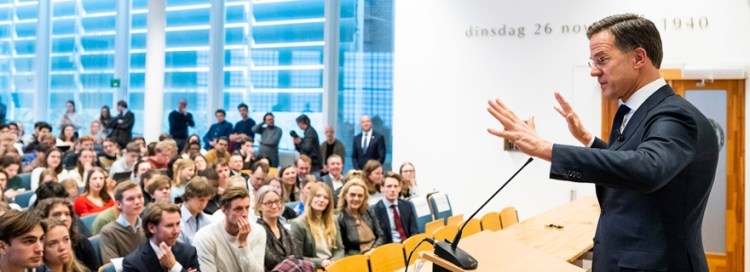
On February 21, 2023, marking the one-year anniversary of the War in Ukraine, Prime Minister Mark Rutte delivered a guest lecture at Leiden University titled ‘Democracy and Tyranny.’ In this lecture, he addressed democracy, the conflict in Ukraine, and the role of the Netherlands in the ongoing crisis.
While I concur with the sentiments expressed by the prime minister that “Ukraine deserves our support,” I advocate for a more pragmatic approach. Support should come with conditions, leading to a negotiated settlement rather than an emotional and morally charged response. The European Parliament’s impassioned reactions require a shift towards a strategic and calculated response, guided by wisdom rather than unrestrained emotions.
Considering the complexities and risks surrounding the conflict, it is imperative to embrace “realpolitik” to prevent further escalation and potential direct military conflicts with Russia. Engaging China diplomatically is suggested as a means to find peaceful solutions.
As a historian, Prime Minister Rutte may reflect on Will Durant’s words: “War is the result of a longer period in history, and each time the price goes up.” The roots of the Ukraine conflict lie in the antagonistic relationship between the U.S. and Russia, with Ukraine caught in the struggle for global hegemony.
The geopolitical landscape, as described by Zbigniew Brzezinski, emphasizes Ukraine as a critical core of European security, aligning with the U.S. strategy to counterbalance China, Iran, and Russia. However, it is crucial for Europe to reassess its imbalanced relationship with the U.S. and aim for a more interdependent partnership.
Prime Minister Rutte highlighted the Netherlands’ strong support for military and financial aid to Ukraine, emphasizing democratic values. However, caution is warranted, acknowledging the limited predictability of the future and the potential protraction of the conflict.
The conflict’s global implications, aimed at isolating and excluding Russia from the global equilibrium, have long-term consequences. Russia’s increasing dependence on China, coupled with potential isolation, may reshape the geopolitical landscape, impacting Europe’s role.
In this complex triangle involving the U.S., China, and Russia, where Ukraine becomes an existential threat to the Kremlin, Europe must carefully consider its involvement. The spectre of a war over Taiwan looms, underscoring the need for a nuanced understanding of the evolving dynamics.
Prime Minister Rutte’s two principles for the conflict—Ukraine must win and President Zelensky defines victory—raise questions about the feasibility and potential risks of further escalation. The conflict demands a step back to reflect and consider the depth and length of support for Ukraine.
The future of Ukraine, its potential NATO/EU membership, and the reconstruction efforts require a thoughtful approach. The EU’s legal footing on frozen Russian funds raises concerns, and the post-conflict scenario prompts questions about the coexistence of Europe and Russia.
In conclusion, the conflict in Ukraine challenges Europe to find common ground, acknowledging historical, cultural, and geopolitical realities. Instead of framing it as a contest, a thorough examination of values and interests on both sides should guide negotiations. The ultimate resolution lies in diplomatic negotiations, respecting the realities of the battlefield and seeking compromises for a lasting peace.
Navigating the Shifting Global Landscape
As a realist in this intricate and perilous world, I acknowledge that my perspectives diverge from the prime minister’s optimistic view of the world as an ideological battleground between the forces of liberal order and autocracy. This perpetual contest, akin to a never-ending circle, has historically resulted in conflicts like the Korean and Vietnam wars and various American proxy wars.
While advancing liberal democracy is a commendable goal, history has shown it to be a challenging endeavour with a higher likelihood of failure than success. The costs of “liberal hegemony” have been significant, marked by illegitimate interference in other states’ internal affairs, often leading to sanctions, regime change strategies, and war. John J Mearsheimer, in his book “The Great Delusion,” argues that liberal hegemony begets endless wars, advocating for a more restrained approach based on balance of power politics.
Despite the prime minister’s concerns about American society’s weaknesses, he holds onto Ronald Reagan’s vision of America as the “Shining City on the Hill.” However, in the 21st century, beneath the thin veneer of American civilization, a different reality emerges. The challenges of tribalism, populism, nationalism, and cult hysteria have eroded the image of the “Shiny City on the Hill.” The American house, once gleaming, appears to be crumbling under its own weight.
Internally, the erosion of the constitution, civil rights, voters’ rights, and economic inequality poses a threat to democracy, potentially leading to an oligarchy. George Packer’s assessment in ‘America in Crisis and Renewal’ underscores the divisions in the U.S., mirroring the broader global challenges posed by illiberal forces.
As Europe contemplates its future, it must recognize the potential changes in the U.S. political landscape, as each election could bring a new authoritarian leader. This realization necessitates a re-evaluation of the European Union’s expansion limits and a strategic choice for consolidation in the face of evolving global dynamics.
Europe must resist the pressure to choose between the American and Chinese economic spheres. The current U.S. strategy of isolating China harms European companies and industries. Europe should aim for “strategic autonomy,” diplomatically and economically engaging with China rather than following the U.S. in a confrontational approach.
The global order is in transition, moving away from Western hegemony. The recent meeting between Xi Jinping and Vladimir Putin highlights a convergence to shape a world adverse to American values. Attempts by the U.S. to divide the world into democratic and non-democratic nations exacerbate divisions and are counterproductive.
The invasion of Iraq in 2003 and to the Israeli/Palestine conflict of today expose the West’s double standards on international law, diminishing its influence in regions like Africa and Latin America. The struggle between democracy and authoritarianism is viewed by many as hypocritical, causing the West to lose ground to China and, to a lesser extent, Russia.
In conclusion, Prime Minister Mark Rutte and European Union President Ursula Von der Leyen must critically examine the global landscape. The world faces multifaceted threats, from climate disruption to pandemics and nuclear security, necessitating a departure from regional wars and ideological battles. Realpolitik and a return to the concept of “balance of power” politics become imperative in navigating these challenges and securing a shared vision for the future.
William J J Houtzager, Aka WJJH 27.12.2023
📌Blog Excerpt
Diatribe: Mark Rutte and the need to adapt to the Shifting Tides. The recognition of the limitations of liberal hegemony is a crucial aspect of understanding the complexities of international relations. Steering away from the overly optimistic or idealistic liberal worldview allows for a more realistic and nuanced approach to global affairs.
 In what kind of world do we wish to live