A Critical Examination of America’s Societal Foundations in the 21st Century.
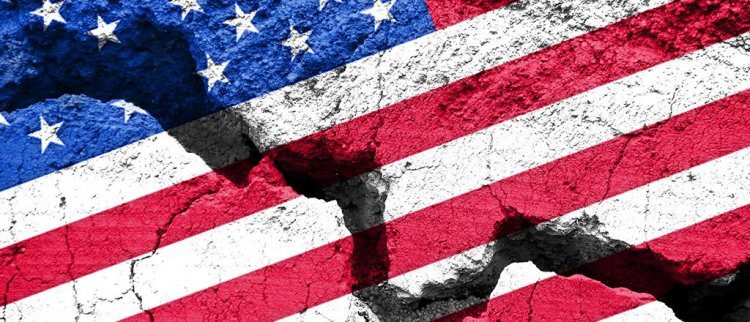
As the smallest minority, the minority of one, I have consistently harboured an adverse inclination towards the utopian ideals of socialism and collectivism. Observing America from across the Atlantic, I must acknowledge that the country still presents itself as an appealing structure from the exterior. However, the lustre projected by JFK’s 1961 “city upon a hill” speech or Ronald Reagan’s 1988 State of the Union “shiny city on the hill” has waned.
Indeed, peering beneath the thin, glossy surface and examining the foundations of America’s 21st-century civil society, it is prudent to conclude that, when viewed in the broader context, the fundamentals were inadequately constructed, and the underlying structure has been weathered by the passage of time.
This prompts the question: What defines a civilized society in the 21st century? Is it one with an advanced and humane culture, safeguarding personal freedoms, ensuring fair elections, equal treatment, and leaving positive legacies for future generations, including balanced budgets, universal healthcare, and environmental protection?
Is it a society marked by the separation of state and church, comprehensive education, gun control, the absence of capital punishment, and women’s right to choose?
The rise of Trumpism, an undeniable presence in the room, has been simmering beneath the surface for years, akin to an ox growing in size but not in wisdom. Before the dark forces emerged into the light, it became evident that the upkeep of the house America built had been neglected, failing to meet the demands of the 21st century for a civilized society.
Despite the election of President Joe Biden, it would be a mistake to assume that American Democracy has weathered the storm or that the guardrails protecting it held strong during the violent upheaval of America’s electoral institutions. Today, Trumpism lingers, silently preparing for a resurgence in the near future, potentially as early as 2024, with the ominous spectre of Democracy collapsing. A prospective second term for Trump, crucial for his own survival, would not merely reopen the “Pandora’s Box of Hate” but would also pose an imminent threat to the United States government, its institutions, national security, the constitution, the rule of law, and the very fabric of American life.
In the event of a second Trump term, fuelled by Trump’s narcissistic rage, the repercussions would extend beyond the borders of the U.S., casting a shadow over America’s security alliances and the world at large. The transatlantic relationship, a cornerstone of peace and stability since WWII, would crumble. Whatever remains of American exceptionalism, despite strategic missteps, could be tossed aside. Today, the house America built teeters under the strain of its own weight, facing the most significant threat since its independence.
In the absence of reason and responsible leadership, America appears to be mirroring the trajectory of the Roman Republic from Marius to Ceasar, where the decline was a process, not a singular event. The erosion of the constitution, civil rights, voters’ rights, and rising economic inequality pose a threat to democracy, risking a shift towards oligarchy due to the monopolization of ownership in the U.S. economy.
Political polarization, institutional weakening, the breakdown of unspoken rules, and the introduction of violence as a political tool further exacerbate the challenges. The power of the Executive grows with support from the Supreme Court, while an ineffective Congress adds to the growing concerns.
As Benjamin Disraeli wisely noted, ‘Change is inevitable. Change is constant.’ In the current Washington landscape, money and influence in politics have become ingrained in the culture, presenting a significant hurdle for the much-needed self-correction of the existing system dominated by the military-industrial complex.
Some draw parallels to the Roman Republic, where ‘a lie was not a lie if a man had the audacity to keep asserting the lie was true.’ Corruption permeates American institutions, eroding trust in the system and paving the way for authoritarianism as calls for a strong leader grow louder.
The limitations of democracy, evident in the histories of Greece and Rome, underscore the difficulty of preventing democracy from sliding into tyranny without rational debate, reason, and compromise.
Reflecting on the Roman Republic’s history, the annual voluntary handover of power for four centuries stands in stark contrast to the intractable refusal to relinquish power witnessed in recent times. The January 6th, 2021 attacks on the foundations of a free society showcased the disheartening scenes of anarchy in the U.S. Congress, tarnishing the well of democracy.
History will likely judge complicit Senators and Members of Congress harshly for letting nationalism, lies, and self-interest triumph over reason, truth, and the Constitution. The current political climate, a consequence of the polarizing atmospheres created by Pat Buchanan and Newt Gingrich, has given rise to the incompetent authoritarianism embodied by Donald J Trump.
Pat Buchanan’s 1991 use of the phrase ‘America first’ laid the groundwork for Trump’s election, blaming free-market economics and globalism for the decline of the American heartland. The slogans ‘America First’ and ‘MAGA’ (Make America Great Again) echo the 1930s when fascists declared the end of liberal democracy.
Since the 1960s, divisions, injustices, paralysis, and inequality have grown, impacting society amidst technological and industrial changes. A sizable portion of the population has been left behind or refuses to adapt to the modern organized society, creating an untenable daily struggle.
As George Packer notes in ‘Last Best Hope: America in Crisis and Renewal,’ economic inequality is tearing America apart, giving rise to four ideological camps. Smart America and Just America dominate the Democratic Party, emphasizing university education, sophistication, meritocracy, and social justice.
Free America and Real America steer the Republican Party, advocating for unrestricted individual freedom with minimal regulated capitalism and rural traditionalism. The societal tale remains hidden behind barriers of privilege, perpetuating relentless inequality and demonizing ‘the other.’
Packer highlights the infiltration of parasites at the top, benefiting the few at the expense of many, while tribalism among these ideological camps fosters mutual distrust. Integrating these tribes based on reason, logic, and transcending party lines is imperative for the nation’s progress.”
The United States grapples with massive structural societal issues spanning education, overflowing prisons in need of reform, police brutality, an inadequate social safety net, and the absence of universal healthcare. Gun violence victimizes young children, highlighting a societal priority skewed towards firearms over the well-being of the youth. Later in life, these children confront substantial student debt, fostering understandable cynicism given their uncertain prospects.
Immigration policies often overlook the long-term consequences of an increasing flow of low-educated immigrants, adding to the surplus of low-skilled workers. Simultaneously, prioritizing well-educated and high-worth immigrants is neglected. The country’s vastness and diversity, particularly in cities where the middle class is disappearing, contribute to opportunity and inequality issues with deep-rooted origins. According to Packer, addressing these problems is crucial for America to restore itself to a more egalitarian society.
Historically, upbringing has been a significant societal separator, with children needing early nurturing for academic success and later achievements. Parents play a pivotal role in stimulating their children’s talents, ensuring their participation in intellectually challenging programs. However, students from diverse backgrounds, including those with limited English language skills, are often overlooked. Inequality persists within the education system, but the rule should be to eliminate barriers hindering a child’s pursuit of opportunities to explore their talents and passions.
These disparities emerge early in life, evident in the significant difference in word exposure for children raised by educated parents versus those from single-parent households. With the U.S. having the world’s highest percentage of single parents at 25%, this trend is concerning. Children from fragmented families face challenges that may lead them towards dependency on handouts and crime, highlighting society’s inability to compensate for family defects.
The U.S. faces alarming statistics regarding workforce participation, ranking lowest among OECD countries and even preceding Italy. The data reveals that 15% of men aged 25-55 have never worked, emphasizing that educational and opportunity inequalities surpass wealth inequality. The reluctance to address the Medicare and Social Security entitlement explosion is notable and are reaching rapidly a level of insolvency. Senator Moynihan’s insight, “the issue of welfare is not what it costs, but what it costs to those who are receiving it,” remains relevant.
All these challenges unfold against the backdrop of pressing environmental issues and global warming. The Club of Rome’s warnings in 1972 went unheeded, leading to today’s urgent calls for cultural change and massive investments based on a scientific assessment of humanity’s impact on resources. The climate change emergency, now a defining problem globally, demands immediate attention, underscored by the Paris Climate Accords.
This urgency coincides with a significant increase in the national debt over the past 30 years, reaching around 33.80 trillion U.S. dollars in December 2023, projected to hit about 52 trillion U.S. dollars in 2033. The debt/GDP Ratio has grown from 34,72 % in 1980 to 122,14 % in 2023. In the absence of austerity measures, government spending control, and deficit reduction, the debt has become unsustainable. Congress habitually raises national debt limits to ensure the U.S. Treasury meets its financial obligations.
Regardless of leadership changes, the election of President Joe Biden signifies a return to basic civility, decency, science, and truth in a world transformed and cautious.
Internally, socio-economic reforms are imperative across various domains. Without addressing them, divisions, injustices, and paralysis will persist and escalate until reaching a breaking point. These challenges are further fuelled by technological developments, particularly the unexpected advancements in Artificial Intelligence (AI). These technological leaps have, in consequence, exacerbated unemployment and ushered in fundamental changes, emphasizing the pivotal role of education in future prosperity.
America, and to a lesser extent, the world, are approaching a new economic paradigm. Unless value systems are adapted and inequality is effectively addressed, the prospect of significant civil unrest or worse looms on the horizon. Fixing societal wrongs poses an open and challenging question, likely requiring massive investments and reforms in education, healthcare, infrastructure, criminal justice, immigration, and potentially considering Universal Basic Income (UBI) in the future.
UBI, while altruistic, contradicts capitalism to some extent but holds merit in improving the quality of life for the poor and long-term unemployed. However, its potential to further divide society into two parts—the able and unable—raises concerns. The financing of UBI remains an open question, and its impact on societal dynamics requires careful consideration.
Advancements in Artificial Super Intelligence (ASI) introduce risks, as machines making rational decisions may cause unforeseen disruptions and uncontrollable changes that reshape human civilization. Progress in nuclear technology and AI signals a future where machines possess decision-making capabilities. Wisdom and international cooperation, as emphasized by Henry Kissinger, are crucial to avoid an Armageddon clash with the potential to extinguish humanity.
The U.S.’s national security strategy, based on American primacy, is running out of steam. Internal priorities conflict with the costs of military overextension, and the rise of China challenges U.S. dominance. Global conflicts, such as the one in Ukraine and the economic war against Russia, underscore a divided world. The need for restraint, especially between China and the U.S., is paramount to prevent larger conflicts.
The rise of China threatens U.S. supremacy, impacting economic advantages and the role of the U.S. in international institutions. Europe should remain cautious and open to cooperation with both China and the U.S., ensuring responsible use of power. Balancing relations among the three powers requires pragmatism and stability.
In today’s interconnected world shaped by capitalism and globalization, there are undeniable advantages. While some criticize capitalism’s side effects, sacrificing it for democratic socialism isn’t the solution. Striking a balance and recalibrating capitalism to address social order is essential. Monopolistic tendencies and wealth concentration in the U.S. economy warrant scrutiny, particularly regarding institutional investors’ control.
Calls for breaking up monopolies and imposing higher taxes require careful consideration. Excessive taxation and wealth tax, despite their benefits, have failed in Europe. Capitalism does need recalibration for a fairer society, but global harmonization of taxes is crucial. Progressives advocating for increased state intervention risk sacrificing individual liberties for community solidarity, potentially leading to overextending the power of the state.
Addressing structural problems demands a fair tax system and renewed focus on tax inefficiencies. Simplifying the tax code, closing loopholes, and avoiding exceptions and subsidies would contribute to a more cohesive society. Balancing internal priorities with the costs of U.S. primacy worldwide is essential, considering the unsustainable national debt resulting from unnecessary wars and political decisions.
History shows that empires facing military overextension experience economic and military erosion. The high level of national debt needs addressing through austerity measures and reasonable tax increases. Striking a better balance between working-class interests and other societal groups is crucial. Achieving this balance requires consensus rather than a majority dictate.
In the pursuit of a fairer and balanced society, governments must ensure all members pay a fair share. This involves tax system simplification, limiting tax avoidance, and increasing cohesion. However, the role of America in the world and its conflicts has contributed to overextension and economic decline.
A way forward involves finding common ground between ideological camps. In moments of difficulty, like past challenges faced by America, rediscovering, reinventing, and repositioning the country is essential. Correcting imbalances and making overdue changes can be an opportunity for renewal, echoing Alexis de Tocqueville’s insight,
“The greatness of America lies not in being more enlightened than any other nation, but rather in her ability to repair her faults.”
William J J Houtzager, Aka WJJH 2.01.2024
Diatribe: About the structural and societal challenges facing the United States, including political polarization, economic inequality, and failing to meet 21st-century demands of a civilized society. Trumpism is a persistent threat and there is a need to re-prioritize and address education, healthcare, and economic reforms. Emphasizing the impending difficulties due to technological advancements, economic shift, climate change, national debt increase, and the need for global diplomatic stability in light of China’s rise. The ultimate hope is for the renewal of American values and societal reconstruction.
 In what kind of world do we wish to live
My religion a mash of Catholic ritual and the Taoist belief that NOW is perfect rejects the notion that the future will be a dismal place.
The data reveals that 15% of men aged 25-55 have never worked, emphasizing that educational and opportunity inequalities surpass wealth inequality. Criticism? What says “lap of luxury” better than allowing 15% of your manpower resources to sit idle?
Much to discuss here but I have to go to church lol.
LikeLiked by 1 person