Commander-in-Chief in Need of Realpolitik and Strategic Equilibrium
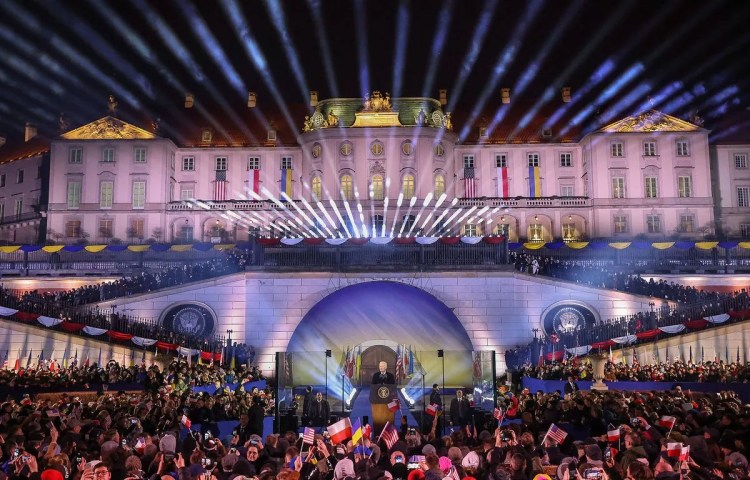
Before and during his presidency, Joe Biden has consistently expressed his commitment to liberal ideals, asserting that the ongoing struggle between democracy and autocracy defines our era. In his address at The Royal Castle in Warsaw, Poland, on March 26, 2022, President Biden declared Washington’s leadership of the so-called free world in this profound struggle:
“Between democracy and autocracy, between liberty and repression, between a rules-based order and one governed by brute force.”
President Joe Biden
While democracy has proven effective in addressing human nature and the desire for freedom, the historical struggle between freedom and tyranny remains a constant theme. Biden’s perspective and conclusions, emphasizing the inevitable triumph of democracy, seem unconvincing. Particularly, as he appears to be sleepwalking into a broader conflict, the complexities of the situation are ignored, and potential repercussions become integral to the future.
President Vladimir Putin’s assertion that the free liberal order is “absolute” echoes the sentiments of 1930s fascists, claiming the end of the era of liberal democracy. This has led to a significant strategic error on Putin’s part, leaving Russia diplomatically isolated, economically crippled, and internally divided due to the war in Ukraine.
However, I find myself sceptical and uneasy about the oversimplified framing of Biden’s argument. Insisting on ideological conformity exacerbates global divisions and overlooks the multifaceted challenges our world faces. In an age dominated by data, the internet, and artificial intelligence, solutions lie not in isolating and sanctioning nations but in shared visions and recognition of the constraints imposed by nature.
Political calls for leadership changes in Russia and China by my conservative and liberal interventionist friends seem strategically counterproductive and delusional. Contextualizing the US-China rivalry in an ideological context is misleading and hampers regional cooperation. Insisting on ideological conformity is not only futile but also invites disaster, mirroring the dubious assumption of a decisive victory in Ukraine’s war of attrition.
The conflict in Ukraine, simmering since the Cold War’s end, is a manifestation of the struggle for global hegemony. Ukraine, a pawn on the geopolitical chessboard, serves as a springboard for the deeper expansion of democracy in the Eurasian Balkans and Ukraine is envisioned as a part of the critical core of European security. General Mark Milley’s assessment that the war is unwinnable by purely military means remains relevant, and one year later after he made this, the situation persists.
In due course, as the leaderships in the Kremlin and Kyiv gain a heightened awareness of the realities of this conflict, there may be an opportunity for both parties to explore the next phase and seek a diplomatic resolution. However, achieving a diplomatic solution faces considerable challenges.
Ukraine remains steadfast in its demand for a return to the 1991 borders, a stance that appears unrealistic given the complexities of the situation. The prospect of peace or a settlement in Ukraine seems elusive, as the country is firmly convinced that no agreement with Russia will ensure lasting stability. The negotiation landscape is further complicated by Ukraine’s unwavering commitment to core demands, articulated in President Zelensky’s 10-point ‘peace formula,’ which places a strong emphasis on justice and retribution for Ukraine.
In the current era dominated by one-sided narratives and tribalism, public opinion often diverges from the harsh realities of war. This divergence adds an additional layer of complexity to the already challenging process of negotiating a settlement in Ukraine.
President Biden’s calls for regime change and the total defeat of Russia reveal a need for less Wilsonian crusaderism and a recognition of the continued relevance of Kissinger-era paradigms. The world is not a U.S. protectorate for the American war economy. The harsh realities of the conflict in Ukraine, considering the cultural and historical aspects of Russia, make the notion of winning highly improbable.
General Mark Milley’s realistic assessment of the conflict’s human toll underscores the stark contrast between war on paper and real war. Winning the war and isolating Russia after a decade-long stalemate raise questions about the meaningful outcome. Ukraine’s counteroffensive and its economic and military dependence on the West create economic and budgetary challenges for Western countries, with persistent volatility in energy, food and grain prices.
The collapse of the Russian Federation leading to great internal instability and even civil war is no longer a distant possibility, a scenario the West is ill-prepared for. The U.S. strategy of isolating Russia from China is a strategic blunder, pushing Russia further into the Chinese orbit. The Biden administration’s approach mirrors the proxy war in Afghanistan from 1979 to 1989, is a dangerous gambit risking a direct war between Russia and NATO, whereby the use of tactical nuclear weapons is no longer inconceivable.
Continuing this reckless conflict will leave Ukraine as a dysfunctional state, dependent on external support for years to come. From a global perspective, the post-war order led by the U.S. must come to terms with China’s growth, offering alternative views and financial ecosystems. China’s increasing influence in the region, reflected in the restored diplomatic ties between Iran and Saudi Arabia, demonstrates the limits of American influence.
President Biden’s confrontational stance towards China echoes the approach of former President Trump, injecting instability into the global equilibrium. The escalating costs and risks associated with an overly ideological conflict raise the spectre of imminent war. While championing human dignity, international law, and political rights, striking a delicate balance between interests and morality in international relations remains a formidable challenge.
The global landscape is divided into two halves, with China, Russia, and their allies united by common grievances and a shared motivation to limit U.S. influence in Eurasia. This underscores the pressing need for a more nuanced approach rooted in realpolitik and strategic balancing. The ongoing tension between democracies and autocracies, as well as industrialized and non-aligned nations, signals the necessity of a sophisticated international relations strategy.
European Union President Ursula von der Leyen’s inclination to maintain a cozy relationship with the U.S. rather than prioritizing a strategically independent Europe raises questions about Europe’s geopolitical influence. The changing world demands acknowledgment that the unipolar era is over, and the multipolar world is here to stay.
In the historical context of Imperial China, void of memories of territorial conquest, the nation now feels encircled within its own sphere of interest by the West, marking a new phase of ideological and geostrategic struggle. China seeks to establish a regional trade area conducive to its economy—a modern adaptation of the system that positioned China at the heart of East Asia from the fourteenth to the nineteenth century. The pursuit of hegemony serves a strategic purpose, driven by a desire to break economic and technological dependency on the West. After a “century of humiliation,” from the mid-19th to mid-20th centuries, when China was diplomatically and militarily dominated by Western colonial powers, China is eager to assert its power in Asia and beyond.
Graham Allison’s reflection in “What Xi Jinping Wants” in The Atlantic, quoting former Singapore Premier Lee Kuan Yew, emphasizes China’s transformative impact on the world balance, prompting the need for a new global equilibrium.
Despite President Biden’s confrontational policies against China, a shift towards engagement would align with Biden’s historical stance. Confrontational strategies against China only contribute to global instability, fostering unrealistic expectations regarding the outcomes of ideological conflicts. The increasing divide between democracies and autocracies, as well as industrialized and non-aligned nations, underscores the necessity for more realpolitik and strategic balancing in our rapidly changing world.
“Europe at a Crossroads: Navigating Realities in a Changing World”
As Europe stands at a crucial juncture, it must reassess its geopolitical position, especially with the U.S. undergoing potential shifts in leadership and increasing internal challenges. The once-civilized structure of American society is showing signs of strain, with growing political polarization and weakened institutions, leaving Europe vulnerable to unforeseen changes.
While the U.S.-European relationship is rooted in historical ties and shared values, it is also marked by imbalanced dependency rather than true financial interdependence. European leaders must awaken to the reality that outsourcing foreign and security policies to the U.S. may no longer serve their best interests. The need for Europe to recover its independence and redefine its strategic priorities becomes imperative, or risk becoming irrelevant.
Participating in the economic war against Russia and aligning with the U.S. in a misguided coalition against China are seen as detrimental to Europe’s interests. European Union President Ursula von der Leyen’s perspective, influenced by an American lens rather than a European one, shows a lack of pragmatism and independence. The call is for Europe to re-prioritize its strategic interests, balancing power between China and the U.S..
The European Union faces pivotal decisions, including the expansion of members, the premature EU candidate membership of Ukraine, and NATO’s potential role in the Indo-Pacific. The question arises: Are Europe’s military and economic priorities aligning with America’s? Pragmatic leaders like President Emmanuel Macron emphasize the need for Europe to make choices based on cold strategic logic rather than sentiment.
Examining international relations, President Biden’s push for an ideological contest between democracy and autocracy must be criticized for its potential to overlook the dangers to civilization. The scepticism arises from the imbalance between values and interests, questioning the realistic feasibility of a world order solely based on liberal democratic values.
The current rule-based order, with its roots in Western hegemony, is perceived as narrow and reflective of Western interests rather than global inclusivity. The shifting dynamics in the world order, marked by the rise of China and other influential nations, suggest a need for a more flexible and multifaceted system of global governance.
Henry Kissinger’s warning about the path to great-power confrontation between the U.S. and China underscores the urgency of a paradigm shift. A transition to a more modest and just world order, adaptable to the changing norms and institutions, is necessary. The call is for a global governance system that accommodates diverse interests and builds a consensus among major powers.
The ideological contest proposed by President Biden is seen as inadequate in addressing the multifaceted challenges humanity faces, from climate disruptions to infectious diseases. The plea is for a comprehensive, global, and long-term approach that transcends regional conflicts and focuses on the survival and sustenance of our global civilization.
In conclusion, a nuanced understanding of geopolitical realities, a pragmatic approach to strategic choices, and a commitment to a globally inclusive governance system are essential for Europe to navigate the complexities of our ever-changing world.
William J J Houtzager, Aka WJJH – 30.01.2024
📌Blog Excerpt
Reflections on Commander in-Chief Joe Biden and the day-to-day reality in our anarchic world, in which conflicts are an ever-present possibility when matters of vital security are perceived to be at play. A world in need of Realpolitik and Strategic Equilibrium.
 In what kind of world do we wish to live
The only way people can live by rules is if the majority want go follow them out is self interest, and are willing and able to enforce the rules by brute force against those who violate the rules.
LikeLiked by 1 person
In a hierarchic world you are right, but the river of civilization does not flow with the same speed everywhere and self interest is not defined in the same manner. This is still Henry Kissingers and Machiavelli’s world and the nature of international relations is not hierarchic but anarchic, which means when matters of national security are concerned states will react most aggressively to protect their national interests.
LikeLike