Capital Punishment: An Unjust Law, is No Law at All


Part 1. Reflection on Capital Punishment
As I write these musings, based on the question “what laws would you change,” I delve into the contentious issue of capital punishment, I do so from my European perspective, mindful that the Netherlands abolished the death penalty in 1870. The Dutch Senate’s seven-day deliberation concluded that such a punishment was both cruel and unusual, unfit for a civilized society. The act of abolishing the death penalty was a stride toward prosperity.
Augustine of Hippo, in the fourth century AD, aptly remarked, “For I think a law that is not just, is not actually a law” (“nam mihi lex esse non videtur, quae justa non fuerit”). He articulated this belief while grappling with the existence of evil, attributing it to humanity’s departure from goodness and justice. Thus, the axiom “An unjust law is no law at all” (Lex iniusta non est lex) resonates globally, highlighting the imperative for authority to be just and righteous.
The history of the death penalty traces back to the 18th Century BC, with the Code of King Hammurabi of Babylon, though murder surprisingly wasn’t among the punishable crimes. Subsequent legal codes, such as the Hittite Code and the Draconian Code of Athens, reflected a punitive culture where death was often the prescribed penalty. Even the Roman Law of the Twelve Tablets established distinctions in the application of the death penalty based on social status.
China’s early dynasties institutionalized capital punishment, exemplified by the Punishments of Lu (Lu Xing) during the Warring States period (475-221 BCE). The execution of Socrates in 399 BC underscores the historical prominence of state-sanctioned death.
Britain, with its long history of capital punishment, experienced reforms from the 19th century onward, influenced by evolving societal values. European movements against capital punishment eventually reached American shores, prompting philosophical reflections by intellectuals like Thomas Jefferson and Cesare Beccaria.
The 20th century witnessed significant strides towards abolition, with Michigan leading the charge in 1846. However, the debate persists, raising intricate legal, ethical, and societal questions about the death penalty’s place in a civilized world.
The Moral Imperative for Abolition
In a civilized society, sentencing should not only ensure public safety and justice but also prioritize rehabilitation and reintegration. Robert Badinter, the former French Minister of Justice instrumental in abolishing the death penalty in France in 1981, emphasized the centrality of human rights and freedoms to democracy’s foundation.
The death penalty stands in stark contradiction to universal values enshrined in documents like the Universal Declaration of Human Rights (UDHR) and the International Bill of Human Rights. Life, as declared by the UDHR, is an inalienable human right, rendering the death penalty incompatible with fundamental principles of human dignity.
Despite the global trend towards abolition, some nations persist in justifying capital punishment. While purported to deter crime, this assertion lacks empirical support and raises ethical concerns. Moreover, executions often extend beyond crimes of extreme gravity, encompassing drug-related offenses and charges related to terrorism.
Global Disparities and Authoritarian Practices
Disparities in the acceptance of capital punishment persist globally, with countries like China, Iran, and the United States upholding its use. Authoritarian regimes, guided by Sharia law, exhibit a callous disregard for human life, employing the death penalty as a tool of terror and control.
Secrecy shrouds the true extent of capital punishment in many retentionist countries, with China, Vietnam, and North Korea treating information about executions as state secrets. The disproportionate use of capital punishment in regions like the Middle East and North Africa underscores its political and social ramifications.
Global perspective
The increasing global consensus favours the abolition of the death penalty, aligning with the progressive development of human rights and dignity. As nations navigate the complexities surrounding capital punishment, the fundamental question persists: Can a civilized society justify the deliberate taking of human life? The answer lies not only in moral deliberation but also in the commitment to uphold the inherent dignity and rights of every individual.
Part 2. Ethical and Moral Concerns in the United States
In the United States, capital punishment is purportedly justified for its aims of deterrence, retribution, and incapacitation. However, as a form of punishment, it stands on morally dubious grounds, proving to be financially burdensome and widely condemned.
The Criminal Justice System in the U.S.
The United States’ criminal justice system operates as a revolving door, emphasizing criminalization and incarceration over rehabilitation. The efficacy of prison terms as a means of rehabilitation versus a tool for punishment or vengeance remains questionable.
Vengeance, a primitive and hollow emotion, should not dictate the nature of punishment. Capital punishment, steeped in the desire for revenge, lacks moral and ethical justification. The notion that executions provide closure is contested, as it often serves as a spectacle for those who seek retribution. However, celebrating the death of another human diminishes one’s integrity.
The imbalance within the U.S. criminal justice system is evident, particularly in its treatment of juvenile offenders and the lasting repercussions they face. Moreover, the system’s reliance on private enterprises for profit further complicates matters, as highlighted by Democratic presidential candidate Hillary Clinton during a keynote address at Columbia University. She emphasized the alarming disparity between the United States’ population share and its disproportionately high incarceration rates.
“It’s a stark fact that the United States has less than five percent of the world’s population, yet we have almost twenty-five percent of the world’s prison population.”
Hillary Clinton
Proposed Solutions and Acknowledged Challenges
According to research from The Brookings Institution, bipartisan reforms are necessary to address the systemic flaws within the criminal justice system. These reforms should be grounded in research-backed analysis and aimed at fostering a more humane and effective system.
Functional illiteracy poses a significant challenge within society and correctional institutions alike. The Department of Justice underscores the link between academic failure and delinquency, emphasizing the need for comprehensive literacy initiatives.
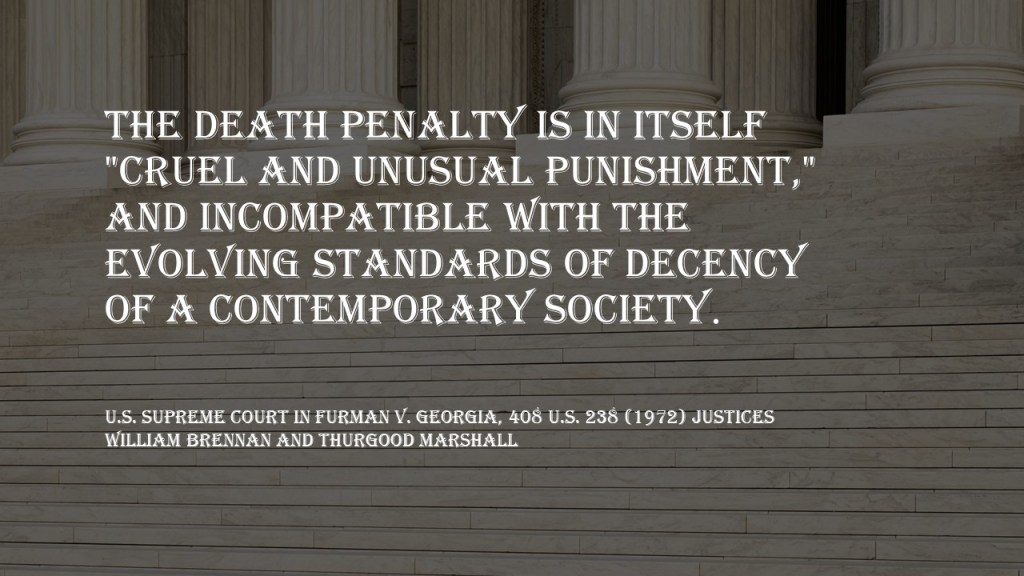
Capital punishment, as concluded by legal scholar Donald P. P. Judges of the University of Arkansas School of Law, embodies arbitrariness, excessiveness, discrimination, and dehumanization. The U.S. Supreme Court’s landmark decision in Furman v. Georgia (1972) initially deemed the death penalty unconstitutional due to its arbitrary and cruel application. However, subsequent rulings reinstated capital punishment, albeit with certain corrective measures.
The American court system’s inconsistency in standards and procedures has led to unbalanced and arbitrary executions. The lack of uniformity in the application of capital punishment, coupled with political motivations in some jury trials, undermines the system’s integrity.
Of particular concern is the case of Florida, where executions were historically based on majority jury rulings. Despite recent reforms requiring unanimous jury recommendations for death sentences, constitutional issues persist, including racial and geographic disparities, and the execution of mentally ill individuals. Assistant Public Defender Pete Mills highlights the ongoing challenges facing Florida’s death penalty system, emphasizing the need for comprehensive reform beyond unanimity requirements.
Part 3: Analysis of Sentencing and Execution Practices
Death Sentences and Executions Trends:
Since the 1970s, over 8,500 individuals have been sentenced to death in the United States. However, the number of annual death sentences has significantly declined from its peak in the mid-1990s. Conversely, the average time between sentencing and execution has increased notably over the years, demonstrating a shift towards longer appeals processes. Despite near-record lows in executions and sentences since 2015, systemic issues persist.
Innocence and Judicial Relief:
The inherent fallibility of human judgment poses a significant risk of executing innocent individuals. Since 1973, nearly 196 death-row prisoners have been exonerated, highlighting the gravity of wrongful convictions. Despite this, judicial relief remains limited, with the Supreme Court granting stays of execution in only a small fraction of cases.
Current State of Capital Punishment:
Presently, 29 American states have either abolished the death penalty or halted executions through executive action. However, 23 states, along with the federal government and military, still permit executions. Recent years have seen fewer executions and death sentences, reflecting a gradual decline in capital punishment’s prevalence.
Methods of Execution:
Lethal injection stands as the primary method of execution in the United States, accounting for 90% of all executions since 1976. However, challenges arise due to European drug companies’ refusal to supply execution drugs, leading some states to explore alternative and experimental methods. The use of nitrogen hypoxia, for example, has faced international condemnation due to concerns about its potential for causing suffering.
Concerns and Challenges:
The United Nations Special Rapporteur has condemned the use of lethal injection in the United States as a violation of human rights, citing the administration of chemicals that induce pain and suffering. Moreover, states like Georgia and Missouri have enacted laws to shield information regarding execution procedures and drug sources, raising transparency and ethical concerns.
Death Row Population and Aging Inmates:
The death row population has fluctuated over the years, with a peak in 2010 followed by a gradual decline. Aging inmates constitute a significant portion of death row prisoners, with more than a quarter aged 60 or older. Mental disabilities, Alzheimer’s, and dementia are prevalent among older inmates, raising questions about the ethical treatment of elderly prisoners facing execution.
Legal Challenges and Constitutional Issues:
The constitutionality of prolonged delays in executions has been questioned by Supreme Court justices, yet the Court has not addressed the issue comprehensively. Despite challenges, the Court has been selective in examining cases related to death row tenure, leaving many systemic issues unaddressed.
Inhumane Conditions and Legal Oversight:
Death row prisoners often endure severe isolation and limited daily activities, constituting conditions that may amount to cruel and unusual punishment. Federal judge Cormac Carney’s ruling in California underscored the arbitrary nature of the death penalty system and its failure to serve penological purposes, highlighting the urgent need for comprehensive reform.
In conclusion, the United States’ capital punishment system faces numerous ethical, legal, and humanitarian challenges that demand immediate attention and reform. From issues of innocence and due process to the humane treatment of aging inmates, addressing these concerns is paramount to upholding justice and human rights principles.
Part 4. Conclusion: Towards Abolishing Capital Punishment
Capital punishment represents a deeply contentious issue, with moral, ethical, and practical implications that demand thorough consideration. From its inherently flawed nature to its impact on victims’ families and societal values, the case against capital punishment is compelling and multifaceted.
There are five fundamental arguments against the death penalty that warrant serious reflection:
Violation of Human Rights: Capital punishment stands in direct contradiction to the Universal Declaration of Human Rights, a foundational document advocating for the dignity and worth of all individuals.
Excessive Cost and Poor Allocation of Funds: The exorbitant financial burden associated with capital punishment could be redirected towards more effective law enforcement measures and social programs aimed at crime prevention and rehabilitation.
Ineffectiveness as a Deterrent: Empirical evidence suggests that the death penalty fails as a deterrent to crime, with law enforcement professionals questioning its efficacy and prioritizing alternative approaches.
Risk of Wrongful Executions: The irrevocable nature of capital punishment means that innocent individuals may be wrongfully sentenced to death, highlighting systemic flaws within the criminal justice system.
Cruelty of Life Imprisonment: While life imprisonment without parole serves as an alternative to capital punishment, it still constitutes a form of cruel, inhuman, or degrading treatment or punishment.
A comprehensive analysis underscores that the death penalty offers no tangible benefits, fails to reduce crime rates, and denies individuals the opportunity for redemption or correction of judicial errors.
From a European perspective, staunch opposition to the death penalty reflects a commitment to universal values and human rights principles. The European Union advocates for its global abolition and conditions extradition to the United States on assurances against its imposition.
In a truly civilized society, capital punishment has no place. It represents a relic of an outdated approach to justice and stands as a stark reminder of humanity’s capacity for cruelty. As we strive towards a more just and compassionate world, the complete abolition of the death penalty emerges as an imperative step forward. Only then can we truly uphold the dignity and rights of every individual, affirming our commitment to justice and human decency.
WJJH – 12.02.2024
This diatribe is a critical examination of the death penalty, citing historical, ethical, and legal perspectives. From global trends to specific concerns within the United States, the discussion encompasses systemic flaws, human rights violations, and the ethical imperative for abolition. It underscores the inefficacy, risks, and moral contradictions associated with capital punishment, advocating for its universal abolition and a shift towards a more humane and just approach to justice.
References:
Brooking Institute: A Better Path Forward For Criminal Justice
Death Penalty Information Centre
Death Penalty Information Centre – 2023 End Year Report
 In what kind of world do we wish to live
It’s really a well-argued and well-sustained proposition! And I think it reflects the truth: that a really civilized society should not keep this barbarian punishment. I think this punishment should be reserved to God only.
LikeLiked by 1 person
Your comment is much appreciated!
LikeLiked by 1 person