Baudelaire’s Parisian Poetic Exploration
✍️Author’s Note
Baudelaire turned the streets of Paris into poetry — revealing the sacred within the profane.
This reflection celebrates his defiance of convention and his enduring insight: that beauty and decay are inseparable in the modern soul.
“You gave me your mud and I turned it into gold.”
— Charles Baudelaire
The Zen period, away from the Twilight zone, provided a perfect opportunity to revisit the darkly beautiful and unconventional poetry of Charles Baudelaire (1821-1867), a French poet, essayist, art critic, and translator, who was a foundational figure in the development of modernism.
To flâneur through Paris, especially in one’s youth, invites one to flow with its streets and follow in the footsteps of the writers, artists, philosophers, and intellectuals who once called the city their home. This experience evokes the spirit of Baudelaire, the invisible idler and the first true connoisseur of the streets of modern Paris.
Marie-Louise, an elegantly mature lady of noble lineage, was such a companion and dear friend. Together, we roamed the daytime streets of Paris, discovering treasures imbued with rich culture and history. Evenings were spent in salons engaging in stimulating conversations over dinner or supper, and nights in her Place Vendôme boudoir, where the phrase “Il n’y a que le premier pas qui coûte” was often mentioned. Baudelaire’s poem “Les Bijoux” “The Jewels,” a piece filled with fond memories and dear to my heart, was frequently quoted.
In “The Jewels,” composed of eight quatrains in regular Alexandrine lines, Charles Baudelaire portrays his mulatto mistress adorned only in her jewellery. Notably, this poem was one of the pieces responsible for the censorship and withdrawal from sale of the first edition of Les Fleurs du mal (1857; Flowers of Evil, 1909).
Baudelaire explored themes such as urban life, decadence, eroticism, and the search for meaning in a rapidly changing world—themes that resonate even in today’s evolving environment. Written during a time of great social and artistic upheaval in 19th-century France, Baudelaire challenged prevailing literary norms and embraced the complexities of the modern world.
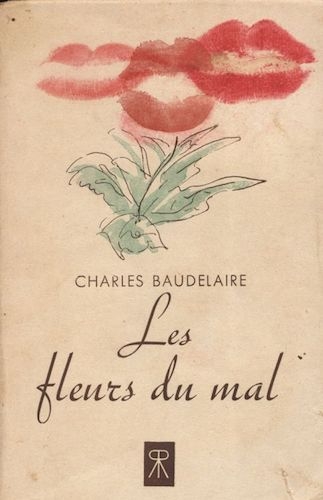
His magnum opus, Les Fleurs du mal (The Flowers of Evil), published in 1857 with an expanded edition in 1861, is a landmark achievement in French literature. This collection, which explores the beauty and horror of everyday life, caused a scandal upon its release due to its frank depictions of sexuality and its morally ambiguous themes. Baudelaire was influenced by Edgar Allan Poe, whose work he translated and championed.
Jewels – Charles Baudelaire
The darling one was naked and, knowing my wish,
Had kept only the regalia of her jewelry
Whose resonant charms can lure and vanquish
Like a Moorish, slave-girl’s in her moment of glory.
A world of dazzling stones and of precious metals
Flinging, in its quick rhythm, glints of mockery
Ravishes me into ecstasy, I love to madness
The mingling of sounds and lights in one intricacy.
Naked, then, she was to all of my worship,
Smiling in triumph from the heights of her couch
At my desire advancing, as gentle and deep
As the sea sending its waves to the warm beach.
Her eyes fixed as a tiger’s in the tamer’s trance,
Absent, unthinking, she varied her poses
With an audacity and wild innocence
That gave a strange pang to each metamorphosis.
Her long legs, her hips, shining smooth as oil,
Her arms and her thighs, undulant as a swan,
Lured my serene, clairvoyant gaze to travel
To her belly and breasts, the grapes of my vine.
With a charm as powerful as an evil angel
To trouble the calm where my soul had retreated,
They advanced slowly to dislodge it from its crystal
Rock, where its loneliness meditated.
With the hips of Antiope, the torso of a boy,
So deeply was the one form sprung into the other
It seemed as if desire had fashioned a new toy.
Her farded, fawn-brown skin was perfection to either!
— And the lamp having at last resigned itself to death,
There was nothing now but firelight in the room,
And every time a flame uttered a gasp for breath
It flushed her amber skin with the blood of its bloom.
*David Paul, Flowers of Evil (NY: New Directions, 1955)
Les Bijoux -Charles Baudelaire
La très chère était nue, et, connaissant mon coeur,
Elle n’avait gardé que ses bijoux sonores,
Dont le riche attirail lui donnait l’air vainqueur
Qu’ont dans leurs jours heureux les esclaves des Mores.
Quand il jette en dansant son bruit vif et moqueur,
Ce monde rayonnant de métal et de pierre
Me ravit en extase, et j’aime à la fureur
Les choses où le son se mêle à la lumière.
Elle était donc couchée et se laissait aimer,
Et du haut du divan elle souriait d’aise
À mon amour profond et doux comme la mer,
Qui vers elle montait comme vers sa falaise.
Les yeux fixés sur moi, comme un tigre dompté,
D’un air vague et rêveur elle essayait des poses,
Et la candeur unie à la lubricité
Donnait un charme neuf à ses métamorphoses;
Et son bras et sa jambe, et sa cuisse et ses reins,
Polis comme de l’huile, onduleux comme un cygne,
Passaient devant mes yeux clairvoyants et sereins;
Et son ventre et ses seins, ces grappes de ma vigne,
S’avançaient, plus câlins que les Anges du mal,
Pour troubler le repos où mon âme était mise,
Et pour la déranger du rocher de cristal
Où, calme et solitaire, elle s’était assise.
Je croyais voir unis par un nouveau dessin
Les hanches de l’Antiope au buste d’un imberbe,
Tant sa taille faisait ressortir son bassin.
Sur ce teint fauve et brun, le fard était superbe!
— Et la lampe s’étant résignée à mourir,
Comme le foyer seul illuminait la chambre
Chaque fois qu’il poussait un flamboyant soupir,
Il inondait de sang cette peau couleur d’ambre!
📌Blog Excerpt
Charles Baudelaire’s revolutionary verse shaped modernism through its fearless portrayal of urban life, desire, and decadence.
By confronting hypocrisy and embracing complexity, Baudelaire made art out of contradiction — turning darkness into illumination.
William J J Houtzager, Aka WJJH, June, 2024
 In what kind of world do we wish to live