Reflecting on “Netherlands First” Politics and the Shadow of WWII
As I survey the current political landscape in the Netherlands, I am reminded of a conversation I had years ago with my late father about the horrors of WWII and the collaboration of some Dutch citizens with the occupying German forces. It was an in-depth discussion that touched on the cyclical nature of history—how fascism rises, how emergency laws can be manipulated, and the perennial scapegoating of foreigners. That conversation was prompted by the early rise of Geert Wilders within the VVD (the Dutch liberal party), and the dangers of populism and nationalism. My father, a man deeply aware of history’s lessons, saw Wilders for what he was: a wolf in sheep’s clothing.
At the time, I strongly disagreed with his assertion that human nature is predictable, and that with the rise of nationalism, populist politicians would once again collaborate with the extreme right, allowing neo-fascists into government just as some collaborated with fascists during WWII. I held the optimistic belief that the Netherlands had learned from its history.
Angela Merkel once wisely remarked, “Once the generation that survived WWII is gone, we will see whether we have truly learned from history.” Today, I recognize the naivety of my disagreement with my father. The evidence is clear: the VVD, NSC, and BBB parties are now collaborating with Wilders’ nationalist and xenophobic far-right PVV, normalizing the abnormal and giving him increased influence. Particularly disturbing is the liberal leader Dilan Yeşilgöz of the VVD, whose party values I once held dear, now legitimizing Wilders’ extremist positions.
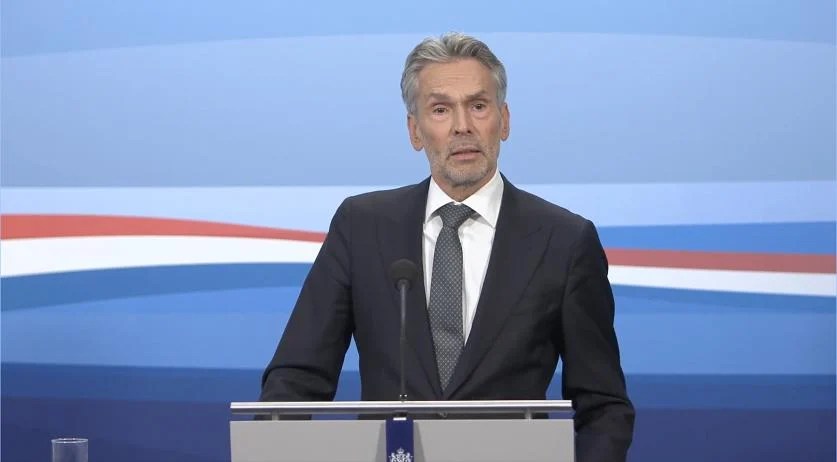
This shift is reflected in the nearly 140-page government program under Prime Minister Dick Schoof, which outlines a wide range of policies, most notably the intention to declare the asylum situation a national emergency. This declaration would allow the government to bypass Parliament and adopt a rigid, severe approach toward asylum seekers. The plan, part of a broader populist migration agenda promised during the election campaign, aims to radically overhaul the asylum system and seek an opt-out from EU migration policies. The government is set to defend this program and next year’s budget in the Tweede Kamer during the “Algemene Beschouwingen,” the critical post-Budget Day debate.
The Cabinet has confirmed its intention to declare the asylum situation an emergency, with Prime Minister Schoof and Asylum and Migration Minister Marjolein Faber leading the charge. Next week, the Netherlands will formally request an opt-out from EU migration rules—a move that requires amending European treaties, a process that can be blocked by any of the 27 EU member states.
Minister Faber, a member of the extreme right PVV, has previously referred to Islam as a “hateful ideology” and invoked the term “Umvolkung,” a concept rooted in Nazi ideology. She is pushing for radical measures to limit asylum intake, many of which are legally contentious and challenge both Dutch and European law. Among the proposed changes are the end of indefinite asylum permits, stricter tests for repeated asylum applications, and the abolition of the dispersal law. Faber’s objective is clear: make the Netherlands as unattractive as possible for asylum seekers.
However, the asylum crisis Faber seeks to declare does not align with reality. Eurostat data shows that the Netherlands received two first-time asylum applications per 1,000 inhabitants in 2023, in line with the EU average. Ten other European countries had a higher rate of asylum seekers. Despite this, Faber and the Cabinet are pushing to use emergency legislation—normally reserved for natural disasters or wartime—to sidestep parliamentary oversight and push through their agenda.
While Faber’s crisis legislation still requires approval from both the House of Representatives and the Senate, its legal foundation is weak. Prime Minister Schoof has acknowledged that declaring such a crisis requires specific conditions, but he remains confident that the Cabinet will present a well-substantiated case to the Council of State, which will ultimately determine the validity of the emergency declaration.
In conclusion, this “Netherlands First” government marks a stark departure from the legacy of former Prime Minister Mark Rutte (2010–2024), a staunch liberal and internationalist who championed individual freedom, democracy, human rights, and a strong European Union. The values he upheld are being dismantled, piece by piece. With the Schoof government, we are venturing into uncharted and perilous territory. As already noted in From Wilders to Milders, “The end of this Cabinet cannot come soon enough, for the sake of democracy, the Netherlands, and the European Union.”
WJJH 14.9.2024
📌Blog Excerpt
The current political landscape in the Netherlands reflects a shift towards nationalism and populism, with Prime Minister Dick Schoof’s government planning to declare the asylum situation a national emergency. This move, backed by extreme right party members, aims to drastically overhaul the asylum system and seeks to bypass parliamentary oversight, signaling a departure from previous liberal and internationalist values.
 In what kind of world do we wish to live