Terrorism: The Price of Humiliation
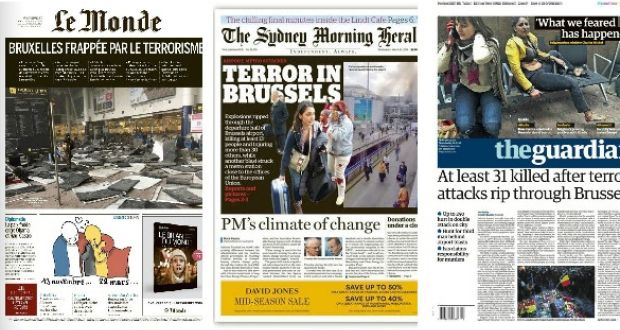
In the wake of the tragic terrorist attacks in Brussels, Istanbul, Paris, and other cities during the 2010s, it is evident that such events often provoke emotional and unrealistic reactions. Prominent Islamophobes, racists, and demagogues like Wilders, Le Pen, Petry, and Trump exploit these tragedies to further their agendas and instill fear, which risks dragging us back to the authoritarian climate of the 1930s. Like Trump, these figures operate in darkness, displaying a daily absence of legal, moral, and ethical standards.
Violence has always existed, with opposition against states, kings, princes, and governments throughout history. Terrorism, characterized by the use of violence against civilians to incite terror or panic, has ancient roots. The term “terror” originated from the French Revolution of 1793-1794, a precursor to the state terrorism seen in the totalitarian regimes of the twentieth century. Terrorism, aiming to frighten, intimidate, or provoke, is not unique to our time; it existed among the Zealots of Palestine who opposed Roman rule 2000 years ago.
Modern terrorism emerged during World War II and the subsequent wars of national liberation in the 1940s, 1950s, and 1960s. During the Cold War, terrorism became a global strategy of attrition.
Despite the complexity and emotional charge surrounding terrorism, the attacks in Brussels and Paris lead me to one conclusion: we all must face death eventually, and I refuse to let fear dominate my life. Instead, I seek to understand the underlying causes of these events.
Throughout my life, I have witnessed Algeria’s National Liberation Front gaining independence from France, which resulted in many Algerians moving to France. I have also seen the destructive suicide attacks in Israel and various terrorist movements in Europe, such as the IRA, ETA, RAF, and Red Brigades. These groups eventually ended their reigns of terror, as most do.
In 1980, I was less than one hundred meters away from the main entrance of the Oktoberfest in Munich when a right-wing extremist bomb exploded, killing twelve people and wounding more than two hundred. Although I was fortunate to survive, this experience instilled a temporary fear and a desire to understand the causes of such violence.
Over the past fifty years, 1979 stands out due to the Iranian Revolution, which confirmed the rise of radical Shiite Islamism, influencing groups like Hezbollah in Lebanon. The most enduring terrorist groups have been Islamic, using the distinctive tactic of self-martyrdom (i.e., suicide bombing), making them particularly indiscriminate and destructive.
These groups have a global reach, as evidenced by the 9/11 attacks, which were the deadliest suicide bombings in history, killing 2,996 people and injuring over 6,000. This attack produced more casualties than the 1941 Japanese attack on Pearl Harbor, which brought the United States into World War II.
Some terrorist groups aim to create national religious states, while others seek to transform the international system by eliminating the sovereignty of independent states, a structure established by the Treaty of Westphalia in 1648. While many of these groups have been defeated, declined in importance, or destroyed themselves, they often merge and renew under different identities. New terrorist groups will likely emerge unless we address the root causes of terrorism. Since the late 1970s, terrorism has predominantly originated from the larger Middle East region.
Others exploit terrorism to strip away our liberties, using it as a pretext, similar to how 9/11 led to the Patriot Act and a massive surveillance program targeting the Muslim community in America. While the U.S. war on terrorism claimed not to target Islam, but terrorism and its sponsors, this was a difficult distinction to maintain.
After 9/11, President George W. Bush, in his address at the Islamic Center of Washington, stated, “The face of terror is not the true faith of Islam. That’s not what Islam is all about. Islam is peace.” Despite my disagreements with Bush, he acted as a statesman and a president for all Americans during that speech. In his subsequent address to Congress and the American people, Bush optimistically declared that terrorism would be eliminated: “Our enemy is a radical network of terrorists and every government which supports them. Our war will not end until every terrorist group of global reach has been found, stopped, and defeated.” This assumption has proven to be overly optimistic and now belongs to the annals of history.
Although the member states of the U.N. have yet to agree on a universal definition of terrorism, and without justifying terrorism in any way—whether on grounds of religion, ideology, ethnicity, or race—the causes of terrorism and violent extremism are varied and can operate at different levels. These range from large-scale geopolitical processes to individual personal factors, leading to discontent and hatred stemming from economic, political, and cultural grievances. Scholars categorize the motivations for terrorism into psychological, ideological, and strategic. While it is challenging to pinpoint definitive causes, ideological and strategic goals undoubtedly play significant roles.
One perspective is that humiliation is a driving force behind terrorism for individuals or groups who feel marginalized, oppressed, or dehumanized. In an effort to reclaim their dignity and assert their identity, these individuals may become radicalized and resort to violent behaviour. Understanding this psychological aspect is crucial for developing effective strategies to prevent terrorism.
Looking at the recent history of the Middle East, the 1916 Sykes-Picot Agreement drew arbitrary borders across the region from the Mediterranean to the Persian frontier, remaking the Middle East. This agreement established British mandates in Palestine, Transjordan, and Iraq, and French mandates in Lebanon and Syria. The 1917 Balfour Declaration further complicated matters by supporting the establishment of a Jewish homeland in Palestine, opening a Pandora’s box of regional instability that persists today, exacerbated by Israel’s strategy for expansion.
In recent times, nationalist grievances have fuelled backlash against American sanctions and interventionism, leading to increased violence and instability. This has led to power vacuums and inadvertently contributed to the resurgence of radical Islamist ideologies and the empowerment of extremist groups like Al-Qaeda and ISIS. The humanitarian costs of sanctions and regime change strategies in countries like Afghanistan, Iran, Iraq, Libya, and Syria have been profound and enduring, including civilian casualties, displacement, and the exacerbation of existing crises. These actions have widened the gap between America and the Muslim world.
Since the early 1950s, several factors have contributed to this situation:
•Post-Colonial State-Building Challenges: Newly independent countries often lacked pre-existing civil societies, making state-led integration necessary. Ethnic, social, and religious divisions caused by colonial borders made achieving state legitimacy difficult.
•Political Factors: Many Middle Eastern and North African (MENA) countries have experienced long-term rule by authoritarian regimes, often supported by Western powers. High levels of poverty, unemployment and inequitable distribution of resources exacerbates feelings of injustice, with regimes suppressing political dissent, leading to frustration and radicalization.
•Creation of Israel in 1948: This event led to ideological shifts and movements in the Arab and Islamic world, with Marxist and anti-Western transformations laying the groundwork for modern international terrorism.
•US Energy Interests: Support for the House of Saud and Wahhabism ensured Wahhābī dominance in Saudi Arabia and Qatar. The Wahhābī movement, founded in the 18th century by Muḥammad ibn ʿAbd al-Wahhāb, has had significant influence in these regions.
•1953 CIA-Backed Coup in Iran: Aimed at protecting American and British energy interests, this coup ousted Prime Minister Mohammad Mossadegh and reinstated the pro-Western Mohammad Reza Pahlavi.
•Support for Wahhabis during the US Proxy War in Afghanistan (1979–1989): The Mujahedeen and Osama Bin Laden were employed, financed, and armed. After the Russians left Afghanistan, Bin Laden was ignored, allowing him to pursue his own designs.
•1979 Iranian Revolution: The overthrow of Mohammad Reza Shah Pahlavi resulted in Ayatollah Khomeini establishing the Islamic Republic with conservative social values, making Iran a known sponsor of state terrorism.
•Sectarian Conflict: Exploited by regional rivals Saudi Arabia and Iran, Sunni-Shia tensions threaten to fracture Iraq and Syria, and affect Syria, Iraq, Lebanon, Bahrain, and Yemen.
•US Support for Israel: Full support for Israel in the Israel/Palestine conflict has ignored Israeli war crimes and crimes against humanity, failing to achieve a two-state solution.
•US Involvement in Wars and Regime Changes: US involvement in the Afghanistan-Iraq war and regime changes in Libya and Syria has motivated terrorism.
•Role of the Islamic Diaspora: Some immigrants have participated in global terrorism, while others have returned to join groups in Islamic territories.
Without addressing the root causes of terrorism and violent extremism, these issues will remain unresolved. The influence of social media in projecting extremist propaganda and recruiting foreign fighters is well-documented. Increased inequality and isolation, coupled with the global shift to online spaces for social distancing, have strengthened terrorists’ ability to radicalize and recruit new followers, as hate speech and propaganda proliferate on social media.
In Europe, integrating immigrants from the Middle East has been complex and challenging due to cultural differences, language barriers, and socio-economic disparities. Ensuring immigrants have access to quality education, employment opportunities, and social services is essential for fostering a more inclusive and cohesive society. The concentration of immigrants without proper integration leads to poverty, isolation, and lack of education, creating fertile ground for radicalization.
American adventurism in the Middle East, supported by the UK and the EU, has been a driving force behind terrorism and violent extremism. Military interventions and occupations in the Middle East and the unresolved Palestinian question increase civic activism and constitute the main drivers of terrorism. The fight against terrorism will only be won through development, education, employment opportunities, social justice, and gender equality, not by military action or force.
Despite the terror attacks in Brussels, Paris, and other places, I continue to support our multicultural society, which has more advantages than disadvantages, and I admire and support the policies of Bundeskanzler Angela Merkel regarding refugees. She adhered to the obligations under the 1951 Refugee Convention, a United Nations treaty defining the rights of refugees and the responsibilities of nations granting asylum. Granting refugee status is both a legal and moral imperative.
In conclusion, unless we address the root causes of terrorism, we will never be free of it. As Thomas Friedman said, “It has always been my view that terrorism is not spawned by the poverty of money; it is spawned by the poverty of dignity. Humiliation is the most underestimated force in international relations and in human relations. It is when people or nations are humiliated that they really lash out and engage in extreme violence.”
Postscript:
On October 7, 2023, the terrorist organization Hamas launched a ruthless, multipronged assault on southern Israel. This act, partly aimed at undermining the Abraham Accords and any potential normalization with Saudi Arabia, involved killing hundreds and taking over two hundred hostages in an apparent bid to provoke an overwhelming Israeli response, effectively making their own Palestinian people sacrificial lambs.
The sheer brutality of Hamas’s attack defies comprehension, and the massacre of innocent civilians is indefensible—a horrific act evoking historical devastations from groups such as the Goths, Vandals, Huns, Seljuks, and Mongols.
Israel responded with airstrikes that have claimed thousands of lives, a total blockade of the Gaza Strip, and a declaration of war through the military operation “Iron Swords.” The Hamas-controlled health ministry in Gaza reports that at least 42,792 Palestinians have been killed amidst over a year of scorched-earth air and ground offensives in Gaza and Lebanon, bringing widespread devastation to these regions.
The objective set by Netanyahu’s government to “destroy Hamas” appears as unrealistic as the “total war” rhetoric and hopes for a conclusive victory. After more than 50 years of occupation and multiple wars with Hamas and other militant factions, these cycles of violence are not new. We’ve often seen the reality obscured by strategic narratives. Only through diplomatic negotiations and implementing a two-state solution can a lasting resolution be achieved.
Meanwhile, Israel faces its own domestic crisis: Netanyahu’s government, marked by the most right-wing policies in Israel’s history, is promoting legislation that appears designed to shield him from three ongoing corruption trials. Escalating violence between West Bank Palestinians and emboldened Israeli settlers has further destabilized the region, risking new cycles of bloodshed and deepening divisions.
Without a lasting resolution for the Palestinian question, this cycle of violence will only persist. President Joe Biden’s response, appearing to both support and yet not restrain Israel, highlights Western inconsistencies and perceived hypocrisy in the region. Netanyahu’s belief that escalating the war serves Israel’s interests is dangerously misguided. Turning Gaza into a desert, or extending the same to Beirut, will only further fuel the violence, while repression alone will do little to change the region’s trajectory beyond spilling more blood.
Ultimately, Israelis and Palestinians are bound by geography, living side by side in perpetuity. While Israel’s circle of international allies may shrink, this shared reality remains unchangeable, and both sides continue to bear the high price of humiliation and unending conflict.
WJJH-25.3.2016 – updated 25.10.2024
📌Blog Excerpt
After witnessing terrorist movements and tragic events in Europe, including the Oktoberfest bombing up close, I refuse to succumb to fear. Criticizing the exploitation of fear by politicians like Wilders, Netanyahu and Trump, asserting that eradicating terrorism requires addressing its root causes, such as irresponsible foreign policies and societal integration issues. Advocating for a multi-cultural society and support for refugees from Syria.
 In what kind of world do we wish to live