Echoes of Time: Music as Memory and Meaning
What is your favorite genre of music?
letters to the Prompt
The prompt asks “What is your favorite genre of Music?
Music is as old as humanity itself. Plato, the renowned Greek philosopher, encapsulated its profound impact when he said, “Music is a moral law. It gives soul to the universe, wings to the mind, flight to the imagination, and charm and gaiety to life and to everything.” But despite the simplicity of the question, answering what my favourite genre is isn’t so easy. While music is inherent to every human being, its influence and importance in our lives can be difficult to define. It’s almost as if the prompt is assuming it can think or feel, reminiscent of Drummond’s line to Brady in Inherit the Wind: “Why did God give humans the power to think—unlike a horse or a sponge?” As an atheist, I found Brady’s response, “If God wants a sponge to think, it thinks,” less than convincing!
Growing up surrounded by books, paintings, and music, I cannot imagine life without music. It adds harmony to my existence. Goethe expressed it well when he said, “A man should hear a little music, read a little poetry, and see a fine picture every day of his life, in order that worldly cares may not obliterate the sense of the beautiful which God has implanted in the human soul.” Whether God implanted music in us is open to debate, but there’s no doubt that music acts as a balm for the soul and works wonders for the human spirit.
It’s no surprise that music has played a central role in my life. My mother played the piano and violin beautifully, and my father had a deep love for books. I fondly remember the daily routine of hearing Chopin, Beethoven, Mozart, or Liszt for two hours while I did my homework before dinner. These musical moments shaped my upbringing, and the presence of classical music has remained a constant companion throughout the years I’ve travelled and lived in our global village. Now, in the winter of my life, I find myself drawn more frequently to classical music, perhaps because it connects me to my cultural heritage.
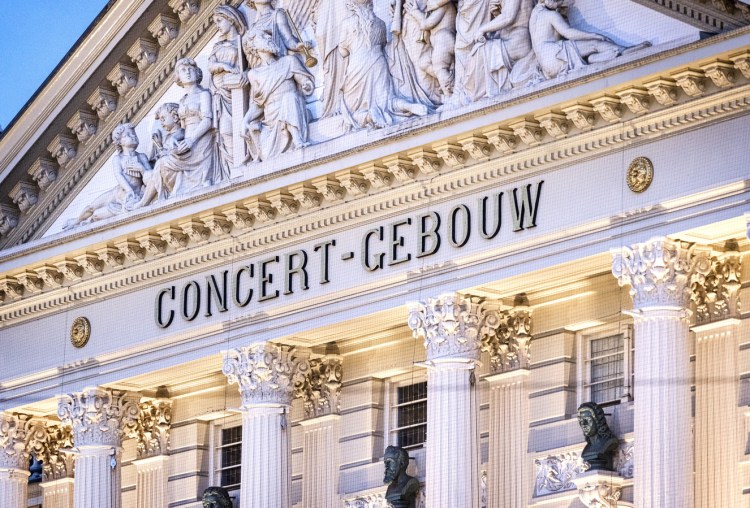
The first concert I ever attended was at the Concertgebouw in Amsterdam, where I heard the magnificent Polish-Belgian pianist Stefan Askenase perform Chopin. The Concertgebouw, opened in 1888, remains one of the finest concert halls in the world, renowned for its nearly perfect acoustics. It’s also home to the Royal Concertgebouw Orchestra, which was under the direction of Bernard Haitink for many years, the great Mahler conductor whose architectural approach to music left a lasting impression.
Growing up in the 1960s, I witnessed firsthand the transformative power of music during a volatile period of societal change. My generation was fortunate to be part of that moment in history, where music became a platform for challenging the status quo and addressing issues such as war, civil rights, apartheid, and environmental concerns. As Plato observed, “Musical innovation is full of danger to the State, for when modes of music change, the fundamental laws of the State always change with them.” Music in the 1960s was more than just entertainment; it was a force for change, reflecting the rebellious spirit of the times.
Over the years, my love for music has continued to evolve, just as my travels have taken me to many corners of the world. I’ve been fortunate to see and hear an incredible range of artists, from Leonard Cohen to Ray Charles, Udo Jürgens to Elton John, Nina Simone to Frank Sinatra, and bands like Queen and Dire Straits. These performances have all enriched my life in their own way.
Yet, at the end of the day, I often return to classical music. It provides a sense of continuity and comfort, whether as background or foreground while I read, study, or work. I’ve been fortunate to listen to many great performers in some of the world’s finest concert halls—from Amsterdam to London, Paris, Milan, New York, and beyond. I’ve experienced the brilliance of conductors like Bernard Haitink, Herbert von Karajan, and Leonard Bernstein, and witnessed the artistry of pianists such as Arthur Rubinstein, Murray Perahia, Maurizio Pollini, and Vladimir Horowitz. And, of course, there have been unforgettable voices like Dmitri Hvorostovsky, Montserrat Caballé, and Luciano Pavarotti.
So, what can I say about my favourite music? It stimulates my memory, warms my soul, and covers a broad spectrum. To paraphrase Frank Sinatra in A Man Alone, with lyrics by Rod McKuen:
“Life has been good!
I have been a rover, I have walked alone,
Hiked a hundred highways, never found a home,
Still in all, I’m happy—the reason is, you see,
Once in a while along the way, love’s been good to me.”
WJJH – 24.10.2024
📌Blog Excerpt
Musings: reflecting on the profound influence of music in life, particularly classical music, which has shaped my upbringing and provided solace. Recounting attending significant concerts, highlighting music’s power to provoke change and its essential role in human culture and personal memory.
 In what kind of world do we wish to live