Solomon’s Crooked Crown
✍️ Author’s Note
This post blends irony, history, and a touch of biblical mischief to explore the uneasy marriage of wisdom and power. Inspired by the legendary figure of Solomon — who famously asked for wisdom, but whose reign was far from unblemished — the piece asks what happens when the crown tilts under its own contradictions. Part parable, part satire, and part observation from the twilight of empire.
Jalāl ad-Dīn Muhammad Rūmī – also known as Jalāl ad-Dīn Muhammad Balkhī, Mevlânâ/Mawlānā (مولانا, “our master”), Mevlevî/Mawlawī (مولوی, “my master”) and more popularly simply as Rumi – was a 13th-century Persian poet, jurist, Islamic scholar, theologian and Sufi mystic who lived in Konya, a city of Ottoman Empire.
Rūmī : The Mystical Poet Across Time and Cultures
Solomon’s Crooked Crown is a story by Rumi centred around King Solomon, whose crown keeps slipping from his head no matter how often he straightens it. Frustrated, Solomon eventually asks the crown why it tilts. The crown replies that it must do so whenever Solomon’s power loses its foundation in compassion.
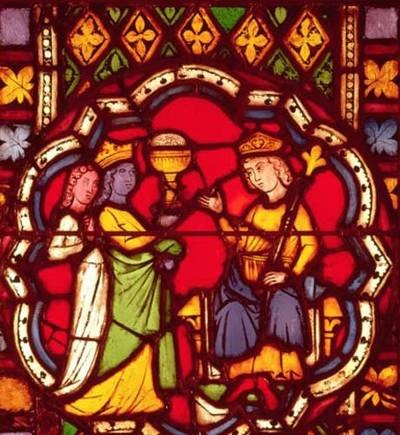
Rumi’s poem, “Solomon’s Crooked Crown,” uses this metaphor to illustrate that even the greatest rulers and wisest leaders are imperfect and subject to the challenges of life. Rumi depicts Solomon as a ruler who recognizes that his authority is not absolute, and that true wisdom lies in humility, acceptance, and alignment with divine will. The crookedness of the crown symbolizes the inherent limitations and imperfections of human life, power, and understanding. Despite his immense wisdom, Solomon accepts the fleeting nature of worldly power and strives to rule with compassion and insight.
Rumi’s insights are timeless, reminding us that true strength lies not only in empathy and understanding but also in making wise decisions that inspire trust and loyalty. His wisdom transcends historical and religious contexts, offering universal truths about leadership, self-awareness, and the human condition. By presenting Solomon as a ruler who embraces his imperfections with grace, Rumi imparts a profound lesson: the essence of true wisdom is not in being flawless, but in navigating life’s challenges with integrity, humility, and a deep connection to the divine.
Solomon’s Crooked Crown – Rumi
Solomon was busy judging others,
when it was his personal thoughts
that were disrupting the community.
His crown slid crooked on his head.
He put it straight, but the crown went
awry again. Eight times this happened.
Finally, he began to talk to his headpiece.
“Why do you keep tilting over my eyes?”
“I have to. When your power loses compassion,
I have to show you what such a condition looks like.”
Immediately Solomon recognized the truth.
He knelt and asked forgiveness.
The crown centred itself on his crown.
When something goes wrong, accuse yourself first.
Even the wisdom of Plato or Solomon
can wobble and go blind.
Listen when your crown reminds you
of what makes you cold toward others,
as you pamper the greedy energy inside.
Netherlands, WJJH-12.12.2024
📌 Blog Excerpt
Rumi’s wisdom often transcends the specifics of the historical or religious context and speaks to universal truths about leadership, self-awareness, and the human condition. Solomon’s Crooked Crown confirms this.
 In what kind of world do we wish to live