The Drums of War and the Fragility of Global Order
The drums of war echo not only in Washington—often referred to as the “city of amnesia”—but also in Moscow, Beijing, and capitals across Europe. This alarming reality is underscored by Josep Borrell Fontelles, the EU High Representative for Foreign Affairs and Security Policy, in his 2024 Window on the World: Europe in the ‘Arc of Fire’. Borrell warns that “Russia’s war of aggression against Ukraine is an existential threat to the European Union. If Vladimir Putin’s Russia were to win in Ukraine, it would inevitably pursue its imperial policy against other neighbours, particularly in Europe.” He concludes that “beyond Europe, if we fail to help Ukraine defend its sovereignty, the entire rules-based world order that we have sought to promote globally will be brought down.”
The post-World War II rules-based order—rooted in liberal ideals of human dignity, international law, and political rights—has long been a pillar of Western influence. Yet democracy, while effective in addressing humanity’s yearning for freedom, has not resolved the historical struggle between freedom and tyranny. This tension persists, as the global confrontation between democracies and autocracies reveals. However, insisting on ideological conformity rooted solely in democratic norms ignores the multifaceted challenges that define today’s world.
Questioning the Universality of the Rules-Based Order
Borrell’s argument raises critical questions about whether Europe’s balance of power is truly under threat and whether the rules-based world order serves as a global good—or simply a product of five decades of Western hegemony. In much of the world, this order is perceived as advancing Western interests at the expense of others. Borrell himself acknowledges this critique, pointing to the contrast between Europe’s firm commitment to Ukraine and its perceived passivity in addressing crises in the Middle East—a disparity often seen as a double standard.
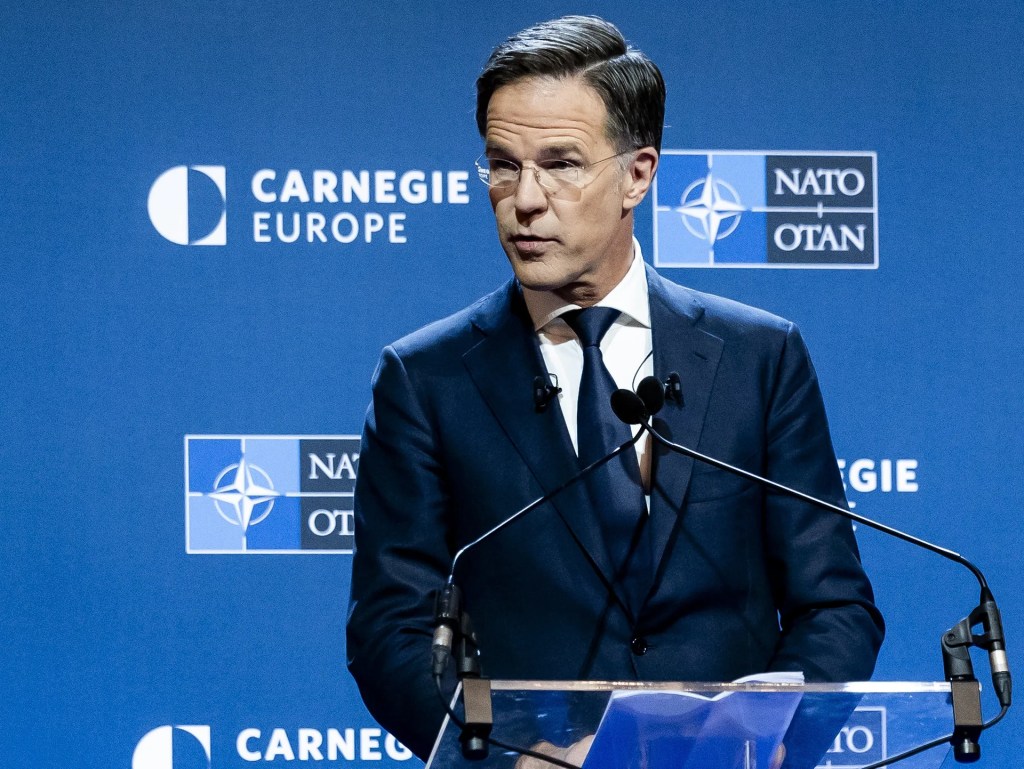
Meanwhile, NATO’s new Secretary-General, Mark Rutte, has warned Europeans to prepare mentally for the possibility of war within the next four to five years. His stark rhetoric, echoing the binary framing of liberal democracies versus authoritarian states, risks oversimplifying the complexities of geopolitics. Rutte’s assertion that “Russia, China, North Korea, and Iran are working to weaken North America and Europe” mirrors Cold War-era narratives, portraying global dynamics in zero-sum terms.
President Biden’s characterization of the global struggle as one between democracy and autocracy reinforces this dichotomy. However, it often neglects the historical contradictions within Western policies, projecting moral superiority while overlooking the nuances of nations that operate outside the liberal democratic model. This framing obscures the reality of geopolitical competition and the compromises that all states, democratic or otherwise, must make. It risks solidifying a new Cold War dynamic, dividing the world into rigid blocs and amplifying tensions at a time when global cooperation is desperately needed.
A World on the Brink of Conflict
The ongoing wars in Ukraine and Israel underscore the perils of this polarized worldview, with the South China Sea looming as a potential flashpoint for U.S.-China confrontation. In Washington, there seems to be little coherent strategy beyond framing these conflicts as part of a broader “democracy versus autocracy” narrative. A potential return of Donald Trump to the presidency could further destabilize transatlantic unity, as his transactional approach to alliances and disdain for NATO would likely weaken Europe’s security.
This moment bears unsettling similarities to the lead-up to World War I, a time of complacency, escalating rhetoric, and competing alliances. Today, the “drums of war” grow louder as leaders prioritize short-term gains over long-term stability, seemingly blind to history’s warnings about the costs of sleepwalking into disaster.
China’s Rise to Power
China’s rise to great power status is rooted not only in current economic and political realities but also in its historical experience of the “Century of Humiliation.” Regardless of its label, China’s rise represents one of the greatest capitalist ventures in history. China—the largest trading nation—has made it clear it will not emulate the democratic paths of Germany or Japan in the U.S.-led, rules-based world order. As Lee Kuan Yew wisely noted, China insists on being accepted as China, not as an honorary member of the West.
China’s ascendance is not solitary; other nations like Brazil, India, Saudi Arabia, and the United Arab Emirates are also asserting their power and seeking regional dominance, increasingly ignoring the European Union and the U.S. This shift is mirrored by a group of nations described by CIA Director William Burns as the “hedging middle,” which includes countries in Africa, Asia, and Latin America. These nations are drawn to China’s vision of multipolarity, sovereignty, and inclusivity—principles that resonate with many countries and call for modifying the workings of international institutions.
In the unjust war in Ukraine, we have failed to manage our differences and expectations, just as we have failed to modernize the United Nations. Despite the wishes of the majority of its 192 members, the veto power remains, giving the five permanent members disproportionate control. This imbalance has allowed Israel, with U.S. support, to commit war crimes and ignore numerous UN resolutions. China, advocating for change, correctly argues that the international system needs reform.
Insisting that China’s 1.4 billion people must adopt Western-style democracy and human rights—rooted in America’s “Manifest Destiny”—is a dangerous path that risks escalating tensions over China’s core interests, particularly in the South China Sea. The insistence on asserting “freedom of navigation” in contested waters, coupled with China’s assertive territorial claims, creates a volatile situation akin to Ukraine. Ignoring spheres of influence and failing to balance power dynamics risks catastrophic miscalculations.
The Gathering Storm: Lessons from History
From the vantage point of the European Union, five decades of neoliberal globalization and the cyclical rise and fall of great powers reveal a familiar pattern. Dominant empires—from ancient Greece to the Portuguese, Spanish, Dutch, and British—have historically faced challenges from rising rivals. Today, the United States confronts this challenge in the form of Russia and China. Yet unlike past rivalries, the presence of weapons of mass destruction raises the stakes, making missteps potentially catastrophic.
While existential threats such as climate change, inequality, pandemics, and resource scarcity loom large, governments appear paralyzed, unable to address these crises or secure a stable global order. The Western worldview, rooted in the belief in universal values, clashes with alternative frameworks, such as those found in Asian cultures. As Samuel Huntington observed, China’s “Confucian civilization” emphasizes hierarchy, authority, and consensus over the individualism central to Western liberalism. These differences create enduring fault lines in the global landscape.
This divide manifests in today’s geopolitical tensions. The war in Ukraine and the conflict in Israel have deepened global divisions, with sanctions on Russia exacerbating inflation, food insecurity, and energy crises—disproportionately impacting the world’s poorest populations. Meanwhile, America’s selective application of international law continues to erode its global credibility.
The Fallacy of Spheres of Influence
The historical notion of spheres of influence, while often criticized, has long shaped global politics. For instance, the Monroe Doctrine of 1823 asserted U.S. dominance in the Western Hemisphere and justified territorial expansion. During the Cold War, this principle persisted, as demonstrated by the Cuban Missile Crisis of 1962, when the U.S. rejected Soviet encroachments in its sphere of influence. Today, Russia views Western military involvement in Ukraine through a similar lens.
The rejection of spheres of influence under George W. Bush marked a turning point in U.S. foreign policy, embracing unilateralism at the expense of pragmatic diplomacy. This absolutist approach destabilized global politics and sowed the seeds of prolonged conflict.
The war in Ukraine exemplifies these failures. While Russia’s invasion is undeniably a blatant violation of international law and a humanitarian tragedy, it also reflects long-standing grievances about NATO’s eastward expansion—a policy that ignored Russian concerns about maintaining strategic buffer zones. Recognizing these dynamics might have prevented escalation, but triumphalism in Western policy after the Cold War prioritized ideological victory over pragmatic security.
Ukraine stands at a critical juncture, with the war dragging on and the erosion of red lines risking escalating tensions into a direct confrontation that could spiral out of control. As the era of illusions comes to a close, with the serious risk Ukraine may not emerge victorious from this conflict, logic demands an end to this conflict based on the realities on the battlefield. A resolution grounded in realpolitik and balance-of-power policies, shelving Ukraine’s NATO membership indefinitely, and negotiating a comprehensive, verifiable peace deal with security guarantees is imperative.
Europe’s Role in a Multipolar World
As NATO adopts its most aggressive agenda in history, Europe faces a crossroads. Its militaristic tendencies, now framed as tools of integration, undermine the eco-social priorities needed to combat climate change and inequality. Far-right populist movements further complicate the EU’s ability to meet domestic and international challenges, threatening cohesion and stability.
The proposed fast-tracking of EU membership for Ukraine and plans for further expansion reflect more reactionary thinking than strategic foresight. Sharp disparities in values and democratic commitments among current members already strain the Union. Democratic backsliding in countries like Hungary and Poland underscores the risks of enlarging the EU without addressing internal fractures.
Conclusion
At a time the international order has shifted to a multipolar state, leading to a most disagreeable state of disorder, with the United States, as the predominant power, the fate of the international order largely depends on the understanding and actions of one or more of our current leaders. The description that we are in a “Westphalia of the atomic age,” seems valid, with the conclusion: while a new global confrontation may be avoided, proxy wars will persist. This seems to rightly describe the current global disorder.
The European Union must rethink its approach to the global disorder, enlargement, prioritizing consolidation over expansion. By focusing on internal stability and reducing reliance on U.S. security guarantees, Europe can better navigate today’s multipolar world. This demands a return to thoughtful diplomacy and a recognition that the challenges of the 21st century—climate disruption, inequality, and global health—cannot be solved through militarization or ideological posturing.
Ultimately, the lessons of history call for humility and cooperation, not triumphalism. The stakes are too high for complacency, and the cost of failure is one the world cannot afford.
WJJH – 16.12.2024
Artwork: The Drums of War by John N. Mason
📌Blog Excerpt
Reflection: The precarious state of global order amid rising tensions between democracies and autocracies is particularly highlighted by Russia’s aggression in Ukraine. Josep Borrell warns that a Russian victory could threaten the EU, so does NATO secretary-general Mark Rutte in stark rhetoric, while the U.S. struggles to balance its moral narratives with complex geopolitical realities. A multipolar world necessitates a shift towards inclusive diplomacy to address pressing global challenges.
 In what kind of world do we wish to live