The ICC in the Context of Ukraine and Palestine
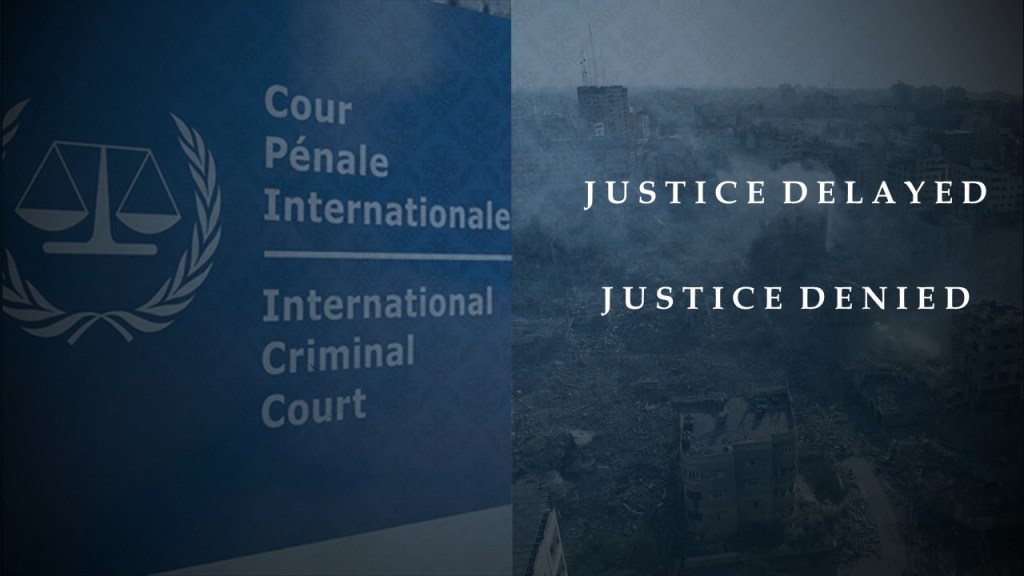
As a European, the actions of the International Criminal Court (ICC) in recent conflicts prompt reflection on international justice’s impartiality. The ICC issued arrest warrants for Russian President Vladimir Putin and his children’s rights commissioner, Maria Lvova-Belova, in response to alleged war crimes in Ukraine—specifically, the deportation of Ukrainian children to Russia. This action followed the ICC’s chief prosecutor Karim Khan’s February 22, 2023 submission, with the warrants confirmed 23 days later. The European Union quickly endorsed a Special Tribunal to prosecute Russia’s aggression against Ukraine, highlighting the gravity of these alleged crimes.
The situation in Ukraine underscores clear violations of sovereignty and international law, paralleling severe aggression-driven atrocities. Yet, there are concerning discrepancies in how similar issues, particularly involving Palestinian territories, have been addressed. Russia’s unlawful annexation of Crimea and its actions in Eastern Ukraine represent flagrant breaches of international law, but a tribunal convened by Western nations with their histories of controversial interventions—such as the U.S. and U.K. in Iraq—risks reinforcing a perception of selective justice, one in which certain international crimes are prioritized over others.
The alleged war crimes and crimes against humanity in both Ukraine and Palestine necessitate comprehensive investigation under international law. The ICC, despite its limitations, remains the most fitting venue to examine and prosecute these cases in accordance with International Public Law, Human Rights Law, Humanitarian Law, and Criminal Law.
Yet, there are political forces at play. U.S. and Israeli officials have reportedly pressured ICC Chief Prosecutor Karim Khan to avoid seeking warrants against Israeli Prime Minister Benjamin Netanyahu and Defence Minister Yoav Gallant for alleged war crimes in Gaza. This interference, marked by a smear campaign and complaint against Khan that bears the hallmarks of intelligence agency tactics, reflects deep-seated resistance in the U.S. and Israel toward ICC accountability.
Historically, Israel’s political landscape has shifted from the more liberal, secular vision held by figures like David Ben-Gurion to a hardline, religiously influenced ideology. With successive administrations under leaders like Menachem Begin, Ariel Sharon, and Benjamin Netanyahu, Israel has transformed into a state markedly different from the vision once held by its founders. Today, Netanyahu’s administration, driven by aspirations for a “Greater Israel,” exhibits little adherence to international law, with force structuring the lives of Palestinians for 75 years. Controlling a disenfranchised population indefinitely, however, sows seeds of future instability, casting Israel as increasingly isolated in the global community.
The escalating cycle of violence between Israel and Palestine has devastating consequences, especially for the region’s children, as both Hamas and the Israeli government show greater commitment to their ideological agendas than to peace. The oppressive nature of Hamas, which developed partially under Israeli policy favouring division over a two-state solution, has grown alongside Israel’s own militarization, testifying to a moral blindness within leadership on both sides.
The October 7, 2023, attack by Hamas on southern Israel marked an unprecedented escalation, resulting in the deaths of hundreds and the taking of hostages. The violence of Hamas is indefensible, a horrific display of brutality. Israel’s right to self-defence is clear; however, it must align with the legal limits of international law. Israel’s military response, Operation Iron Swords, involved massive airstrikes on Gaza and a stringent blockade, actions reminiscent of the 2006 ground conflict with Hezbollah in Lebanon.
Under the leadership of Netanyahu, who lacks both a clear strategy and exit plan, Israel’s tactics have reached a morally untenable state. The current siege on Gaza, ordered by Israeli Defence Minister Yoav Gallant, has involved cutting off essential resources to millions of people. Finance Minister Bezalel Smotrich’s comment on the morality of starving Gaza until the release of Israeli hostages exemplifies a pervasive callousness within Israeli leadership. Gallant’s description of Palestinians as “human animals” further characterizes this approach, which has culminated in a 15-year blockade inflicting severe hardships on one of the world’s most densely populated areas.
Recent Israeli actions have reduced Gaza to ruin. The enforced blockade since October 9, 2023, has dismantled the infrastructure essential for Gazans’ survival, with a death toll that, according to Gaza’s health authorities, exceeds 42,000, including a significant proportion of women and children. With an overwhelming majority of Gaza’s population displaced and basic needs increasingly inaccessible, the situation bears the marks of intentional destruction underpinned by genocidal intent as defined by the 1948 Genocide Convention.
The Genocide Convention was drafted in the aftermath of the Nazi Holocaust, in the face of a particular kind of horror: not just mass killing, but mass killing with the “intent to destroy, in whole or in part, a national, ethnical, racial or religious group, as such.”
Intent is often understood by scholars as the most difficult component of the genocide definition to prove in court. However, Israeli government officials have repeatedly made their intent to commit genocide remarkably evident. Both their rhetoric and actions illustrate that they are targeting and bombing Palestinians in Gaza for the sole reason that they are Palestinians in Gaza.
On October 12, Israeli President Isaac Herzog said: “It’s an entire nation out there that is responsible. It’s not true this rhetoric about civilians not aware not involved. It’s absolutely not true. … and we will fight until we break their backbone.”
Israel has now carried out since October 2023 “indiscriminate” bombing in Gaza, targeting churches, mosques, hospitals, schools, U.N. facilities, refugee camps, homes, and the very roads on which Palestinians were fleeing Israeli bombing. There is no sace area to avoid the Israeli onslaught.
The International Court of Justice (ICJ) weighed in on these legal concerns in a historic decision issued on July 19, 2024, affirming that Israel’s occupation and settlement activity in Gaza and the West Bank constitute unlawful acts under international law. The ICJ’s ruling mandated Israel’s withdrawal, reparations to Palestinian victims, and the return of displaced persons, calling the occupation a violation of prohibitions on racial segregation and apartheid. Yet, the U.S. quickly dismissed the ruling as disruptive to diplomatic solutions, once again exposing the contradictions in the West’s stance on international law.
The ICC’s application for warrants against Israeli and Hamas leaders for war crimes is a necessary step towards accountability, although U.S. officials, including Secretary of State Antony Blinken, condemned these actions as “shameful.” This response underscores the inconsistencies within U.S. policy, which rapidly endorsed Putin’s indictment yet resists similar scrutiny of its allies.
The contrast between the ICC’s swift warrant issuance for Putin and the delayed warrants against Netanyahu and Gallant, but now have been issued highlights a double standard that undermines the ICC’s credibility. The pursuit of international justice demands consistency, and when justice is delayed or obstructed, it is ultimately denied.
WJJH – 17.11.2024
📌Blog Excerpt
Reflection: The ICC’s actions regarding alleged war crimes in Ukraine, including warrants for Putin, contrast with perceived delays in Palestinian issues. The U.S. and Israel’s influence over the ICC raises concerns of selective justice. Ongoing violence in Gaza has led to severe humanitarian crises, highlighting the urgent need for consistent international legal accountability.
 In what kind of world do we wish to live