The Lotus – Rabindranath Tagore
✍️Writer’s Note:
Tagore’s The Lotus is a meditation on mindfulness and transience. It reminds us that beauty does not reside in permanence but in perception. Like the lotus rising above the mud, awareness allows us to see life as both fragile and sacred — a fleeting bloom in the still waters of being.
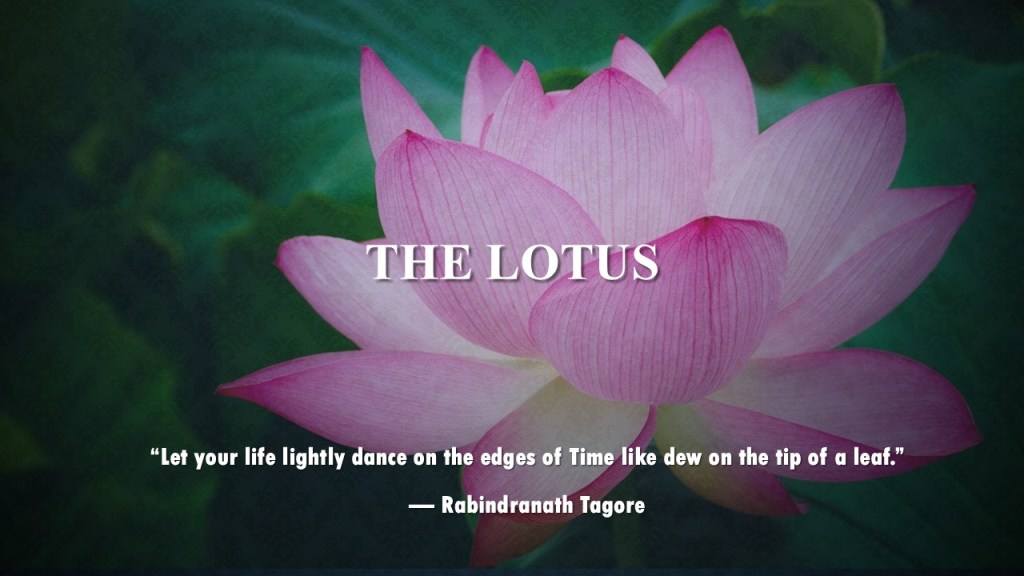
The lotus is a symbol of quiet beauty, one that must be taken care with kindness before one can begin to appreciate the splendor of the flower itself.
Rabindranath Tagore (1861-1941) is rightly celebrated as India’s poet laureate. In 1913, he became the first non-European to be awarded the Nobel Prize in Literature for Gitanjali, a collection of poems originally written in Bengali and later translated into English by Tagore himself. As W.B. Yeats remarked, “The lyrics of Gitanjali display in their thought a world I have dreamed of all my life.”
Tagore’s poetic genius and philosophical depth continue to resonate deeply, and he remains one of India’s most cherished figures, inspiring generations with his exploration of universal themes such as love, nature, spirituality, and the human condition.
In Gitanjali, a collection of 103 poems, Tagore offers insights and reflections on his spiritual journey, exploring the relationship between the individual and the divine. Each poem stands alone, yet collectively, they convey a profound yearning for spiritual connection. In the opening chapter, Tagore expresses a deep desire to offer his songs as a tribute to the divine, revealing an earnest pursuit of inner peace and unity.
In The Lotus, Rabindranath Tagore presents a tender meditation on life’s fleeting nature and the delicate beauty of being present. The poem reflects a sense of wistful awareness—a reminder that moments of beauty and revelation can pass by unnoticed if one is absorbed in dreams or distracted by life’s transient concerns. Tagore uses the image of an empty basket to symbolize missed opportunities and unfulfilled expectations, expressing the poignant regret that comes from failing to recognize life’s gifts in their fullness.
The lotus itself stands as a powerful symbol in the poem: embodying purity, spiritual awakening, and the quiet splendour of a life fully lived. Tagore reminds us that, like the lotus, beauty must be approached with gentleness and mindfulness if we are to appreciate its depths. The blooming lotus, left unplucked, reflects the poet’s insight into the delicate balance between aspiration and acceptance, urging readers to cultivate awareness and cherish the present moment before it slips away.
The Lotus
Verse 20 from “Gitanjali,” by Rabindranath Tagore
On the day when the lotus bloomed, alas,
my mind was straying, and I knew it not.
My basket was empty and the flower remained unheeded.
Only now and again a sadness fell upon me,
and I started up from my dream
and felt a sweet trace of a strange fragrance in the south wind.
That vague sweetness made my heart ache with longing
and it seemed to me that is was the eager breath
of the summer seeking for its completion.
I knew not then that it was so near, that it was mine,
and that this perfect sweetness
had blossomed in the depth of my own heart.
William J J Houtzager, Aka WJJH, November 2024
📌Blog Excerpt
The Lotus, a poem by Rabindranath Tagore, contemplates life’s fleeting beauty and the art of mindfulness. Through the lotus — a symbol of purity and awakening — Tagore reflects on missed moments and the need to live with awareness. His words remind us that life’s gifts are revealed only to those who pause to see them.
 In what kind of world do we wish to live