The End of American Exceptionalism and the European Dilemma
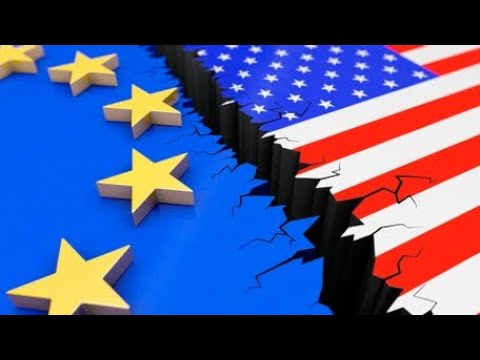
The world has changed irreversibly, and so has the United States. A mind, once expanded, never returns to its original dimensions. The America we once knew—defined by post-war idealism and a sense of global responsibility—has been replaced by a country consumed by internal strife and isolationist tendencies. Trumpism is not a passing populist phase; it is an authoritarian movement with global consequences, and Europe must recognize this shift before it is too late.
In the past, the United States positioned itself as the leader of the free world, championing democracy and the rule of law. But the 21st century has exposed the contradictions of American primacy. The wars in Iraq and Afghanistan, the 2008 financial crisis, and the rise of China have eroded U.S. credibility. The election of Donald Trump in 2016 accelerated this decline, signalling a retreat from international commitments and a turn toward nationalist rhetoric. His potential return to power—along with the implementation of Project 2025—would cement America’s transition into a Hobbesian state, where power dictates morality and international norms are discarded for transactional politics.
The Erosion of International Norms
Project 2025 is not merely a Republican policy initiative; it is a blueprint for an authoritarian America. It aims to dismantle federal oversight, weaken democratic institutions, and centralize power in the executive branch. Under such a regime, the U.S. would further abandon multilateralism, undermining institutions like NATO and the European Union. With Tump’s return to the presidency in 2024, the guardrails of American democracy may not hold. The result would be a nation governed by brute force, where international agreements are rendered meaningless.
Europe must acknowledge this reality. The long-standing assumption that the United States will always be a reliable ally is no longer valid. Even under Biden, America’s commitment to Europe is contingent on domestic politics. A second Trump presidency would reinforce this instability, leaving Europe vulnerable to Russian aggression and economic coercion from China.
The European Response: A Call for Sovereignty
For too long, Europe has relied on the American security umbrella, allowing its own defence capabilities to atrophy. The illusion of a permanent U.S. commitment has prevented Europe from taking full responsibility for its own future. This must change. If Europe fails to act now, it risks becoming irrelevant in the global power struggle.
The European Union must strengthen its strategic autonomy. This means developing an independent defence policy, reducing economic dependence on the U.S. and China, and asserting itself as a geopolitical actor. Leaders in Berlin, Paris, and Brussels must recognize that the world order they once knew is gone. Europe must define its own path, forging alliances that serve its interests rather than clinging to a transatlantic relationship that may no longer exist in its current form.
The stakes could not be higher. The unravelling of American democracy will have profound consequences for the world, but Europe still has a choice: adapt or be left behind. The time for wishful thinking is over. The future belongs to those who take their fate into their own hands.
WJJH – 10.3.2025
📌Blog Excerpt
Reflection: discussing the decline of American exceptionalism, highlighting the rise of authoritarianism exemplified by Trumpism and its implications for global power dynamics. Europe must recognize the changing landscape and develop its own defense strategies to ensure sovereignty, moving beyond reliance on the U.S. for security amid escalating threats.
 In what kind of world do we wish to live