Elephants and Windmills
✍️ Author’s Note
This reflection was written on the eve of the Dutch elections, when the elephant of populism and the windmills of tradition clash in the national debate. I write reluctantly as a voter, but with conviction as a democrat. Our challenge is not migration itself, but how fear and resentment reshape the very character of the Netherlands.
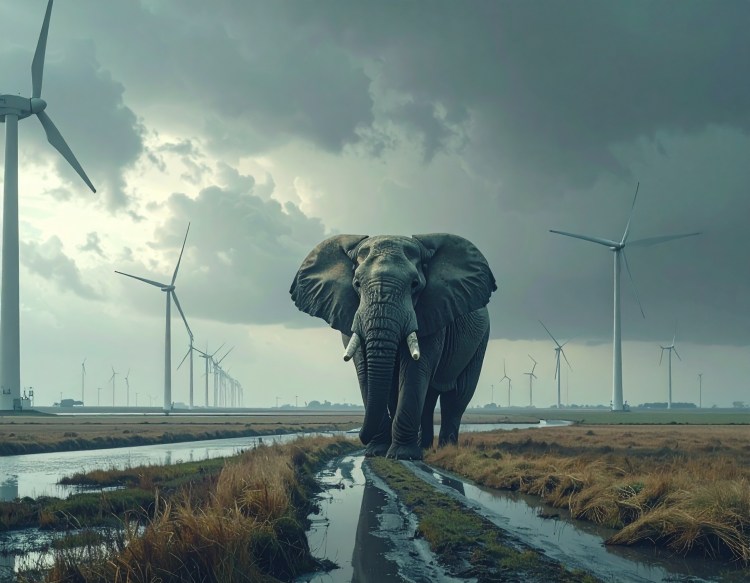
“Tolerance is the glory of the Dutch nation — but intolerance, once normalized, becomes its undoing.”
— Adapted from Spinoza’s legacy of tolerance
In this election season, the Dutch political landscape is dominated by an elephant — Geert Wilders and his PVV. Once seen as fringe, his party has become the voice of national populism. Built on resentment and exclusion, his rhetoric offers scapegoats instead of solutions: foreigners, the European Union, Islam. Like Le Pen, Farage, and Orbán, Wilders doesn’t just attack policy. He undermines the institutions that protect our freedoms.
Yet the so-called “asylum crisis” he feeds on is a misnomer. As Peter Scholten and Fons Meijer argue, the Netherlands faces a reception crisis, not an asylum one. Shortages of staff and housing, combined with years of government neglect, have created bottlenecks. The problem is structural, but politics has turned it into an obsession with migration.
This obsession is the elephant in the room — or rather, the elephant in the china closet, trampling Dutch tolerance and pragmatism. And what of the windmills, those enduring symbols of adaptation and resilience? They are battered, spinning now to the tune of populism rather than purpose.
The VVD, under Dilan Yeşilgöz, bears heavy responsibility. By normalizing Wilders as a governing partner, it broke with decades of liberal democratic restraint. What was once unthinkable — treating a xenophobic one-man party as legitimate — has become reality. The electorate has noticed, and the VVD has lost its moral centre.
Even D66, once the voice of principled liberalism, now bends in the wind. It speaks of reconsidering the Refugee Convention, of processing asylum claims at Europe’s borders, even of replacing European symbols with Dutch flags. Rob Jetten still invokes democracy, rule of law, and a green economy — but the tone has shifted. Something vital has been lost.
Meanwhile, the left tries to hold the line. GroenLinks-PvdA and parts of D66 advocate humane asylum policies: faster procedures, small-scale reception, and European cooperation. Yet their voices are drowned out by the thunder of elephants.
For voters like myself, the choice is uneasy. In the general interest, I will vote D66 — not out of enthusiasm, but because it still stands closer to the liberal democratic tradition that must be defended, however compromised.
The Netherlands has always known how to live with wind and water. Windmills were built to turn storms into energy. But elephants cannot be turned; they can only be confronted. The danger we face today is not uncontrolled migration, but the normalization of exclusion and the erosion of tolerance.
The question is simple: will we remain a nation of windmills — pragmatic, open, adaptable — or will we let elephants trample our democracy?
📌Blog Excerpt
Elephants and Windmills explores the uneasy balance of Dutch politics in an age of populism. Geert Wilders and the PVV have turned migration into the “elephant in the room,” while traditional values of pragmatism and tolerance — symbolized by windmills — struggle to withstand the storm. A reflection on obsession, fear, and the fragile fabric of democracy.
 In what kind of world do we wish to live