Justice Deferred: Reflections on Saddam Hussein, Bashar al-Assad, and the ICC
Paul Kriwaczek wrote in his book “Babylon”, using the language of the Old Testament:
“It was the morning of the Sabbath, before the sun rose.
And they brought him into the city, even unto the place of execution.
And they bound his hands, and his feet as was the custom among them in way of execution.
And they reviled him saying, how are the mighty fallen, and may you be cursed by the Lord.
And they placed a rope around his neck, and they reviled him again, praising the name and titles of his enemies saying God curse you, may you go to Hell.
And he replied, saying, Is this your Manhood?
This is the gallows of shame.
And again, they spoke unto him, saying, prepare to meet your God.
And he prayed to God, saying there is no God but the Lord.
And they hanged him.
And a great shout went up in the place of execution and in the streets and in the markets.
It was the morning of the Sabbath, as the sun rose over the walls of Babylon.”
Paul Kriwaczek in “Babylon”
The ongoing crisis in Syria presents a moral dilemma of grave proportions. Both the regime of Syrian President Bashar al-Assad and the rebel factions seeking its ouster stand accused of committing heinous war crimes in the brutal civil war ravaging the nation. Reports of chemical weapons use, deliberate attacks on civilian populations, and rampant torture and extrajudicial killings have stained the conflict with unimaginable horror.
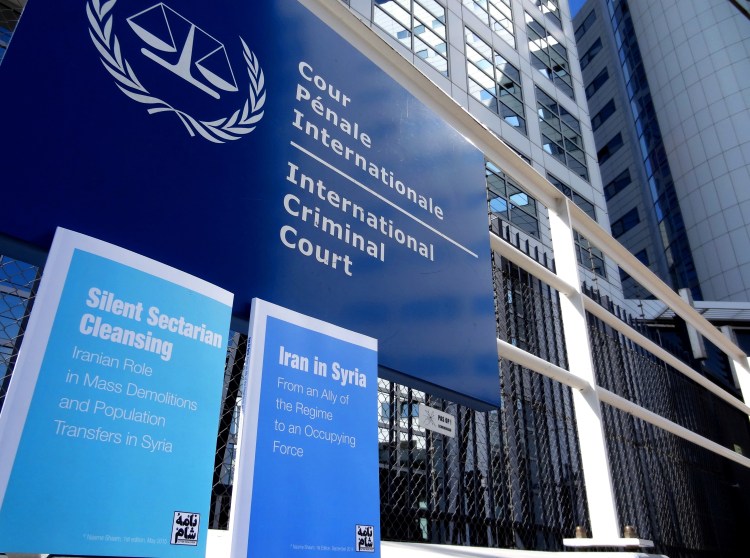
In the face of such atrocities, it is imperative that perpetrators be held accountable before the International Criminal Court (ICC) in The Hague. Just as the war criminal Saddam Hussein faced justice, Bashar al-Assad must be brought to trial for his egregious violations of international humanitarian law and crimes against humanity.
The establishment of the ICC on July 17th, 1998, through the Rome Statute, ratified by 60 states on July 1st, 2002, signifies a beacon of hope for global justice. The court’s mandate to investigate and prosecute cases involving genocide, war crimes, crimes against humanity, and the crime of aggression underscores its pivotal role in upholding human rights and international law. However, it’s important to note that the ICC’s jurisdiction is not retroactive and applies only to crimes committed after its ratification.
The United States’ stance on the ICC reflects a longstanding apprehension toward international judicial oversight, particularly concerning its military and political leaders. The Bush administration’s vehement opposition to the ICC manifested in bilateral agreements aimed at shielding U.S. nationals from the court’s jurisdiction. This resistance stemmed from concerns that the court could subject American officials to a global standard of justice, thereby undermining national sovereignty.
In the case of Saddam Hussein, the Bush administration advocated for “Victor’s Justice” by means of a localized tribunal in Iraq able to seek the death penalty, orchestrated by the U.S.-controlled Iraqi Governing Council. This approach, while ostensibly aimed at fostering accountability, raised questions about impartiality and transparency. Moreover, it underscored broader geopolitical agendas, including the desire to avoid scrutiny of past alliances and engagements, such as the Iran-Iraq war and the Kuwait invasion.
Despite international efforts to pursue justice, political rhetoric often eclipses the pursuit of truth and accountability. George W. Bush’s pre-emptive condemnation of Saddam Hussein’s trial “Saddam Hussein should receive the ultimate penalty for crimes against the Iraqi people and the World” undermined the credibility of the 25 member Court, just as this undermined the ICC and underscored the politicization of justice in the post-conflict landscape.
The parallels between Iraq and Syria, particularly concerning allegations of chemical weapons use, highlight the complexity of modern warfare and the challenges of attribution. As geopolitical interests converge and diverge, the spectre of sectarian violence looms large, threatening to engulf the region in a cycle of perpetual conflict.
Nabil Sha’ath’s recollection of President Bush’s divine mandate “I’m driven with the Mission of God. God would tell me,’ George, go fight those terrorist in Afghanistan.’ And I did; and then God would tell me ‘George go end the tyranny in Iraq. And I did,” underscores the perilous nexus between religious fervour and geopolitical strategy. Such messianic visions of interventionism perpetuate instability and sow discord, leaving a trail of destruction in their wake.
At the heart of the Syrian crisis lies a fundamental question of political will and strategic foresight. The failure to engage constructively with regional stakeholders, notably Russia, undermines efforts to achieve lasting peace and stability. Without concerted diplomatic efforts, military intervention risks exacerbating existing tensions and fuelling anti-American sentiment on a global scale.
As the sands of time shift, the spectre of history looms large, reminding us of the enduring legacy of colonialism and interventionism in the Middle East. From the overthrow of Mossadeq in Iran to the quagmires of Afghanistan and Iraq, the arc of American foreign policy reflects a troubling pattern of hubris and miscalculation.
In charting a path forward, we must heed the lessons of history and embrace a paradigm of engagement rooted in diplomacy and dialogue. Only through genuine collaboration and mutual respect can we hope to transcend the cycles of violence and forge a future defined by peace and prosperity.
WJJH – August 2013 – Revised January 2024
📌 Blog Excerpt
Reflection encapsulating the themes of accountability, international justice, and the challenges faced in prosecuting war crimes in Iraq and Syria.
 In what kind of world do we wish to live