Economic Sanction: The Ethical- and Human Costs Surpass the Benefits
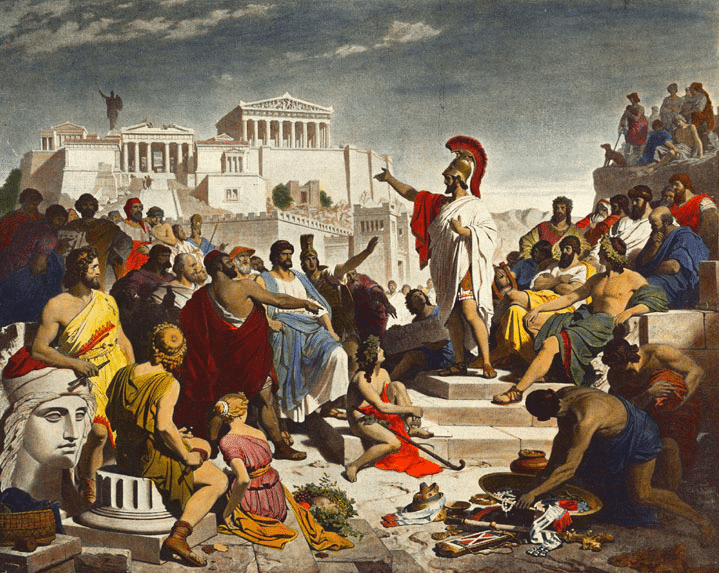
Philipp Foltz (c. 1805–1877)
Since the early 1980s, the U.S. has brandished economic sanctions as a moral rationale for its causes and political objectives. While presented as a moral choice, these sanctions have given rise to the excesses of liberal sanctionism, now deeply ingrained in the economic, political, and social fabric.
The historical use of economic sanctions is not a novel concept in foreign policies. Thucydides and Plutarch document what is arguably the earliest recorded instance of economic sanctions in 432 BC—the “Megarian Decree,” embargoing all trades between Megara and the Athenian empire. This Athenian retaliation for the Megarians’ treacherous behaviour may have contributed to prolonging and intensifying the Peloponnesian War (431-404 BC).
Contemporary sanctions, primarily employed by the U.S. and other developed nations, aim to pressure the leadership of transgressor nations into adhering to international law and ethical norms. As Carl von Clausewitz noted that war is the continuation of politics by other means, sanctions can be seen as the continuation of politics by economic means—an instrument perceived as more economical and preferable to military interventions.
However, sanctions have evolved into a form of political posturing, resonating well with a public influenced more by passion than reason. Despite their relatively low cost, sanctions, ranging from economic to diplomatic measures, may not provide universal answers to global issues, often proving counterproductive.
Sanctions, while attempting to crush economies and devalue currencies, inadvertently lead transgressor nations to adapt, engaging in illicit activities impacting essential supplies such as food, medicine, and sanitation, exacerbating hardships for their populations. The ethical and human costs of sanctions, particularly on vulnerable groups, like children, women, and other valuable groups, often outweigh their intended benefits.
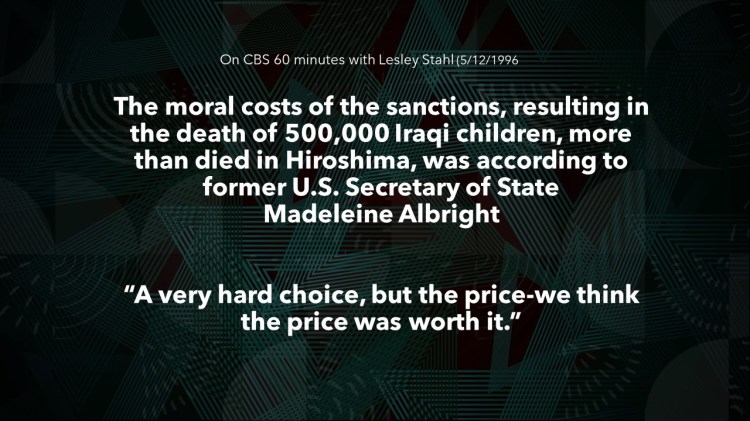
Historically, sanctions, although targeted at the ruling class, have demonstrated limited success, with cases such as the UN sanctions against Rhodesia, South Africa, U.S. sanctions on Cuba, India, Iraq, Iran, North Korea, Pakistan, Russia, Syria, and Venezuela failing to achieve their objectives. Sanctions against nuclear development often prove ineffective and take years to influence policies. The longer period sanctions are enforced, the less successful they become (Cuba, Iran, Myanmar, Russia, Sudan.)
However, when the intention is regime change, the logic of coercive sanctions does not hold, for the reason that the cost of relinquishing power will always exceed the benefit of sanction relief.
The U.S. has increasingly utilized sanctions as a foreign policy tool, especially since the Clinton era, aiming to promote American power and safeguard national interests. Recent sanctions against Russia, imposed by President Biden, have heightened geopolitical tensions, leading to economic repercussions on a global scale. However, the history of sanctions over the last six decades indicates a significant failure to instigate change due to growing interdependency between markets and countries. According to Robert A. Pape’s study, less than 5% of the 40 analysed sanctions have proven successful.
The pursuit of regime change through sanctions has often resulted in U.S. overreach, diminishing its influence and causing strains with European allies. The sanctions against Russia, in place since 2014, have not only been grossly ineffective in changing Russia’s behaviour but have also impacted global economies and led to closer ties between Russia and China, challenging the dominance of the U.S. led financial system. The sanctions highlight the divisions in the world, between industrialized nations supporting sanctions and neutral or non-aligned countries, including BRIC nations, resisting them.
In conclusion, the overuse of sanctions, coupled with a lack of relief, has diminished their effectiveness. Without restraint, diplomacy, compromise, and engagement, the world may witness an increase in military interventions and heightened political instability, underscoring the need for a nuanced approach to international relations.
William J J Houtzager, Aka WJJH- 21.1.2024
📌Blog Excerpt
On the US strategy of Economic Sanctions, as a foreign policy tool by the U.S., emphasizing its ineffective results and ethical implications. Despite being presented as a moral choice, sanctions often lead to adverse consequences for vulnerable populations and rarely achieve their objectives. The diminishing effectiveness and rising ethical and human costs necessitate a more nuanced approach to international relations.
 In what kind of world do we wish to live