Tax the Rich: U.S. Internal Imbalances Require a More Nuanced Approach
Senators Elizabeth Warren and Bernie Sanders position themselves as champions of the common people against the affluent elite, targeting millionaires, billionaires, and Wall Street. Supported by the progressive left wing, led by figures like Alexandria Ocasio-Cortes, they advocate for an expanded civil apparatus, a crackdown on Wall Street, and new tax proposals, including the controversial wealth tax.
Initially proposing a 2 percent annual levy on net wealth above $50 million and 3 percent above $1 billion, these plans are evolving to include levies on unrealized gains in liquid assets of the wealthiest 700 individuals. While Democrats believe these proposals enjoy broad popular support, they target a specific group, raising constitutional and legal concerns.
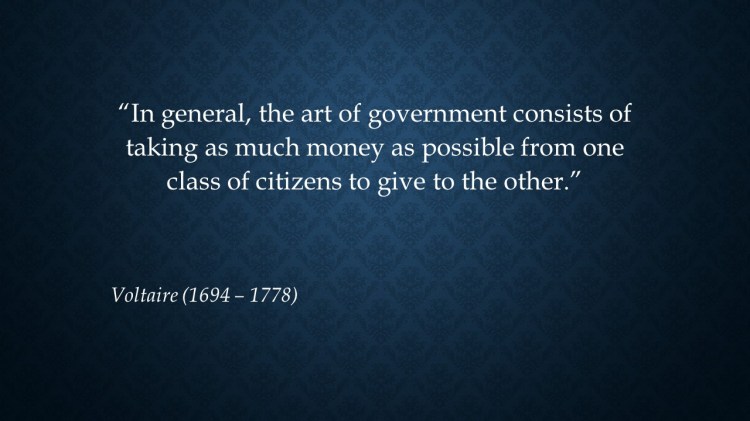
President Joe Biden has campaigned on raising the income tax, the inheritance tax and investment taxes on the wealthy, as well as increasing the corporate tax. The words of George Bernard Shaw resonate “A government that robs Peter to pay Paul can always depend upon the support of Paul. “
Instead of focusing on increasing progressive taxation, estate tax and wealth tax plans, Democrats could address imbalances in the tax system by simplifying the tax code, closing loopholes, and ensuring fair contributions from all members of society, whether individuals or corporations. However, political reluctance, influenced by campaign contributions and an entrenched relationship with the private sector, impedes progress in Congress.
Senator Elizabeth Warren, known for her comprehensive plans, aims to address societal issues and wealth inequality through wealth redistribution. However, critics like Larry Summers question the efficacy of wealth inequality as a basis for creating a just society. As a proponent of John Locke’s liberal philosophy, I value individual freedom and independence, emphasizing personal responsibility over government intervention.
The progressive approach advocating for government as the provider of happiness disregards the desire for self-reliance and self-responsibility. While acknowledging the imperfections of human nature, the need to defend the less fortunate, and global challenges, excessive government involvement risks undermining individual autonomy.
The ongoing debate revolves around the question: Is altruism compatible with capitalism? Progressive taxation, based on the principle “from each according to his ability to pay, to each according to his need,” including the inheritance tax and the wealth tax, attempts to address imbalances raises concerns about government overreach and the erosion of individual property rights.
Senators Sanders and Warren epitomize progressive taxation, challenging the idea that intellectual products are individual achievements. This notion, grounded in the belief that societal contributions entitle the state to a share of profits, contradicts the principles of individualism and free-market success.
Finding the balance between individual pursuits and social responsibilities reflects the historical clash between capitalism and socialism. Adam Smith’s invisible hand theory and the positive forces of supply and demand, contrasted with socialist visions of a more classless society, showcase the ongoing ideological struggle.
The wealth tax, presented as a solution to tax system inefficiencies, may discourage asset holding, prompt short-term strategies, and increase government control. Instead, a balanced approach, simplification, and addressing tax evasion could enhance the effectiveness of the tax system.
While sympathizing with wealth creators, the proposed wealth tax represents the tyranny of the majority, dictating what individuals should share. To address societal tensions, balanced budgets, deficit reduction, and a review of defence spending are crucial, avoiding an unsustainable increase in national debt.
The idea of progressive taxation and wealth tax echoes failed attempts in Europe during the 1960s-1980s, resulting in capital outflows, job losses, and decreased tax revenue. Europe has since shifted towards more reasonable corporate taxation, maintaining a delicate balance between equity and societal welfare.
In the U.S., internal imbalances require a nuanced approach, considering budgetary austerity, balanced taxation, and a review of America’s global role. The focus must be on internal priorities, preventing military overextension, and avoiding economic and military erosion, as history has shown with declining empires.
William J J Houtzager, Aka WJJH – 22.01.2024
📌Blog Excerpt
Arguing that, rather than targeting a specific group, efforts should be directed at achieving balanced taxation by addressing inefficiencies in the current tax system. Raising concerns about the potential negative impact of the wealth tax on investments, economic strategies, and overall government control over individuals’ lives.
 In what kind of world do we wish to live
I believe progressive taxes and inheritance taxes are necessary to reduce extreme imbalances. Too much concentration of wealth at the top is destructive to a society. We have real estate taxes, but taxes on other types of property such as unrealized gains, taxes on intangibles, and taxes on personal property is also destructive.
LikeLike
Man is not endowed with the inherent ability to achieve perfection, so the tax system on what is fair and proper is a illusion. Justice demands that all participants in society pay a fair share of the cost of maintaining order in that society. This function is properly one which the state should perform. But what constitutes fairness in taxation? I do not disagree about your sentiments about inequality, which is of all times, but growing up with excess taxation, I could never find great enthusiasm for this or the inheritance tax. Both stimulate tax avoidance schemes. Only a reasonable global minimal tax (20%) will address this issue but its difficult to find a agreement on this.
LikeLike