Beyond Thoughts and Prayers: America’s “1791”Gun Dilemma
From my European perspective, I must note the stark contrast in gun ownership regulations between the European Union and the United States. In the EU, gun ownership is strictly regulated, with licenses granted only after stringent background checks that assess criminal records and other relevant information.
In the Netherlands, for instance, private handgun possession has been restricted by law since 1890. Gun ownership is considered a privilege, not a right, and is granted under strict conditions to law enforcement, hunters, and members of shooting clubs. Fully automatic weapons are outright prohibited.
Contrastingly, the Second Amendment to the United States Constitution guarantees the right to bear arms, contributing to a culture where approximately one-third of U.S. adults claim personal gun ownership. Shockingly, in 2021, the United States witnessed a record-high of 48,830 deaths from gun-related injuries, as reported by the Centers for Disease Control and Prevention (CDC).
Reflecting on this, along with the tragic assassinations of prominent figures like Martin Luther King, JFK, and RFK during my lifetime, I am left incredulous at America’s failure to address its moral obligations. The United States has, regrettably, become one of the most violent nations among civilized societies.
The staggering proliferation of three hundred million guns in the United States underscores a deeply ingrained cultural issue. Despite comprising only 4.4% of the world’s population, the U.S. accounts for 48% of all civilian-owned guns, resulting in a gun-related murder rate twenty-five times higher than that of other high-income nations.
Today, American children and teens live in constant fear, which undoubtedly impacts their psychological well-being and academic performance. Moreover, gun violence exacerbates existing racial inequalities, affecting communities nationwide.
It is unsurprising that responsible parents, both across the Atlantic and around the world, hesitate to expose their children to the climate of fear, hate, and violence prevalent in the United States.
In conclusion, America’s failure to enact meaningful gun control measures represents a moral and logical lapse in its responsibility to safeguard its citizens, particularly its children, who, as Herbert Hoover once said, are “our most valuable resource.”
While the right to gun ownership is enshrined in the U.S. Constitution, historical attempts at regulation, such as the National Firearms Act of 1934, and subsequent efforts like the Gun Control Act of 1968 and the Brady Handgun Violence Prevention Act of 1993, have fallen short of addressing the root issues. The ongoing debate surrounding gun control persists, highlighting the urgent need for comprehensive legislative action to mitigate the pervasive threat of gun violence.
The consequence of Congress’s “do-nothing” attitude, influenced and financed by the NRA gun lobby, has been nothing short of catastrophic. It leads to the distressing conclusion that members of Congress have lacked courage, sufficed with empty words, and shirked their responsibilities. They have failed to reconcile the diverse interests in society, just as they have failed to mend the societal and congressional divides.
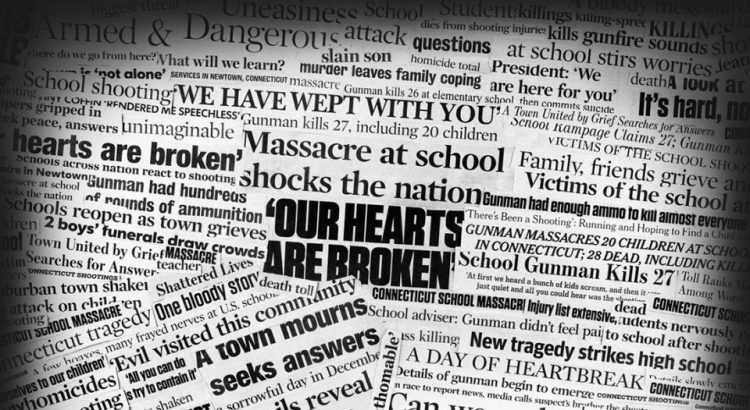
Each new mass shooting, defined as incidents where four or more people are killed or injured by a firearm, excluding the shooter themselves, stands as an egregious assault on humanity. Tragic events like Virginia Tech, Sandy Hook, Columbine High, Umpqua College, Sutherland Springs, the Las Vegas Strip, Parkland, and Robb Elementary School, among others, remain etched in our collective memory. As of December 6, 2023, there were twelve mass shootings in the United States, a stark contrast to the solitary incident in 1982, one in 2000.
Public displays of sympathy and sadness, while touching and heart-wrenching, ring hollow without concrete action. From Reagan to Biden, each tearful president offers “thoughts and prayers” at the appropriate moments, yet these sentiments fail to effect change. Despite the escalating frequency and severity of mass shootings, presidents and politicians have consistently refrained from enacting meaningful legislation or structural solutions to prevent future tragedies. Their moral leadership to the country falls short.
Public sentiment for stricter firearm laws fluctuates, with only about 56 percent of Americans feeling that firearm sale laws should be more stringent in 2023. A concerning 31 percent advocate for the status quo, while only 12 percent support less stringent laws.
Contrary to some suggestions, the answer does not lie in arming more individuals, which would only escalate gun-related suicides and deaths. Rather, stringent gun regulations and restoration of order are imperative. The “1791-gun disease” and its underlying causes demand attention. The question arises: Is the United States, as a civilized society, morally bankrupt to the extent that children are considered disposable?
A pervasive mood of anarchism, fuelled by gun addicts and those with semi-automatic and automatic weapons, prevails. These individuals, with their flawed constitutional arguments, exhibit a pathological addiction to guns, death, and violence. They represent the anarchists of today and tomorrow, homegrown terrorists who eschew law enforcement, government, and the rule of law.
Since Trump’s presidency, attacks on immigrants and minorities have surged, accompanied by a rise in hate crimes and domestic terrorism. Trump’s failure to denounce white nationalism and his propagation of conspiracy theories underscore a moral deficiency reminiscent of Woodrow Wilson’s shortcomings.
However, this is the 21st century, vastly different from 1791 or the 18th and 19th centuries when firearms were deemed necessary. Those in the NRA or pro-gun politicians who advocate for widespread gun ownership suffer from a form of mental illness or, at best, delusion.
Structural changes to gun laws are urgently needed to regulate firearms and prohibit automatic and semi-automatic military-style weapons. Implementing measures such as tightened background checks, ownership rules, and a temporary gun buyback program akin to Australia’s 1996 initiative is prudent.
Statistical data comparing the United States to twenty-two other high-income nations reveal a staggering disparity in firearm-related mortality rates. The US leads with an overwhelming 82 percent of all gun deaths, despite having only half the population of the other nations combined.
In conclusion, the United States grapples with an alarming firearm problem compared to other high-income countries, marked by higher rates of homicide and firearm-related suicide. While the US suicide rate aligns with other countries, its gun-related suicide rate is eight times higher. Urgent action is imperative to create safer communities and enhance mental health support, lest the cycle of violence persists.
Postscript:
Unquestionable, perspectives on gun ownership and its implications may vary greatly depending on cultural, historical, and personal experiences. This is a complex topic, encompassing issues of individual rights, public safety, and the broader societal impact of firearms. However, and from personal experiences, the sight of someone openly carrying a gun has always increased a sense of unease or discomfort with me, rather than a feeling of safety. What seems important is to work towards meaningful solutions that prioritize the well-being and safety of all individuals and communities, especial the most vulnerable in society, the children.
William J J Houtzager, Aka WJJH – 11.3.2024
📌Blog Excerpt
The European Union has strict gun ownership regulations, with the Netherlands restricting private handgun possession since 1890. In contrast, the US Second Amendment fosters a culture of widespread personal gun ownership, contributing to record-high gun-related deaths. Despite historical attempts at regulation, meaningful legislative action is urgently required to address this pervasive threat.
 In what kind of world do we wish to live