Angela Merkel Should Not Say Sorry
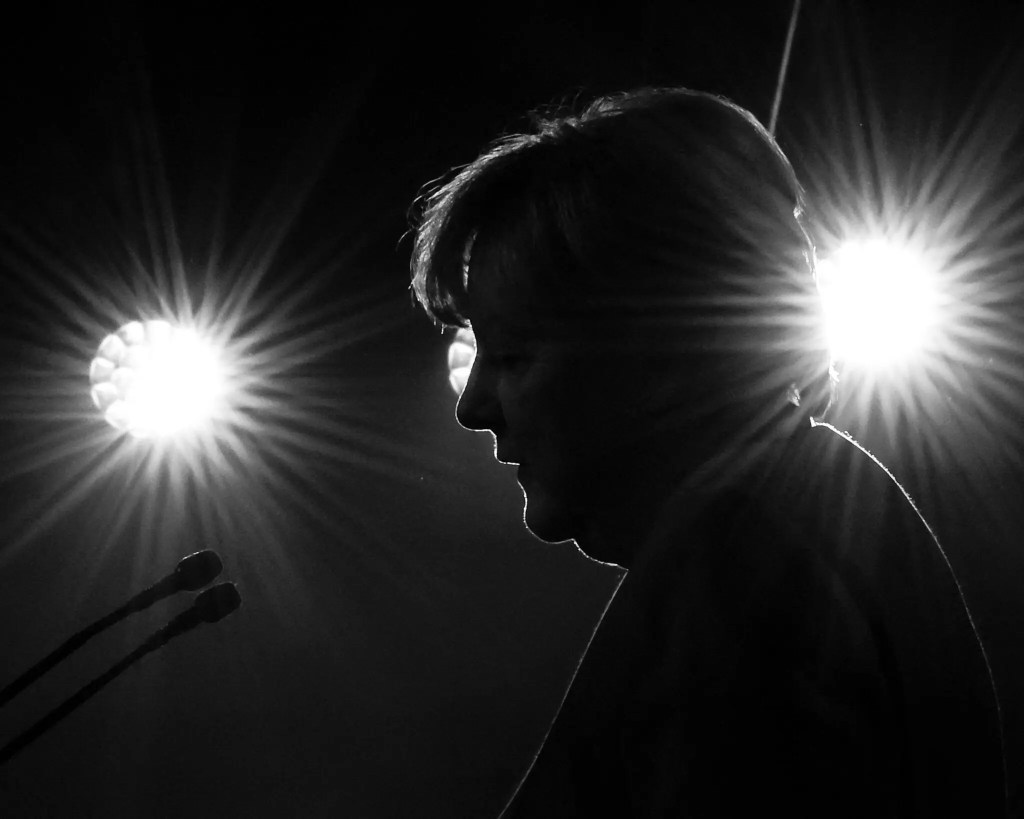
Angela Merkel, Germany’s former chancellor who left office in 2021 after 16 years in power, was the de facto leader of Europe during her tenure. She solved Henry Kissinger’s famous question, “Who do I call in Europe?” by providing steady, pragmatic leadership that is sorely missed in today’s political climate. Merkel’s recent memoir, “Freedom”, covering her life from 1954 to 2021, reflects on her political inheritance with few regrets, apart from certain decisions during the COVID-19 pandemic.
The Economist’s recent article, “Angela’s Ashes,” is predictably critical, arguing that Merkel’s legacy has crumbled, leaving behind only diminished reputation. While The Economist raises some valid points, I take issue with its overall assessment. Merkel served Germany and the European Union with distinction from 2005 to 2021, exemplifying quiet, effective leadership that prioritized stability and economic growth. She eschewed aggression and theatrics, focusing instead on solutions. Her leadership style offered a much-needed counterbalance to an increasingly polarized world.
Succeeding Helmut Kohl—a towering figure who served as Germany’s chancellor for 16 years starting in 1982 and was instrumental in Germany’s reunification and advancing European integration—was no small challenge. Kohl, who once referred to Angela Merkel as “das Mädchen” (“the girl”), left an imposing legacy that set a high bar for any successor. Yet Merkel, a physicist with a PhD and a reputation for being methodical and understated, leveraged these qualities to her advantage. Often underestimated, she turned pragmatism, resilience, and a talent for consensus-building into her defining strengths, steering Germany and Europe through multiple crises and cementing her own legacy as a pragmatic and steady leader.
Reflecting on Merkel’s tenure, it’s clear she was a skilled problem-solver who navigated numerous crises: the Eurozone debt crisis, NATO debates over Ukraine, the refugee crisis, Brexit, the pandemic, and tensions with Russia. While her policies were not without flaws, they were rooted in realism, acknowledging the complexities of geopolitics and the limits of European influence. Her support for initiatives like Nord Stream 2 and her efforts to maintain a balanced EU-Russia relationship had great merit and underscored her focus on stability.
As someone aptly said, “You can’t make an omelette without breaking a few eggs.” Merkel may not have been a visionary, but she was a realist—a leader who carefully felt her way through crises and avoided overpromising easy solutions. Her voice of reason is missed today, particularly in the fragmented European discourse over Ukraine and other pressing challenges.
During her tenure there are five moments which spring to mind and show her pragmatic and reliable approach.
Euro Crisis
Angela Merkel was right to support the Euro and insist on fiscal discipline during the Eurozone crisis. Countries like Cyprus, Greece, Italy, Malta, Portugal, and Spain faced stringent austerity measures in response to their fiscal crises, with Greece enduring the harshest adjustments. While these measures drew criticism for exacerbating social hardships, they reflected the constraints of EU rules and Germany’s commitment to the Maastricht Treaty’s fiscal guidelines.
The introduction of Germany’s “Schuldenbremse” (debt brake) in 2009 underscored this commitment to fiscal responsibility. It restricted structural deficits to 0.35% of GDP, a move designed to safeguard long-term economic stability. While this policy caused short-term pain, particularly in Southern Europe, Merkel’s adherence to fiscal prudence recognized the vulnerabilities of high debt levels in a volatile global economy. Her approach emphasized investor confidence and financial stability, even if it came at a political cost in affected nations.
Ukraine and NATO Membership
Mrs. Merkel’s decision to block NATO membership for Ukraine in 2008 remains a pivotal—and for some, contentious—moment in European geopolitics. At the 2008 NATO summit in Bucharest, President George W. Bush, against the advice of his own intelligence community, pushed to extend a Membership Action Plan (MAP) to Georgia and Ukraine. Merkel, supported by then-French President Nicolas Sarkozy, opposed the move, labelling it a “monumental provocation” to Russia. Her rationale, shared by other European leaders, was clear: such a step would push President Vladimir Putin too far and provoke an aggressive response aimed at preventing Ukraine’s alignment with the West.
Merkel rightly understood that NATO expansion should enhance the security of both the alliance and its potential members. Ukraine, then and now, did not meet this criterion, making its NATO membership an implausible goal in the foreseeable future. As she later recalled, Putin told her directly, “You will not be chancellor forever. And then they will become NATO members. And I want to prevent that.”
Critics, including Ukrainian President Volodymyr Zelensky, have described Merkel’s decision as a “miscalculation” that emboldened Russia. However, such critiques fail to account for centuries of Russian strategic paranoia regarding its borders. Escalating provocations, as seen in Ukraine’s post-2008 positioning, carried significant risks. The geopolitical dynamics of the time—and now—render Ukraine’s NATO membership a flashpoint, increasing regional tensions and undermining stability. Merkel’s pragmatic stance reflected her understanding of the delicate balance required for European security. As Henry Kissinger noted, Ukraine’s survival hinges on being a bridge between East and West rather than a pawn in their rivalry. Ukraine chose a different path, with consequences that were both foreseeable and grave.
Merkel’s policy of economic engagement with Russia, exemplified by projects like Nord Stream 2, aimed to “buy time” for Ukraine to strengthen its military and political position after the 2014 annexation of Crimea. While critics have questioned the wisdom of this approach, it was underpinned by the hope that economic interdependence could mitigate conflict. Today, in the midst of a brutal war, Merkel’s emphasis on diplomatic solutions remains relevant. Any resolution to the conflict must involve Ukraine’s European allies and account for the region’s complex power dynamics.
As the Trump administration arrived, Ukraine’s NATO membership—always a distant prospect—seemed likely to be shelved indefinitely in favour of pursuing a comprehensive and verifiable peace deal with security guarantees. This reality underscores a poignant reflection from Alexander Nikitenko, a tsarist censor, during the Crimean War, as quoted by Orlando Figes in The Story of Russia: “What was the point of it all?”
Russian Energy, Nord Stream 2, and Sanctions
Merkel’s support for Nord Stream 2 (NS2) was rooted in economic pragmatism. The pipeline provided a cost-effective solution for meeting Europe’s growing energy needs, reducing dependency on less efficient overland routes. Contrary to critics, NS2 did not prevent Germany from adopting a firm stance on Russia when necessary, including the implementation of sanctions following the annexation of Crimea.
However, Merkel’s tenure also highlighted the limitations of sanctions as a foreign policy tool. The decade-long measures against Russia, initiated in 2014, failed to alter Moscow’s behaviour and instead deepened its economic and strategic ties with China. The sanctions’ economic toll on Europe—manifested in high energy prices, inflation, and industrial challenges—raises questions about their strategic efficacy. Merkel’s approach, which emphasized dialogue and measured engagement with Russia, may have better preserved Europe’s long-term stability.
Migration Crisis
The migration crisis of 2015 marked one of Merkel’s most defining and polarizing moments. Her decision to welcome over one million asylum seekers with the declaration “Wir schaffen das” (“We can do it”) reflected her commitment to European values and human dignity. Merkel rejected calls to close Germany’s borders, which would have violated EU law and left neighbouring countries to bear the burden alone.
This policy was lauded by leaders like Barack Obama as a courageous and moral decision. Yet, it also fuelled domestic backlash and the rise of far-right movements like the Alternative for Germany (AfD), which capitalized on public concerns about immigration and integration. Merkel’s steadfast opposition to populist rhetoric underscored her belief in a humane and cooperative approach to migration, even as it strained her political base.
EU-US Relationship – Merkel and Trump
The arrival of Donald Trump in 2017 marked a significant setback in global progress on critical issues such as climate change, public health, nuclear non-proliferation, equality, and multilateralism. During his presidency, Trump withdrew from key international treaties, alienated allies, and undermined institutions like the G7, the WHO, and NATO. His preference for confrontation over cooperation, along with sanctions, embargoes, and boycotts targeting China, Iran, and even Europe, deepened global divisions.
Trump’s tenure accelerated a shift in the global order, with the U.S. moving away from multilateralism toward isolationism, contributing to the erosion of democratic norms worldwide. The election of a national populist like Trump invigorated nationalism, racism, and authoritarianism on a global scale. His first term saw a profound erosion of trust and respect between the United States and its European allies, critically damaging transatlantic cooperation.
Tensions were evident from the start. During Chancellor Angela Merkel’s first official visit to Trump in March 2017, the fissures in the transatlantic relationship came into sharp relief. Merkel later described Trump as viewing everything through the lens of his real estate career. “We talked on two different levels,” she wrote. “Trump on an emotional level, me on a factual one.” While Trump wanted to be liked, he fundamentally rejected Merkel’s belief in the mutual benefits of cooperation. “He believed that all countries were in competition with each other, where the success of one was the failure of another,” she observed. “He did not believe that prosperity could be increased through cooperation.”
With the Trump return to the White House in 2025, Europe faces critical questions about the future of transatlantic cooperation on economic, foreign, and policy matters. Yet, the transatlantic rift did not originate with Trump. The seeds were sown during George W. Bush’s presidency, when actions such as rejecting the Kyoto Protocol on climate change, withdrawing from the Anti-Ballistic Missile Treaty, and undermining the International Criminal Court strained U.S.-Europe relations. These policies, coupled with unconditional support for Israel, diminished U.S. moral authority and global leadership. The decline of U.S. hegemony was further compounded by the rise of China, presenting Europe with a more complex and multipolar global landscape.
Conclusion
Despite criticism from The Economist and others, Merkel’s tenure should be recognized for its pragmatism and stability. While some of her policies—such as the lack of structural reforms and reliance on Russian energy—have drawn criticism in light of changing global circumstances, Merkel navigated Germany and Europe through an era of unprecedented challenges. From the Eurozone crisis to the migration crisis, her decisions often prioritized European unity and long-term stability over short-term popularity.
Her leadership serves as a reminder of the need for pragmatism, diplomacy, and balance in a rapidly shifting geopolitical landscape. As Europe faces new challenges, including the resurgence of authoritarianism and economic uncertainty, Merkel’s legacy offers valuable lessons on the limits and possibilities of leadership in an interconnected world.
WJJH – 30.11.2024
📌Blog Excerpt
Reflection: Angela Merkel’s tenure as Chancellor of Germany from 2005 to 2021 demonstrated pragmatic leadership through numerous crises, emphasizing stability, economic growth, and European unity. Though criticized in some circles for certain policies, her legacy remains significant, reflecting a commitment to diplomacy amidst a polarized political climate. Merkel’s measured approach continues to resonate in today’s geopolitics.
 In what kind of world do we wish to live