Rabindranath Tagore: Poet, Philosopher, and Mystic
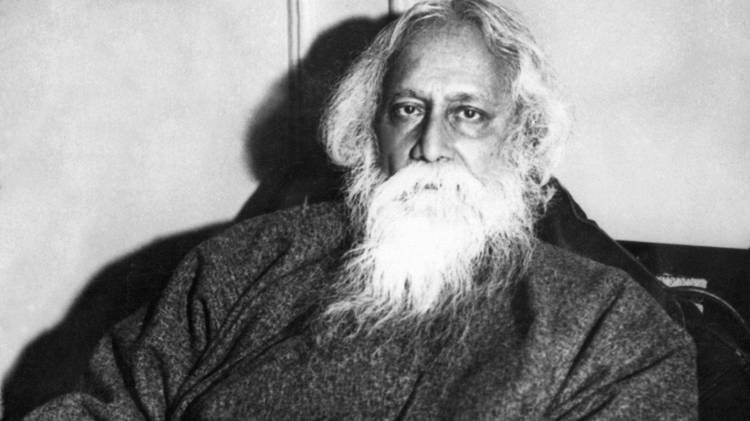
I was first introduced to Rumi years ago by an dear Indian friend, who also gifted Gitanjali by Rabindranath Tagore and today when my mind is straying reminds me of the poem “The Lotus” and the fleeting nature of life and the importance of cherishing every moment. The gifts sparked a deep appreciation for their remarkable beauty. Around the same time, I received a collection of Mirabai’s verses from her. Hindu mythology, so rich in symbolism and spirituality, always captivated me, reinforcing Will Durant’s observation in The Story of Civilization: “Civilization is not a European thing,” even though we in the West often think we are at the centre of the universe.
Mirabai, a 16th-century princess, became a Hindu saint through her unwavering devotion to Lord Krishna. She defied societal expectations, including her marriage into a royal family, to follow her spiritual path. These gifts helped me better understand the social complexities of Indian society. Only later did I grasp the profound essence of Tagore, Mirabai, Rumi, and the mystic world they inhabited.
Tagore’s Beginnings and Legacy
Rabindranath Tagore, born in 1861 as the 14th child of Debendranath Tagore and Sarada Devi, has rightly been called India’s poet laureate. He became the first non-European to be awarded the Nobel Prize in Literature in 1913 and remains one of India’s greatest sons. The Tagore’s were a distinguished family that embodied progressive ideas and activities, contributing to philosophy, science, the arts, social reform, and nation-building.
His father, Debendranath Tagore, was one of the leaders of the Brahmo Samaj, a reformist movement within Hinduism. A man of wealth, culture, and sanctity, Debendranath influenced generations of artists, philosophers, and social reformers, including his sons Dwijendranath, a philosopher, and Rabindranath, the poet. His mother, Sarada Devi, came from a family of accomplished poets and musicians, further exposing young Rabindranath to literature, music, and the arts.
Tagore was raised in an atmosphere of comfort, refinement, and intellectual richness. He was a gentle spirit from birth, so affectionate that birds perched on his hands, and squirrels climbed upon his knees. He was deeply observant, spending hours on a balcony watching passersby, or sitting in quiet contemplation, composing verses on a slate, content with the ease of wiping away errors. At 17, he published his first collection, Kabi Kahini (The Poet’s Tale).
A Poet of India’s Soul
Soon, Tagore began writing songs infused with tenderness for India—songs that celebrated her natural beauty, the loveliness of her women, and the suffering of her people. He composed the music for his poems, and as he travelled anonymously through India’s villages, he was deeply moved to hear peasants singing his works. Tagore’s extensive travels, including trips to the U.S., Europe, and Japan, broadened his worldview and confirmed his belief in the interconnectedness of all cultures.
Tagore’s poetry was part of India’s cultural renaissance in the late 19th and early 20th centuries. His verses reflect a deep, sober patriotism; a subtle understanding of love, nature, and humanity; and a passionate connection to India’s philosophical traditions. His work explores the suffering of his people with a Tennysonian delicacy of sentiment and phrase. The essence of Tagore’s worldview lies in his humanism, a belief in the essential unity of all humanity, transcending barriers of nationality, religion, and race.
A Voice of Moral Integrity
Tagore stood out not only as a poet but also as a reformer. He had the courage to denounce India’s caste system and rejected the concept of transmigration, beliefs that were central to traditional Hindu thought. He returned his knighthood to the British in 1919 as an act of protest against the Jallianwala Bagh massacre in Amritsar, where British troops killed hundreds of unarmed civilians. In a powerful letter to the Viceroy, Tagore renounced the honour, a gesture that echoed his deep distress at British colonial brutality.
Though a nationalist at heart, Tagore remained critical of the narrow chauvinism within the nationalist movement. In his essay Criticism on Nationalism, he warned against the dangers of intolerance and self-interest, which often led to conflict. His criticism was not well-received by younger nationalists, who saw his knighthood as a betrayal of India. Yet, Tagore’s vision of India’s moral renewal went beyond political freedom.
Tagore’s Literary Legacy
Rabindranath Tagore’s contributions to literature are vast and varied. He wrote approximately 2,000 poems and 1,400 songs, along with numerous essays, short stories, plays, and novels. His best-known works include Gitanjali, The Gardener, The Crescent Moon, and Fruit-Gathering. Gitanjali, originally written in Bengali and later translated into English by Tagore himself, earned him the Nobel Prize. As W.B. Yeats remarked, “The lyrics of Gitanjali display in their thought a world I have dreamed of all my life.”
In Gitanjali poem no. 1, Tagore explores the idea of surrendering oneself to the divine will, acknowledging that God is the ultimate source of life and fulfilment: Thou hast made me endless, such is thy pleasure. This frail vessel thou emptiest again and again, and fillest it ever with fresh life.
The Crescent Moon expresses the joy and wonder of childhood, while The Gardener offers a rich collection of love, nature, and mystical poems. In The Gardener, Tagore’s voice resonates with passion and subtle sensuality, as in the lines: Is it true, is it true, that your love travelled alone through ages and worlds in search of me?
Tagore’s Chitra offers a reflection on love’s evolution, portraying the journey from superficial beauty to the depth of human connection.
The Poet and the Philosopher
Tagore’s philosophical insights were rooted in the Vedanta and a mystic vision of life and death. In his later years, his poetry took on a contemplative tone, exploring the mysteries of existence. Like the medieval Bengali poet Chandidas, Tagore faced the messengers of death with no other consolation than his undying gift of song: It is a trifle that my hair is turning grey… They all have need for me, and I have no time to brood over the afterlife.
In the final analysis, Rabindranath Tagore remains an iconic figure whose poetic genius and philosophical depth continue to inspire across generations. His works reflect the soul of India and resonate with universal themes of love, spirituality, and the human condition.
WJJH – 11.11.2024
📌Blog Excerpt
Rabindranath Tagore, born in 1861, was a celebrated Indian poet and philosopher, renowned for winning the Nobel Prize in Literature in 1913. His works, including Gitanjali, explore themes of love, spirituality, and humanity. As a reformer, he opposed the caste system and criticized nationalism, leaving a profound literary and moral legacy that transcends cultures.
 In what kind of world do we wish to live