Europe Today: We are all Gaullists Now
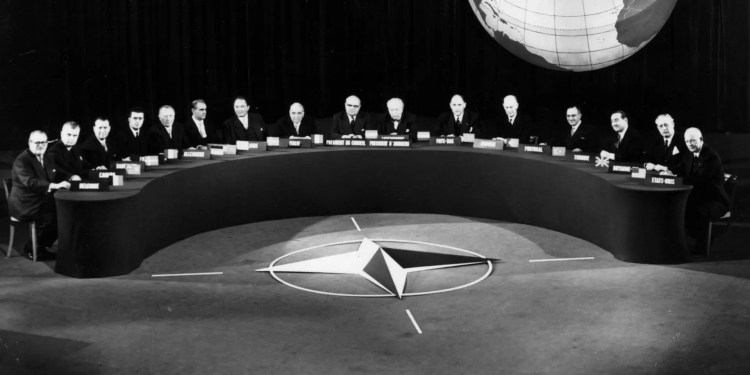
I write this diatribe with the understanding that without grasping the past—and the past is complicated—we cannot comprehend the future.
Angela Merkel once posed a haunting question: “When the survivors of World War II have expired, we will know if we have learned from history.” Today, we have our answer, and we did not even have to wait for all of them to pass. The recent Oval Office meeting, in which Trump and Vance sought to humiliate Zelensky as he stood up for Ukraine’s interests—followed by the suspension of U.S. military aid to Ukraine—made this abundantly clear.
Looking at the shifting geopolitical landscape, one thing is apparent: welcome to a brutal new world of transactional, quid pro quo politics—a dog-eat-dog mentality reminiscent of the Gilded Age and the era of robber barons. The world has changed irreversibly, and so has the United States. A mind, once expanded, never returns to its original dimensions.
In the Trump transactional world, “America First” policy has suffocated American Exceptionalism. A world in which communication with autocrats and dictators is favoured over allies, causing allies to distance themselves from the US. The is a different world now, one that will never be the same—and neither will the United States. As Oliver Wendell Holmes Sr. once said, “One’s mind, once stretched by a new idea, never regains its original dimensions.
In our global economy, where U.S. and European investments are inextricably ties to the East Asia and oil-producing nations, the Trump administration signals a new perfect storm– ignoring the multible cascading crises–climate change, economic instability, migration, and political fragmentation–we experience today that can bring civilization to a breaking point leading to and unraveling that mirrors or even is more devastating than past collapses.
In my own country, the Netherlands, we see a similar shift with complacency on the rise, assuming “it can’t happen here,” despite history showing us again and again that democratic backsliding can be subtle at first, then accelerate rapidly. In the Netherlands we are seeing how mass ignorance, disinformation, and polarization are eroding the foundations of democratic civilization.
The enablers of the neo-fascists have ushered in the current “Netherlands First” Wilders-led government. For Wilders and his likes, only they matter; he needs no justification, no reasoning—he is always right. As a liberal, I find it particularly disturbing that the VVD, once a staunch advocate of core liberal values, has succumbed to nihilism, resentment, and populist pressures. This has not only caused internal unrest but has also reverberated across Europe. By handing power to the extreme right, they have committed an act both incomprehensible and unforgivable.
While I am tempted to retreat into silence, I recognize that nihilism and nativism must not go unchallenged. We cannot allow ourselves to be silenced, even when our opinions are unpopular or unwelcome.
Trump embodies this nihilism; he is a predator who follows the dictum that might makes right. In his worldview, truth is malleable, institutions are disposable, and self-interest overrides any sense of duty or principle. This aligns with what Hannah Arendt described in The Origins of Totalitarianism: when people no longer believe in truth, they become vulnerable to authoritarianism, because they retreat into cynicism, apathy and compassing disappears. The erosion of spiritual and ethical values creates fertile ground for demagogues who manipulate fear and resentment. nothing has inherent meaning or value.
We live in an era where democracy, freedom, and civilization are increasingly misunderstood. The zeitgeist is corroding the spirit of democratic civilization, replaced by mass ignorance and cynical calls to “make America great again.” What we are witnessing in the United States is not merely populism, in its purest form, the reaction to elite failures, but what we’re witnessing is the resurgence of something darker—authoritarianism with fascist undertones. We all recognize this reality on some level, but many deny it for as long as they can. Yet denial does not change the facts.
European democracy and institutions are not immune to these forces. The European Union has been weakened by prioritizing expansion over EU integration and failures to address immigration, climate change, inequality, and defence expenditures. They are further eroded when compromises are made on judicial independence and press freedom in Hungary and Poland, when populist movements gain traction, and when extreme right-wing forces are normalized. The growing influence of figures like Orban and Le Pen, highlight the vulnerabilities of this approach. A more consolidated EU might have had stronger internal mechanisms to counter democratic backsliding.
As Socrates said over 2,000 years ago, we must call the problem by its true name rather than disguise this. The rhetoric, the scapegoating, the attacks on democratic institutions, and the normalization of political violence all echo past warning from figures like Mann, Adorno, Levi, Churchill adn Camus.
This is why Thomas Mann’s warning from October 3, 1940, at Claremont College remains so prescient: “Let me tell you the whole truth: if fascism should ever come to America, it will come in the name of freedom.” Mann’s quote is particularly chilling because it captures the paradox of how authoritarianism often cloaks itself in the language of “freedom.” The far-right in the U.S. and Europe increasingly weaponizes ideas of “liberty” to justify dismantling democratic norms.
It is time we stop calling Trumpism “populism.”
The mechanisms by which he seeks to consolidate power go far beyond democratic concessions or electoral victories. Trump is laying the groundwork for authoritarian rule, employing tactics we have seen throughout history. His return is not merely a continuation of his previous administration—it is an escalation.
Project 2025, his administration’s blueprint, is not chaos for chaos’s sake; it is a methodical strategy aimed at dismantling the U.S. government and civil society. It seeks to normalize a Christian nationalist dictatorship through executive orders designed to create “shock and awe.” This is not just ideology at work; it is a calculated effort to instil fear, anger, and instability within government institutions. The question is: how long will the public tolerate this continuation down this spiral of chaos, crony capitalism, lawlessness, isolation, authoritarianism and abuse of power? As Montesquieu warned, “Whoever has power is inclined to abuse power. This is why, by the way things are arranged, power must stop power.” The separation of powers is therefore essential, as former French Prime Minister Alain Juppé notes in Le Monde.
Elon Musk, too, plays a role in this disruption. His so-called “Department of Government Efficiency” has sought to infiltrate key institutions, including the Treasury. His sledgehammer approach mirrors what he has done with Twitter—now X—transforming a once-global platform into a dangerous far-right propaganda tool.
As Philippe Bernard writes in Le Monde, “Vice President J.D. Vance, at the Munich Security Conference, began to break the alliance with Europe, sealed in 1945 after defeating the Nazis.” A diplomat present at the conference described Vance’s speech as fascist and anti-European. The irony of Vance lecturing Europeans about freedom of expression while rejecting journalists’ questions, all while associating himself with the Putin regime that imprisons dissenters, is unmistakable.
The encouragement by the U.S. of the extreme-right AfD (Alternative for Germany) in Germany and Nigel Farage’s “Reform UK” is part of a broader effort to weaken Europe and the European project. Paradoxically, Trump’s attempts to undermine the EU may force it to reinvent itself and strengthen the “Europe of the willing.”
Within weeks, the Trump machine has already wrought disaster. True to form, he has pressured Ukraine into accepting, in the words of Don Corleone, “an offer it cannot refuse.” The Oval Office meeting was a demonstration of the new world order: the strong do as they please, while the weak must comply. With this the US reverting to a Hobbesian state.
This is not the post-World War II order but a regression to the 19th-century model of empires and monarchs. Trump has reprioritized U.S. foreign policy to align with Vladimir Putin’s objectives, effectively acting as his proxy. He claims to seek peace in Ukraine, yet the military, political, and economic pressure on Zelensky is designed to force Ukraine into capitulation. There is already talk of “regime change” in Kyiv—a well-known American concept.
Europe must dispel any lingering illusions about its influence. Without European and Ukrainian involvement, there can be no lasting peace in Ukraine. This moment is strategic: since German unification, Europe has positioned itself as an American protectorate, relying on an increasingly unpredictable patron. For two decades, Europe has ignored America’s pivot to the Indo-Pacific, only for the U.S. to turn back momentarily when it needed European support for sanctions against Russia.
Europe must cease outsourcing its foreign and security policy. As President Macron proposed in 2017, strategic autonomy does not mean abandoning transatlantic ties but reassessing the relationship with the understanding that given the inextricable economic links between the U.S. and Europe—severing those ties, despite political tensions, would be nearly impossible without catastrophic economic consequences for both sides.
The Trump administration’s erratic policies might strain alliances, but the reality of economic interdependence acts as a counterweight, preventing a full-scale rupture. This makes the new mantra unavoidable: “Cooperate when we can, be independent when we must.” Europe, an economic powerhouse with 450 million people and 22 million companies, must emancipate itself militarily and politically from the U.S. to preserve its relevance.
At this time, who will trust U.S. commitments? NATO’s security guarantees, despite Mark Rutte’s reassurances, have never been more uncertain. Europe must acknowledge its changing position in a shifting world order. As Merkel recognized in 2017, “The days when we could completely rely on others are, to some extent, over. We Europeans must take our fate into our own hands.”
Europe must acknowledge that the seventy years of trust and cooperation with the U.S. are now over. Despite Europe’s reluctance to take full responsibility for itself. European leaders, including the future German Chancellor, Friedrich Merz, a committed Atlanticist, followed the same line of thought when he stated that his absolute priority would be to strengthen Europe in order to achieve independence from the US. The question today is, given Europe’s reluctance to take full responsibility for itself, how much is strategic autonomy more of an idea than a reality.
Today reminds Europe how in the 1960’s President De Gaulle considered the US as “an occupying state interfering in all economic, military and political processes in the world”. On March 7, 1966, de Gaulle sent a letter to US President Johnson, in which he stated France’s withdrawal from NATO’s military wing and also that France had taken sovereignty into its own hands and no longer putting French military forces under NATO’s order. Today begs the question: Maybe Charles de Gaulle was right after all. Today as the Dutch Foreign Minister Caspar Veldkamp, said: “We are all Gaullists now.”
WJJH-11.1.2025
📌Blog Excerpt
Refection: arguing that the contemporary political landscape reflects a dangerous shift toward transactional, authoritarian governance reminiscent of the past. It highlights the erosion of democratic values in both the U.S. and Europe, exemplified by figures like Trump and nationalist leaders, calling for Europe to take strategic autonomy seriously and reassess its reliance on the U.S.
 In what kind of world do we wish to live
Wonderful post 🌅🌅
LikeLiked by 1 person