The Shoes of Autumn
✍️ Author’s Note
This reflection grew out of looking at a pair of old Saucony running shoes that had carried me faithfully for many kilometres. I once thought that giving up running meant leaving those shoes behind as well. It turns out the distinction is less clear. The legs changed, the pace changed, but the shoes did not necessarily have to.
Perhaps that is true of more things in life than we care to admit. We do not always need a new road—or even new shoes. Sometimes we simply learn to travel the old road differently.
—WJJH
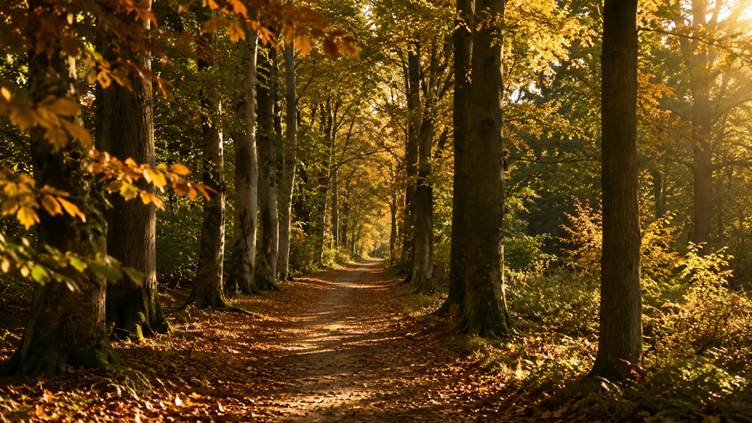
“I’ll be happy if running and I can grow old together.”
— Haruki Murakami, What I Talk About When I Talk About Running
There comes a time in every runner’s life when the legs begin to speak louder than ambition. Mine did so at 76.
I started running later in life, and I was never the fastest runner. But at forty, I never wondered whether I would still be walking long distances forty years later. One assumes such things will somehow take care of themselves. They do not.
For many years, running shoes were faithful companions for thirty to fifty kilometres a week, and running became an important part of my quality of life. Eventually, however, my hips made clear that they had no intention of continuing the arrangement.
So, with some reluctance and a fair dose of pragmatism, I stopped running.
I once imagined that this would mean replacing running shoes with walking shoes: sturdier perhaps, slower, and certainly less glamorous. But life, as usual, proved less tidy than the metaphor. I still walk in Sauconys. The shoes designed to run are perfectly content to walk, even if their owner has changed tempo and the pace has become slower.
With age, stability matters more than efficiency, and the body quietly finds its own ways of adapting. Murakami was right: there is something to be said for growing old with running, even if somewhere along the way running becomes walking.
Strava even has a club for runners over sixty. I no longer qualify as much of a runner, but I am still covering part of the distance. It simply takes longer, and there is more time to admire the scenery.
And there is a simple truth worth remembering: a mile remains a mile, whether it is run in six minutes or walked in twenty.
In reality, this is less about running or walking than about quality of life. The transition from running to walking is perhaps not like changing instruments, but rather like playing the same piece more slowly. Rock ’n roll has given way somewhat to chamber music, but the concert continues, and I am still fortunate enough to enjoy the music — and the colours of the leaves.
In the end, every pair of shoes carries its own season, but that does not mean we must discard them when the season changes. Some things remain useful long after their original purpose has passed. What matters now is no longer speed, nor kilometres per minute, but distance, continuity, and the pleasure of still being on the road.
And walking has one considerable advantage over running: there is much more time to look around.
📌 Blog Excerpt
I stopped running, but I never really left the road. The pace changed, the legs changed, but the shoes remained.
Perhaps life does not always require new shoes when the season changes. Sometimes it is enough to change tempo, keep moving, and take more time to look around.

