Iran: Before the Strategic Map
This is not a plea for indulgence, but for proportion
✍️ Author’s Note
This short reflection serves as a preface to two longer essays on Iran. It is not written as a defence of the Islamic Republic, whose repression and narrowing of civil society cannot be excused. It is written instead as a plea for proportion: before Iran is reduced to a strategic problem, it should be seen as one of the world’s older civilizational rivers — shaped by memory, language, poetry, empire, injury, pride, and continuity.
Great powers often understand maps better than memories. This essay asks whether any serious discussion of Iran can begin without first acknowledging the country beneath the strategic map.
“The present is the past rolled up for action,
and the past is the present unrolled for understanding.”
-Will Durant Lesson of History
Before writing about Iran, one should pause.
Not because Iran is beyond criticism, nor because its rulers should be excused, romanticised, or protected from judgment. The Islamic Republic is responsible for repression at home, for the silencing of dissent, for the narrowing of civil society, and for policies that have deepened fear both within and beyond its borders.
But Iran is not only a regime.
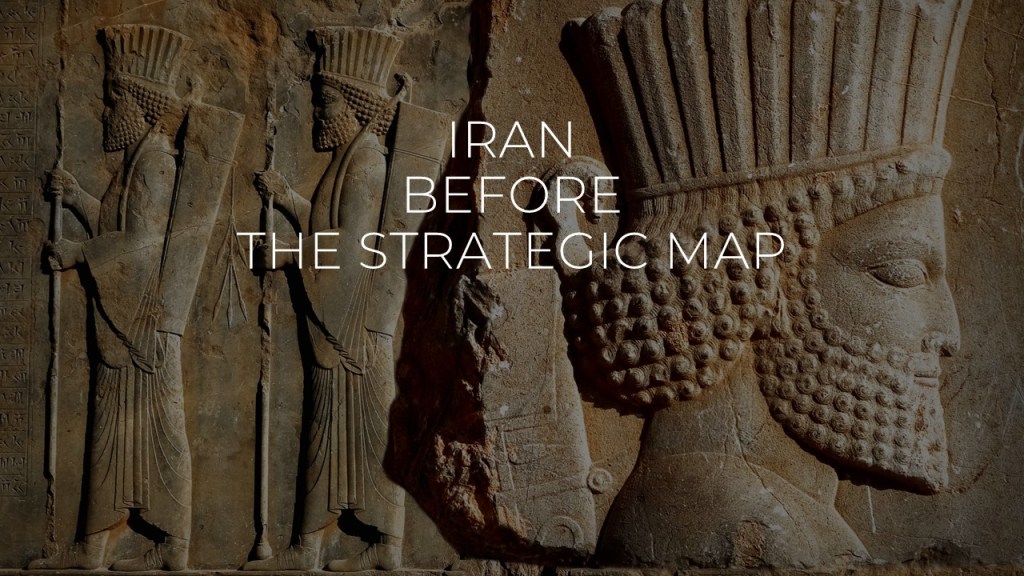
It is one of the oldest continuous civilisations in the world: Persia before it became the Islamic Republic, poetry before ideology, memory before sanctions, language before the nuclear file. To approach Iran only through the vocabulary of threat, containment, oil, missiles, and regional escalation is already to have lost sight of the larger country beneath the strategic map.
This is not a small error. It is one of the recurring failures of modern power.
Great powers often study countries strategically while failing to understand them civilisationally. They know the maps, ports, pipelines, factions, alliances, pressure points, and military balances. What they understand less well are the injuries, memories, rhythms, humiliations, pride, and internal contradictions that shape how societies experience outside pressure.
Iran is a revealing case because it has been misread for so long.
In the nineteenth century, it became a space between empires. In the twentieth century, it became a source of oil, a buffer, a monarchy to be supported, a revolution to be contained, a nuclear question to be managed. Again and again, Iran was treated less as a living civilisation than as a strategic object.
That is the subject of the two essays that follow.
The first looks at Iran as a civilisation before ideology: Persia as memory, language, poetry, empire, and continuity. The second, Iran and the Architecture of Intervention, examines how that civilisation was gradually enclosed within an architecture of intervention: geography, oil, imperial rivalry, the coup of 1953, the Shah’s modernization, the revolution of 1979, sanctions, containment, regional conflict, and the temptation of regime change.
The argument is not that Iran is innocent. No serious historical argument can be built on innocence. Iran has acted, suffered, miscalculated, resisted, endured — and under its rulers, repressed. Its rulers have made choices. Its society has paid the price.
But the West, after five centuries of hegemony, would be wise to remember something Will Durant understood well: civilisations are not permanent possessions of the powerful. They rise, decline, borrow, adapt, wound, and remember. Power may command attention, but it does not automatically create understanding.
The difficulty is not that great powers have interests. They always do. The difficulty begins when they mistake their own perspective for the whole field of reality. No country, however powerful, sees the whole river from its own bank.
Every civilisation has its own source of dignity, its own current and sediment. These rivers run at different speeds, through different landscapes, carrying different memories. Yet they flow toward a shared human horizon. Dignity is not a Western monopoly, nor is reason the property of one civilisation alone.
Iran is one of these rivers. To view it only strategically is to stand on one bank and mistake that partial view for the whole. The West, especially when speaking in the name of universalism, should be careful not to confuse its own perspective with the entire field of reality.
Respect matters.
Respect is not sentimentality. It is a condition of understanding. A society approached only as a problem to be managed will eventually answer in the language of injury, suspicion, and resistance. If we do not give respect, we should not be surprised when we do not receive it.
Countries are rivers with different banks. What appears as strategy from one side may be remembered as humiliation from the other. What appears as containment from one bank may be experienced as encirclement from the opposite shore. To stand on one bank is not to see the whole river.
Iran, beneath the headlines, remains such a river: ancient, wounded, proud, divided, restless, and still moving.
Before we speak of Iran, we should at least try to see more than the map.
📌Blog Excerpt
Before Iran is reduced to sanctions, missiles, oil, or the nuclear file, it should be seen as one of the world’s older civilizational rivers: ancient, wounded, proud, divided, restless, and still moving.

